Children’s Climate and Disaster Risk Model
Subnational model in Tajikistan aims to assess and measure disaster risks for children

Highlights
Child-Centred Risk Assessment in Tajikistan
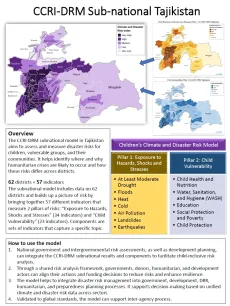
UNICEF’s Climate and Crisis Risk Index for Disaster Risk Management (CCRI-DRM) subnational model helps identify and measure disaster risks affecting children, vulnerable populations, and their communities across Tajikistan. By assessing where and why humanitarian crises are most likely to occur, the model provides critical evidence to support risk-informed planning, preparedness, and resilience-building efforts at the local level.
The model covers all 62 districts of Tajikistan and brings together 57 indicators to create a comprehensive picture of risk. These indicators are organized into two key pillars:
- Exposure to Hazards, Shocks and Stresses (34 indicators), which measures the likelihood and intensity of natural and human-induced hazards affecting communities.
- Child Vulnerability (23 indicators), which captures the factors that increase children’s susceptibility to harm and reduce their ability to cope with and recover from crises.
The indicators are further grouped into thematic components, enabling a detailed understanding of specific risk factors and helping decision-makers identify priority areas for action. By highlighting geographic disparities in risk, the CCRI-DRM subnational model supports targeted investments and interventions that strengthen resilience and better protect children from the impacts of disasters and climate-related shocks.