Stitching hope: Ghanem’s journey back to his dream
UNICEF helps young people in Syria build skills and create opportunities for a brighter future
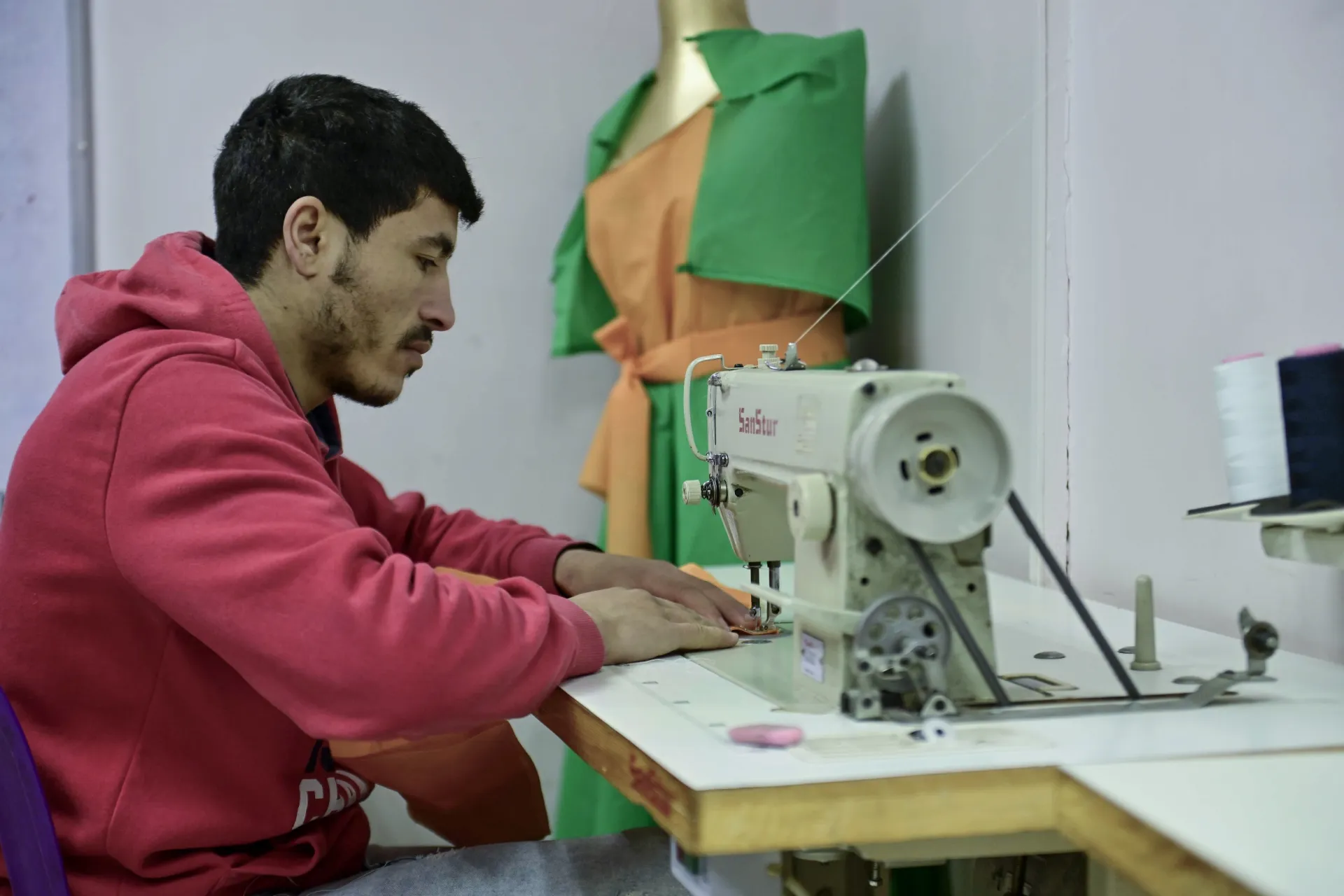
Jaramana, Rural Damascus – “I was just a child when I started working. I had to help my family,” Ghanem, 23, said, reflecting on his life after displacement. Ghanem lives with his parents and six siblings in Jaramana. In 2019, due to the conflict, the family fled their home in Deir-ez-Zor and sought safety in Rural Damascus.
To support his family, Ghanem left school and took on various jobs. He worked in a sewing factory before moving into construction for better pay. In 2023, he travelled to Iraq seeking opportunities but returned a year later due to health issues. “I felt like I had failed,” he said. “I was depressed.”
With the support of his family and driven by his passion, Ghanem decided to try again. This time, he pursued his true dream, finding work wrapping finished clothes at a workshop. “I was close to the machine but never allowed to touch it,” he said.
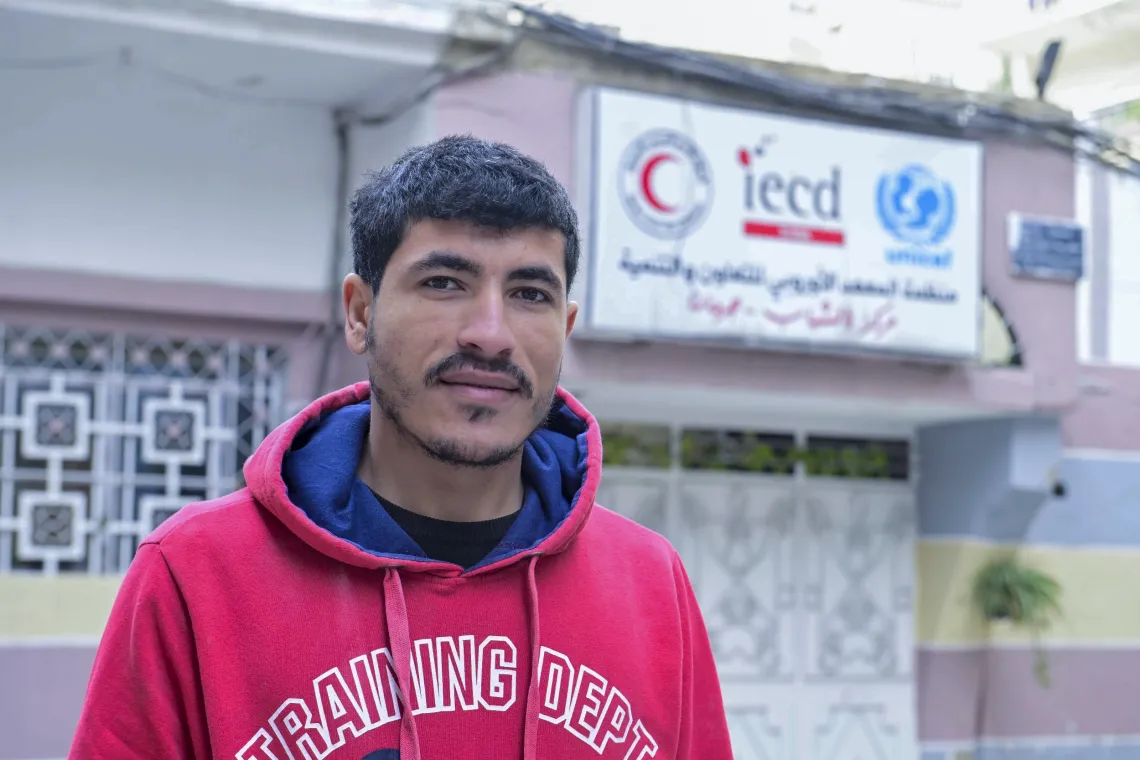
A turning point came when his cousin told him about a UNICEF-supported youth-friendly space in Jaramana that offers free vocational training. “I went immediately,” Ghanem said. “When I heard there was a sewing course, my heart jumped. This is what I dreamed of,” he added.
With encouragement from his employer, Ghanem was allowed to leave work early each day to attend the course. Over the span of a month, alongside ten other young participants, he learned the basics of sewing and regained the self-confidence he thought he had lost.

UNICEF/UNI958563/Wissam Bashour
“The first time I sat at the machine, I felt like a child who had just touched his dream. Since then, I never stopped learning.”
Ghanem did not miss a single lesson.
“My trainer used to explain everything patiently,” he said. “She made sure we practiced again and again. I absorbed every word.”
Soon, his progress became evident at work. The factory owner recognised his growing skills and finally allowed him to sit behind a sewing machine. “I was excited. The trust I was given meant that I was moving forward,” Ghanem said.
One day, he noticed fabric scraps being discarded at the factory. He collected them to the centre, and the next day returned with a carefully sewn girl’s dress.


“He started bringing scraps every day,” Ibtihaj, his trainer, recalled. “He turned them into dresses for his nieces to wear on Eid.” Ghanem developed into a skilled sewer and began building a new career.
Beyond technical skills, the space helped Ghanem rebuild his social life. He became confident and proactive, regularly sharing ideas with his peers.

UNICEF/UNI958558/Wissam Bashour
“I made friends here. We still speak every day, exchanging designs and ideas. Before, I had no time for social life. Now, I look forward to it.”
“Young people bear heavy responsibilities early on,” Ibtihaj said. “With the right guidance and opportunity, they can find their path again.”
Today, Ghanem dreams of opening his own workshop.
“I want to sell clothes that I designed and made from the heart.”
Between January 2025 and January 2026, UNICEF reached nearly 380,000 young people aged 10 to 24 across Syria through comprehensive skills development and vocational training initiatives delivered in 44 youth‑friendly spaces nationwide. These centres continue to provide adolescents and young persons with opportunities to rebuild their lives and strengthen their prospects for the future following years of conflict and displacement.
This support was made possible by the invaluable contributions from the German Federal Ministry for Economic Cooperation and Development (BMZ) through the KfW Development Bank; the UN Joint Programme to Strengthen Urban and Rural Resilience and the Conditions for Recovery in Syria (UNJP); the Global Humanitarian Thematic Fund; the Foreign Commonwealth and Development Office (FCDO), the governments of Japan, Austria, Canada, Australia, and Norway; and UNICEF National Committee for Japan.