Where healing begins
UNICEF Makanas providing safe spaces where children affected by conflict can learn, play and recover

Marwa, 11, still remembers the loud explosions and airstrikes that lit up the skyline in her hometown of Nyala. Her father later confirmed what everyone feared—the war had come dangerously close.
The days that followed were long and uncertain, with the situation rapidly deteriorating and leaving the family with no choice but to flee.
For two days, they travelled on foot from Nyala to Geneina, before boarding trucks that took them to Madani in Aj Jazirah State. Their stay there was short-lived, as fighting that began in Khartoum quickly spread.
The family eventually fled again—this time to Gedaref, where they have now been living for almost three years.
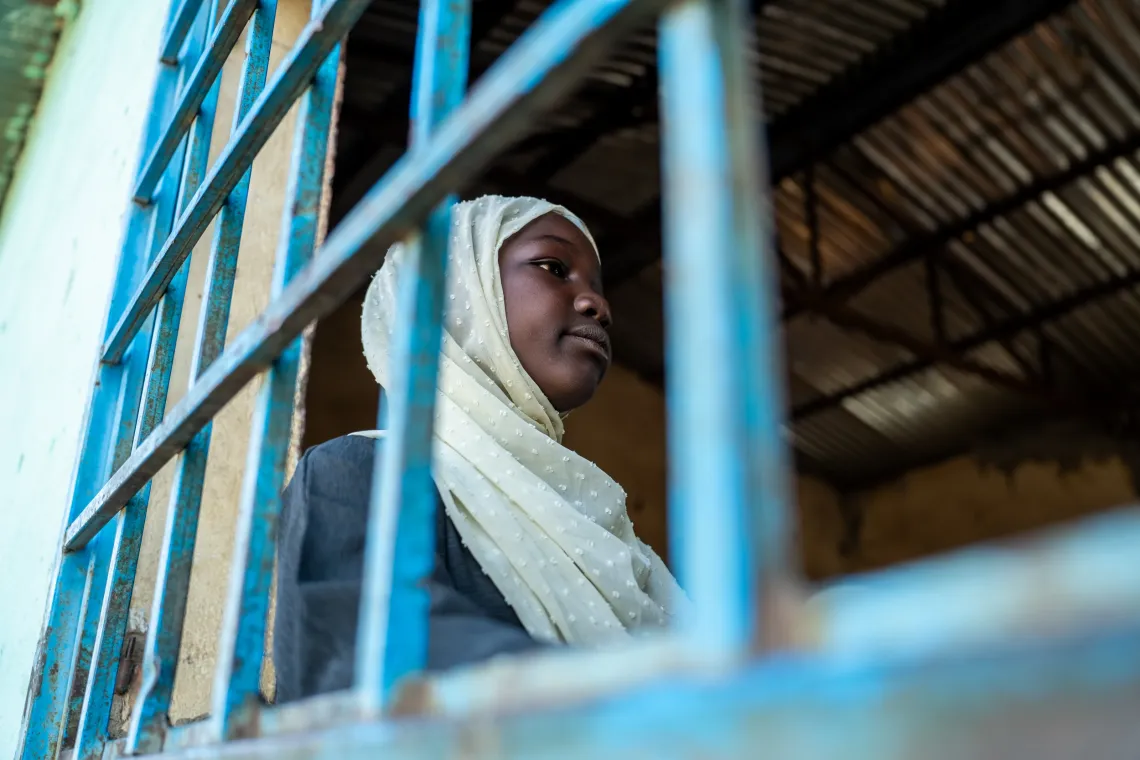
“I don’t have a home,” Marwa murmurs.
“I don’t have a room. I didn’t go to school for many years.”
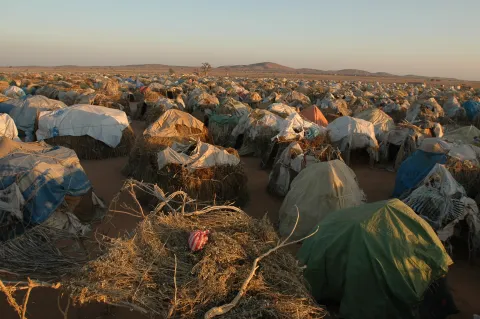
Like millions of children in Sudan, war forced Marwa and her family to leave behind their home and childhood memories, completely upending their lives. Today, they live in a shelter shared with other displaced families. The uncertainty of returning home—and the loss of everything familiar—continues to weigh heavily on her.
“Will we ever go back home?” Marwa asks.
“When I feel sad, I like to sit alone,” she whispers.


The healing journey begins
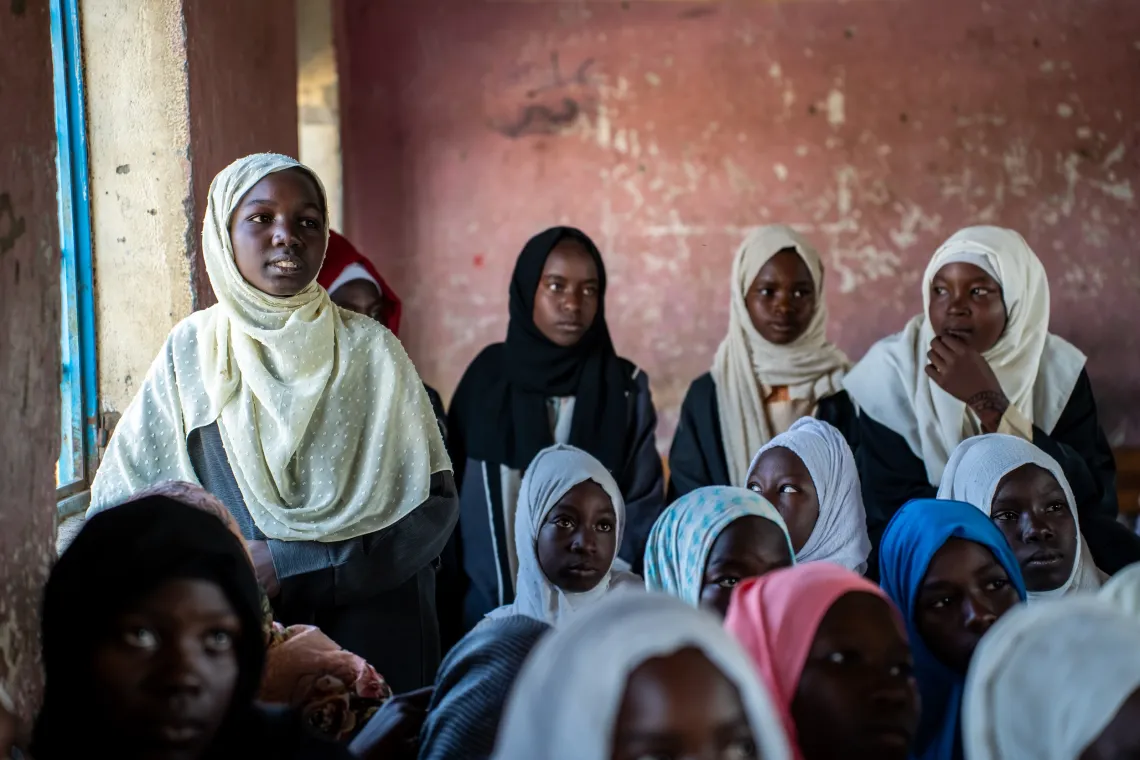
A few months ago, Marwa and her sister, Fatuma, 14, enrolled at a UNICEF-supported Makanna at Salamt Al Bey Mixed Primary School. Here, Marwa is not only catching up on her education but also receiving psychosocial support to help her cope with stress and adapt to a new reality.
In Gedaref State, UNICEF has established Makannas—safe spaces where children affected by conflict can access integrated services, including education, child protection, psychosocial support, and water, sanitation and hygiene (WASH), thanks to support from German Cooperation through the KfW Development Bank.
Inside a Grade 4 classroom, a trained social worker named Fatuma leads a psychosocial session. Sitting in a circle with the pupils on a large mat, she begins by asking them to talk about themselves—their hopes, dreams and fears—before gently guiding the discussion towards topics such as violence, its causes, and how to report it.
“I always start by checking how they are feeling,” Fatuma explains.
Following mass displacement, children in the Makanna come from different regions, communities and backgrounds. These sessions help them understand one another, build trust, and foster social cohesion.
They also provide a safe platform for children to express themselves—sharing experiences, forming friendships, and engaging in activities such as singing, dancing and creative play.
Suleiman, an animator, has seen the impact first-hand. The Makanna, now attended by children from displaced, refugee and host communities, offer both structured and unstructured psychosocial activities, alongside play and cultural sessions to help children recover from the hardships they have endured.
Healing together
When it is her turn to speak, Marwa shares how the sessions—and the friendships she has formed—have helped her cope and begin to move forward.
Her friend Mowaib, who is displaced from Khartoum, has become her greatest source of support.
“Whenever I feel sad, she helps me cope,” Marwa says.
“I share my experiences from the journey, and she comforts me.”
Together, they enjoy playing higla, a traditional Sudanese game, and spend time reading and writing during their free time.
Although Marwa remains far from home, the UNICEF Makanna is helping her—and hundreds of other children affected by conflict—to rebuild their lives, heal, learn and find moments of joy again.
“Here, I feel safe and can go to school,” she says.
“Maybe one day, I will become a nurse when I finish school.”