From survival to stability
Humanitarian cash transfers are helping conflict affected families meet basic needs and restore livelihoods in Sudan

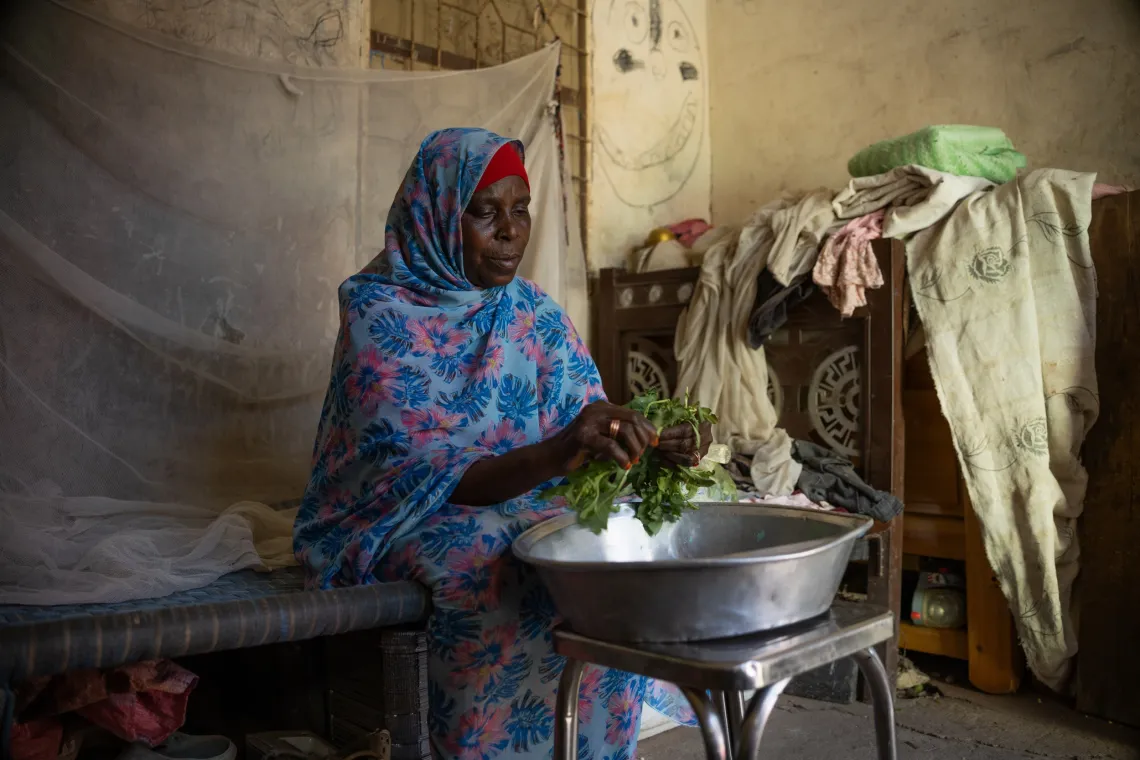
In the mid-afternoon, Khadija stops at a small stall along a narrow street in Al-Waha area, in Madani, Aj Jazirah State. She carefully selects green leafy vegetables, tomatoes and onions - enough to prepare a nutritious meal for her family of 11.
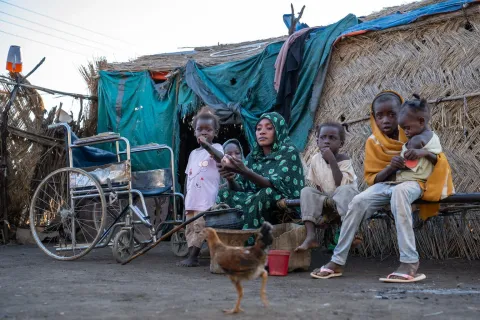
Not long ago, putting food on the table was an uphill struggle for a family that has endured the impact of the ongoing conflict in Sudan.
Khadija lived in Aj Jazirah State all her life. Like many in her community, her family depended on agriculture for their livelihoods.
“We grew our food, and we had plenty to eat,” Khadija recalls.
Going without food was never something they experienced until the conflict began.

UNICEF/UNI963645/Ahmed Mohamdeen Elfatih
“We had no food and no water.” “The situation was very difficult.”
Displacement and return amid conflict
Two years ago, Khadija and her family were forced to flee as fighting that began in Khartoum spread closer to their community.
“I heard the sound of bombs and airplanes,” she recalls.
“Whenever the plane came, we hid under the bed.”
After hours on the road, they reached Al-Hawata in Gedaref State. But life there was harsh. There was little access to food, water, medical care or work.
After just one month, the family made the difficult decision to return home, despite ongoing insecurity.
“Almost everyone had left,” Khadija said. “It was a dead city with daily bombing.”
What followed were months of isolation, deprivation and uncertainty.
“We had no food and no water.” “The situation was very difficult.”
Despite being back home, the family struggled to access even the most basic services. Water systems, health facilities and schools had been damaged or destroyed.
“Sometimes we didn’t eat anything.”
For more than a year, Khadija carried the weight of responsibility for her family, navigating uncertainty while holding on to hope.
Cash assistance brings relief
In 2025, as families began returning to Aj Jazirah, UNICEF and partners launched the Humanitarian Cash Transfer (HCT) programme in conflict-affected areas, including Aj Jazirah and Khartoum.
Through the programme, vulnerable households particularly those with women and girls at risk received multipurpose cash assistance through three payment cycles, helping them meet basic needs and access essential services during the crisis.
Khadija remembers the moment she learned she had been selected.
“The first thing I did was to tell my neighbours,” she says with a smile.
“We were all very happy and relieved.”
Her priorities were immediate: food and medicines.
“I bought a sack of sorghum and food, and I went to the clinic to get medicines for me and my husband,” she explains.
For the first time in months, the family was able to eat regular, nutritious meals.

Seeds of gold
But Khadija also looked ahead.
She invested part of the cash in a small income-generating activity, what she now calls her “seeds of gold.”
She began by buying a sack of beans, which she cleaned and sold locally. Over time, her business grew. Today, she purchases multiple bags of different seeds, including watermelon and groundnuts, in addition to beans.
In her compound, sacks of seeds await preparation.
After cooking dinner, Khadija sits with a large silver tray, tossing watermelon seeds into the air to remove dirt before roasting and packaging them into small snack bags—locally known as tasali—for sale in the neighbourhood.
From each bag, she earns a profit of around 30,000 Sudanese pounds (approx. 7 US$).
What started as a small effort has grown into a steady source of income, restoring a sense of stability and dignity for her family after years of hardship.
“The money has helped us a lot, and our lives have changed,” she says.
“I no longer need to borrow from others, and I can live from what I earn.”
Through the Humanitarian Cash Transfer programme delivered with support from the German Federal Foreign Office (GFFO) and the global humanitarian thematic funding, UNICEF and partners have reached approximately 14,142 individuals with unconditional cash assistance—giving families the flexibility to meet their most urgent needs.
For Khadija, the support has been more than temporary relief. It laid the foundation for a small business that continues to sustain her family and support others in her community.