Photo essay
Pre-COVID19 Notes from the Field - New hope for Sudan’s Jebel Marra
A United Nations Volunteer (UNV) travels on a UNICEF and partners mission to South Jebel Marra in South Darfur visiting communities not accessible to humanitarian services since 2009
Mohammed Jalal

- English
- العربية
05 July 2020
My name is Mohammed Ahmed Gelal Eldin. I am Sudanese and live in Khartoum, Sudan. Currently, I am a United Nations Volunteer based in UNICEF Sudan’s Nyala field office where I work as a monitoring officer.
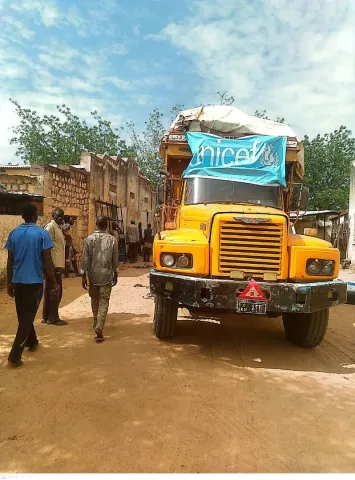
During our mission from the 12th of February to the 15th, UNICEF team and myself, were heading to Jebel Marra in South Darfur. It was my first mission to this area, and I had a mix of emotions; excitement and hope overwhelmed me the morning of the mission.
The area we were visiting, Kerri which is south of Jebel Marra, had been inaccessible since 2009. Our team mission was to assess the situation and find out the needs of the people.

On our way there were mountains and valleys which were dry and hot. As the sun shined down upon us, we appreciated the refreshing cool mountain breeze.
To get to remote villages we walked or rode donkeys for two hours along dusty paths. No vehicle can get through this route, which is why we had to hike more than five kilometres up the mountain.
As we hiked, my mixed emotions still lingered, and I became nervous, not sure what to expect when we get there.
Finally, we arrived at Kerri. It is a village that is in the center of a group of more than ten other villages in South Jebel Merra
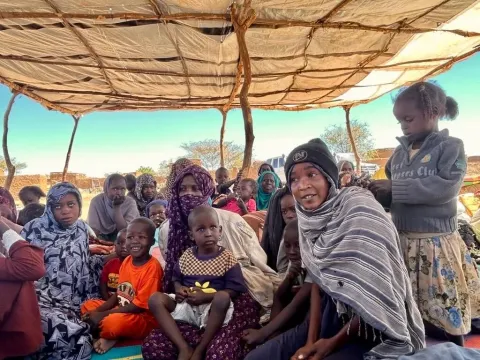
Imagine that this area has had no humanitarian support since 2009, so people were anticipating UNICEF’s presence. About 1,000 people from the community welcomed us with great excitement, children were singing, women were crying with joy, thanking and chanting traditional celebratory sounds.

The exhaustion and mixed emotions suddenly dropped away and turned into commitment to my people.
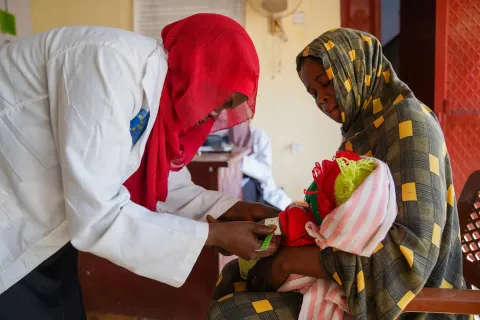
We immediately began our assessment and did interviews with women, children and local leaders. This included health screenings to find signs of malnutrition.

After assessing the situation, we found that many children under-five were stunted and had fluoride deficiency. Access to water is limited as only five out of fifteen water hand-pumps were working; women usually have to walk or travel by donkey for up to three hours to fetch water. About 1,000 children are out of school, and they only have one basic functioning school that accommodates 1,170 girls and boys. The school has no teaching materials and a specific request was made for chalk. There is no secondary school and children do not have the access to sit for their grade eight exams due to the security situation.