Tawila, a refuge for tens of thousands uprooted by conflict
Amid mass displacement, children and families find protection, health care and hope through UNICEF's lifesaving support
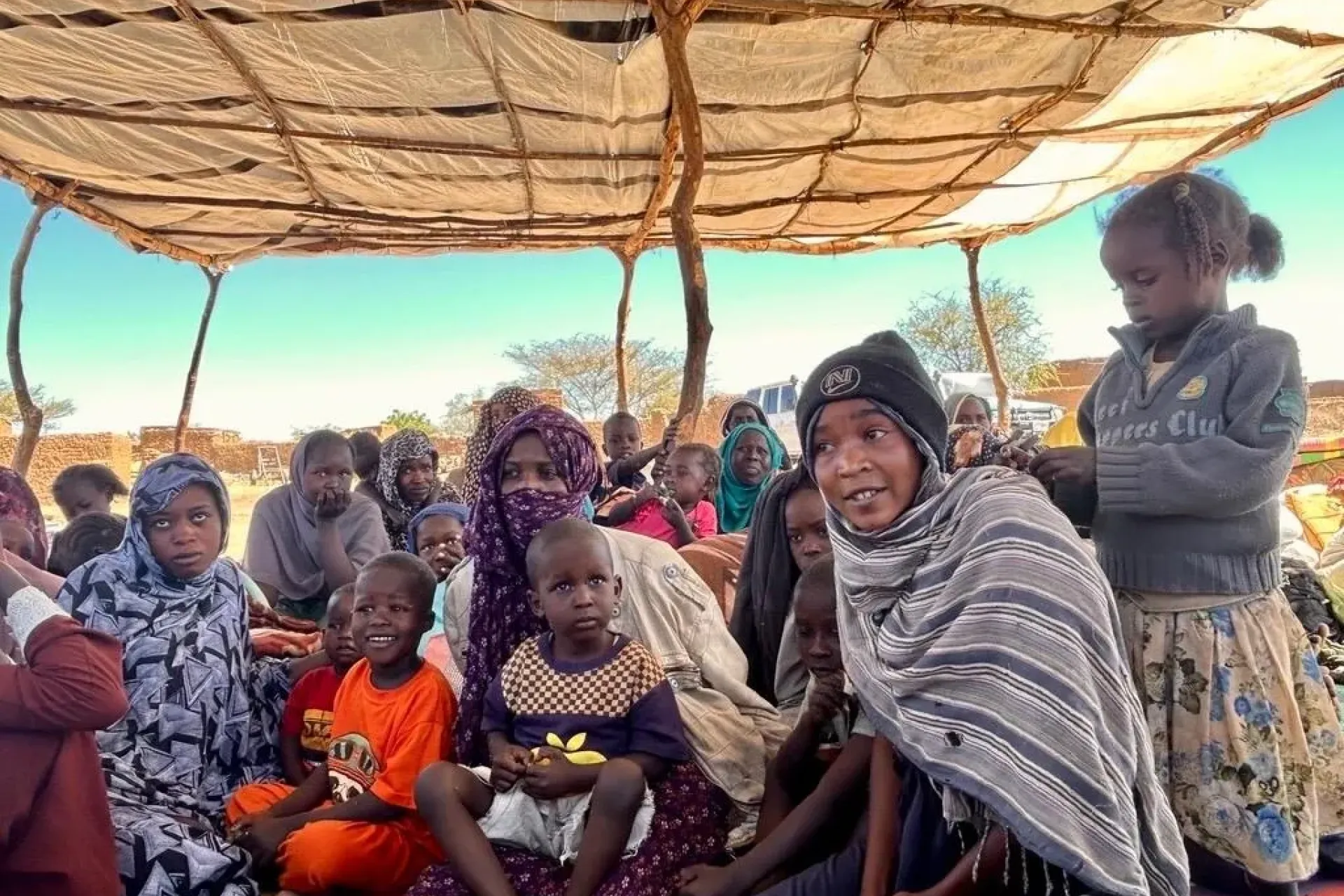
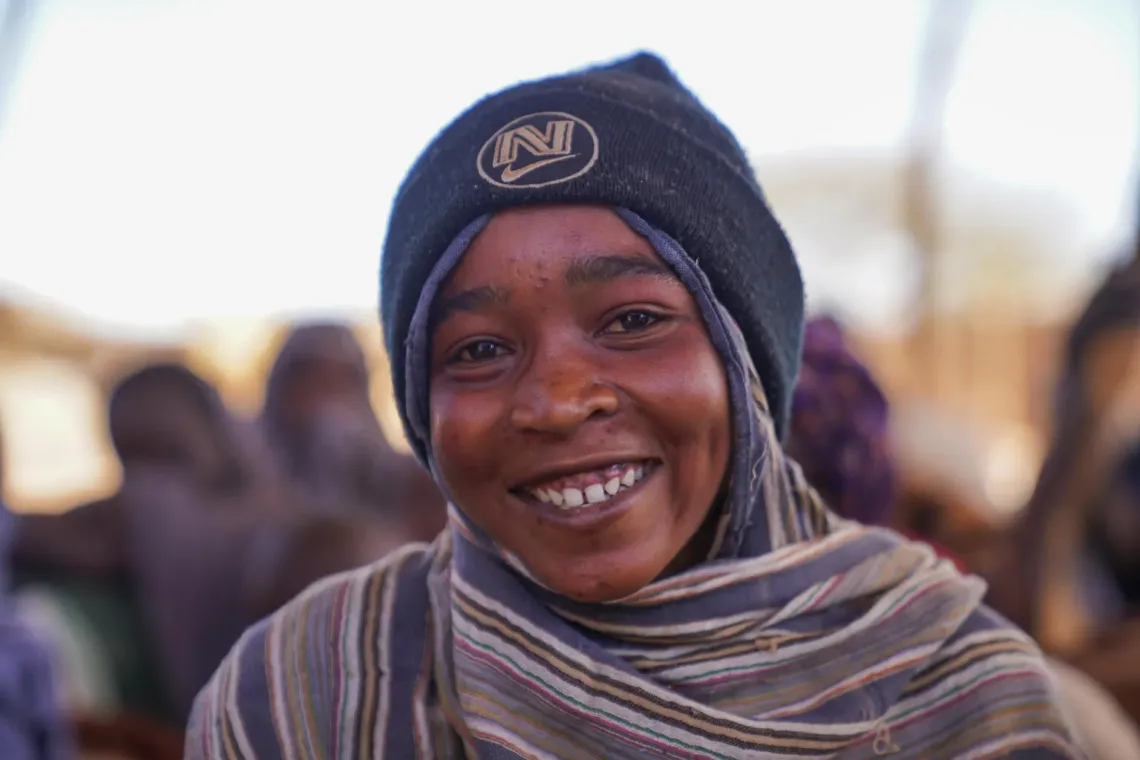
On a chilly morning in Tawila, 17-year-old Doha sits beneath a shelter stitched together from sticks and a thin tarpaulin sheet at the reception point for newly arrived families. Wrapped in a warm scarf and hoodie, she tried to shield herself from the cold while her youngest sister curls into her side, occasionally climbing onto her lap.
Around them, her siblings and extended family huddle close. They fled Al Fasher just days earlier. For now, safety comes in numbers.
After a three-day journey by donkey cart, Doha and her family finally reached Tawila six days ago, exhausted and frightened. Home had become too dangerous. Food was scarce. Health facilities were destroyed. School — once the centre of Doha’s days — was no more.
At the reception point, families are registered, offered hot meals, provided with water containers and given medical check-ups before being guided deeper into the vast camp.
Tawila has grown into a sprawling settlement, with more than 600,000 people sheltering in makeshift homes of sticks, hay and plastic sheeting. Some families have lived in these harsh conditions for months.
After her recent visit, UNICEF’s Chief of Advocacy and Communication, Eva Hinds, described:
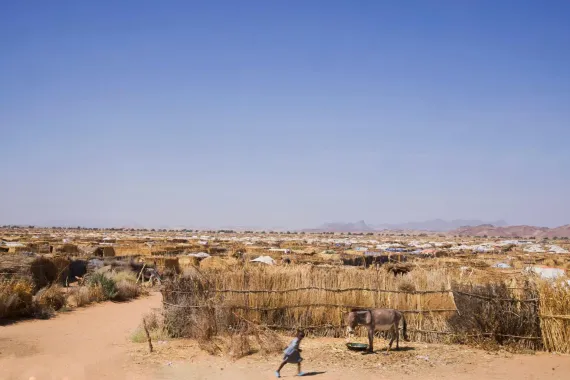
“It felt like an entire city uprooted and rebuilt out of necessity and fear. It is a city rebuilt out of desperation, larger than my hometown Helsinki and every one of those families is there because they had no choice but to flee.”
As the population grows, so do humanitarian needs.
Despite insecurity and blocked routes that continue to restrict access and strain overstretch services, UNICEF and partners are working around the clock to reach families with protection, water, health care, and essential supplies.
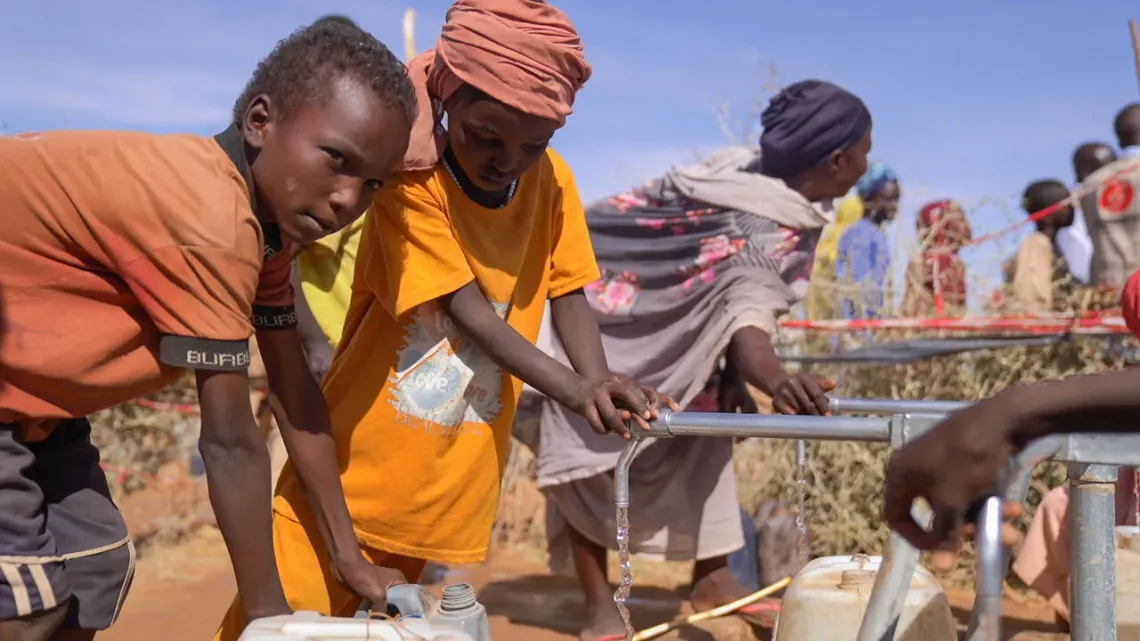
Safe water- the first line of survival
For families living in crowded shelters, access to safe water can mean the difference between health and illness.
Insufficient supplies heighten the risk of waterborne diseases such as diarrhoea and cholera. UNICEF and partners are sustaining water, sanitation and hygiene services across Tawila — including daily chlorination of public water points — to help ensure safe drinking water for newly arrived and long-settled families alike.
“Since we arrived, we have access to water and they always give us some food,” Doha says quietly.
Alongside water distribution, sanitation services and hygiene promotion — including hand-washing at critical times and safe water handling — are helping reduce disease risks. Emergency latrines are also being constructed to limit open defecation and improve dignity for families.
Saving children’s lives in displacement
Across Tawila, overcrowded living conditions leave children — especially the youngest — vulnerable to illness.
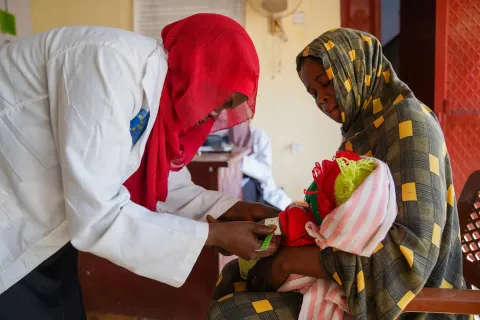
During a recent measles-rubella vaccination campaign supported by UNICEF, more than 141,000 children were immunized against preventable diseases that spread easily in such environments.
Nutrition care remains another lifeline.
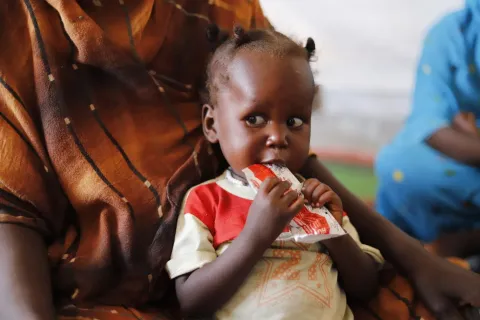
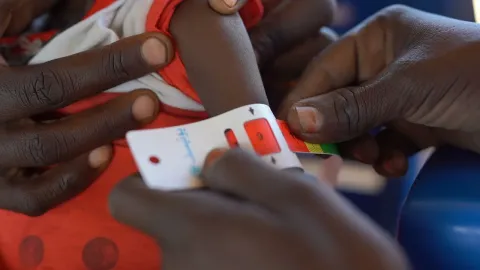
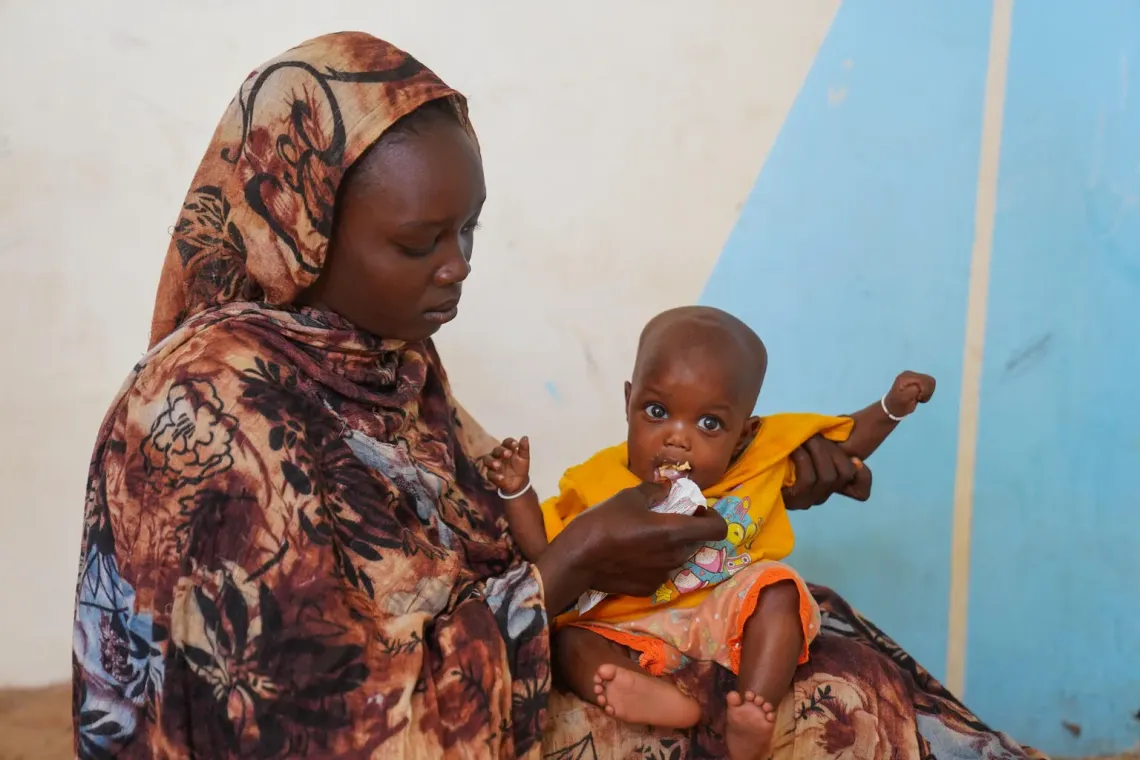
At one health facility, Hadiat arrives carrying her eight-month-old daughter, Fatima, who is severely malnourished. After screening, Fatima is enrolled in a nutrition programme and receives life-saving therapeutic food.
Perched on her mother’s lap, Fatima coos as she eats.
For mothers like Hadiat — forced to flee everything familiar — such services offer a fragile sense of stability in an otherwise uncertain world.
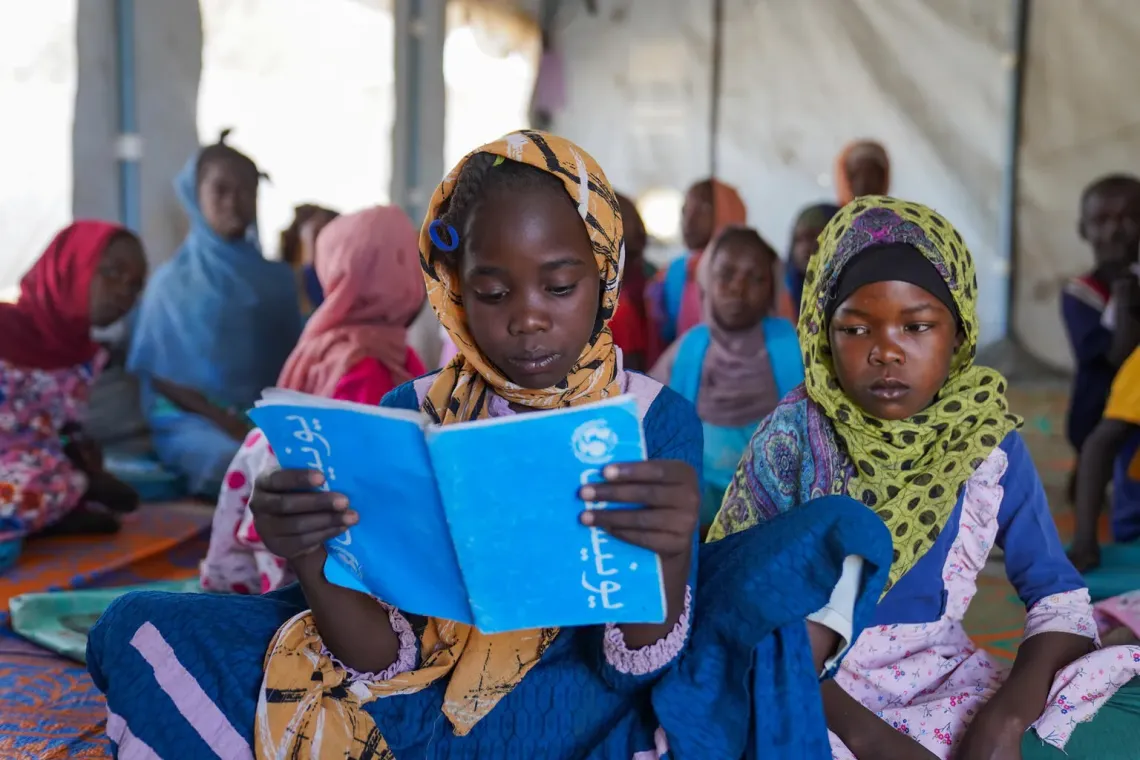
When education cannot wait
While mothers like Hadiat struggle to keep their children alive, the education of thousands including Doha cannot wait. For more than two years now, the war has robbed the children in Sudan of their right to an education.
Back in Al Fasher, Doha attended school and dreamed of a brighter future. English was her favourite subject. She hoped to become a teacher — and to master the language she loved.
In Tawila, that dream feels distant, but not gone.
“I want to be a great teacher to teach children like these ones around me,” she says, smiling.
For millions of displaced children like Doha, who have already lost so much, education is more than a privilege — it is a lifeline. Every day out of school makes returning less likely.
Since the onset of the mass displacement, UNICEF has supported the reopening of more than 30 schools in Tawila, distributed essential teaching and learning materials, set up 30 safe learning spaces for children to play and learn as well as 25 Accelerated Learning Programme (ALP) centres where children can catch up on lost learning.
Starting afresh
As Doha and her family settle in Tawila, they remain close, holding onto one another in a place still unfamiliar.
Young and energetic, Doha remains determined to rebuild her future despite the hardships she faces.
With the support of the Governments of Sweden, Canada, the United States of America and the United Kingdom, the European Union Humanitarian Aid (ECHO), the UN Central Emergency Response Fund (CERF), and UNICEF’s Global Humanitarian Thematic Funds, UNICEF continues to respond to urgent needs through:
- Clean and safe drinking water.
- Sanitation services.
- Integrated health and nutrition care.
- Immunization campaigns
- Child protection services, including support for unaccompanied and separated children.
- Safe learning spaces
- Reopening schools.
Like thousands of children in Tawila, Doha is holding onto hope — that one day soon she will sit in a classroom again, open her books, and continue chasing her dream of becoming a teacher.