Hope Amidst Conflict
A Sudan free from Maternal and Neonatal Tetanus

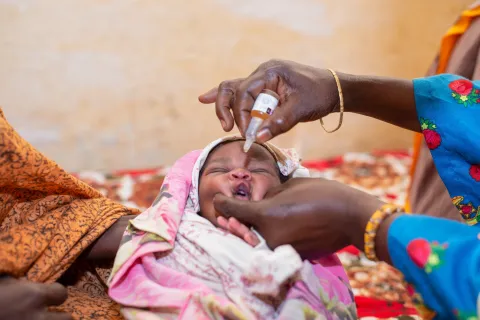
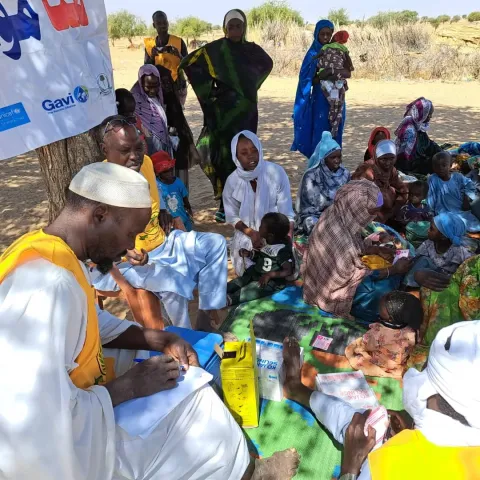
From afar, Al Jubarab Primary Health Care Centre appears quiet. But a step closer, the silence disappears. Mothers move in and out of the consultation rooms, children cry softly, and health workers call patients forward. The remote UNICEF-supported facility, which offers integrated Maternal and Child health services, remains a lifeline for hundreds even amid the protracted conflict affecting much of Sudan.

UNICEF/UNI907935/Mohamed Dawod
"The vaccine will protect me and my baby."
Zaineb, expecting her second child, arrives early for her antenatal care visit. As the midwife shares the good news of a healthy pregnancy, she also reminds her of the importance of receiving the tetanus vaccine: a simple but life saving measure that protects both mother and newborn from deadly neonatal tetanus.
At the entrance of the maternal wing, Madina, a diligent health worker, checks patient cards and verifies their tetanus vaccination status. “I have to confirm they received all their doses,” she says, noting that education and reassurance have helped many mothers understand the value of protection at birth.
Across the room, Massara, a vaccinator, prepares the tetanus doses. “I vaccinate more than 20 women a day,” she explains. “It was difficult in the beginning as many refused. But after sustained awareness sessions and community outreach, women now come willingly.”

“I vaccinate more than 20 women a day.”
The milestone
These frontline health workers, midwives, vaccinators, and community health staff have been instrumental in securing the progress celebrated across the country today. Their efforts helped Sudan achieve Maternal and Neonatal Tetanus Elimination (MNTE), validated through a rigorous World Health Organization-led process using the most recent pre-conflict data from 2022.
Because insecurity made standard field surveys unsafe, the validation followed an adapted WHO-approved approach designed for fragile and conflict-affected settings. This involved an in-depth review of district-level data on neonatal tetanus surveillance, clean and safe delivery practices, and protection at birth, with a particular focus on districts considered most at risk. The assessment confirmed that all 188 districts met the criteria for elimination, demonstrating that the risk of neonatal tetanus had been reduced to extremely low levels nationwide.The validation highlighted Sudan’s remarkable achievements despite conflict, displacement, and health system disruptions. A network of trained midwives strategically deployed across communities at a ratio of one per village (2000 population) ensured clean and safe deliveries, even among displaced populations. In 2022, 183 out of 188 districts surpassed the WHO threshold of 70 per cent clean delivery coverage, demonstrating the resilience of Sudan’s maternal health system.
Sudan also implemented targeted tetanus vaccination campaigns between 2016 and 2019 across 78 high risk districts, reaching more than 3.5 million women of reproductive age. An impressive 95 per cent of these women received at least two protective doses. These supplementary immunization activities, combined with routine tetanus vaccination through antenatal care, played a critical role in strengthening protection at birth and building long-term immunity.

A win for children and women
For years, neonatal tetanus, a silent but preventable killer, claimed the lives of newborns within their first days of life, particularly in settings with unsafe delivery practices and poor cord care. Today, amid ongoing conflict and population displacement, the elimination milestone achieved with support from The Church of Jesus Christ of Latter-day Saints , offers hope and a renewed pathway toward safeguarding mothers and newborns.
Sustaining these gains, however, remains essential. Conflict-related service disruptions, the displacement of pregnant women, and gaps in private sector reporting continue to pose risks. Continued investment in routine immunization, the integration of Td booster doses into the national schedule, enhanced community-based surveillance, and the strategic deployment of midwives to underserved areas will be critical to protecting future generations.
For mothers like Zaineb, and for countless newborns across Sudan, this achievement represents far more than a public health milestone; it is survival, dignity, and the promise of a healthier future.
UNICEF does not endorse any brand, company, organization, product or service.