Fighting the cholera outbreak
Amidst the conflict, Sudan Health Ministry and UNICEF launch a cholera vaccination campaign

Zainab, a displaced mother, and teacher from Khartoum washes vegetables before preparing a meal for her family.
In the background is a container with boiled drinking water well covered to prevent contamination by flies.
Occasionally she reminds her children that exposing food to flies, failure to wash hands after using the toilet, before cooking and eating as well as drinking unclean water contribute to the spread of cholera.
All this, she has learnt from health educators that frequent their homes creating awareness on the danger of the recently declared cholera outbreaks in Sudan.
After fighting broke out in Apirl in Khartoum, Zainab did not sleep until she had brought her family to safety outside of Khartoum.
Today, Zainab her focus is on protecting herself and loved ones from Cholera during very difficult circumstances. Faced with insufficient water, overcrowded gathering points for families which fled the fighting, poor hygiene and sanitation conditions, Zainab, and many other displaced families, are at risk of the highly contagious and life-threatening disease.
“We suffer because there is no water in most neighborhoods in the state, and people stand in long lines carrying buckets to fill them with water,” Zainab says.
The compounding impacts of the conflict in Sudan are increasing the vulnerability of children and their families, exposing them to disease outbreaks including cholera.
Confirmed cases have been reported in Gedaref, Kassala, Red Sea, White Nile, Blue Nile, Sennar, Gezira, South Kordofan states and Khartoum the war-torn capital. Since the outbreak started, about 4,500 cases and 142 associated deaths have been reported to the Federal Ministry of Health.
Cholera is highly infectious and can kill children in a matter of hours.
Zanaib confirms “Cholera is a bad disease transmitted by flies and we must do everything possible to prevent. We must take quick action to address its spread in the country.”
While the Federal Ministry of Health in partnership with partners including UNICEF have invested in preventive measures to stop the outbreak, a cholera vaccination campaign was recently launched in high-risk states to supplement earlier efforts, subsequently protecting communities.


Vaccination during the crisis
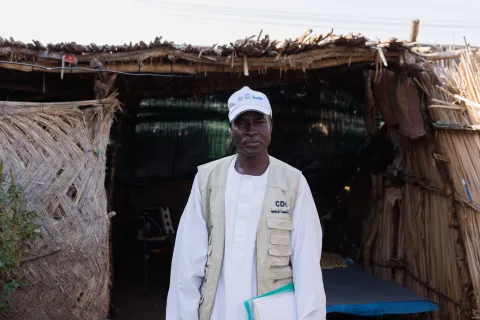
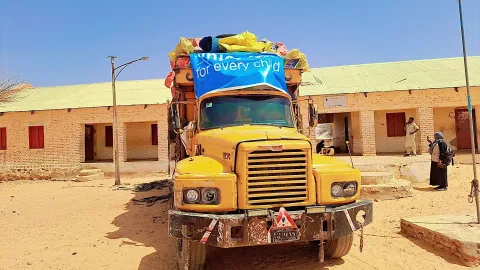
In Madani, health teams arrive at the cold chain facility for vaccines and other supplies that will support the campaign. The vaccines were procured with UNICEF support and funding from Gavi.
Zainab and her family have heard about the campaign and with her lead, they all head out to the nearest vaccination point. One by one, the adults and children receive the vaccine.
“All people should get their vaccinations. The vaccine will take away this very difficult disease,” Zainab shares as she encourages mothers, caregivers, and their children to participate in the vaccination exercise.

Children are taking the vaccine and provided with vaccination cards.
While adults and children are at risk of contracting cholera, children remain more at risk and suffer the most, particularly when weakened by hunger and malnourishment.
In Gezira state 99 per cent of the target population - 686,739 people were reached and protected from cholera during the campaign. A similar campaign launched in Gedaref reached a total of 1,534,230 children and adults.
An integrated approach to stopping the outbreak
Across the 18 states, Ministry of Health in partnership with UNICEF and partners are implementing an integrated multisectoral cholera response action plan to contain the spread of the life-threatening disease through Water, Sanitation and Hygiene (WASH), health, nutrition, Risk Communication and Community Engagement (RCCE).
UNICEF has also prepositioned critical supplies like water purification tablets, medicines, oral rehydration salts, Acute Water Diarrhea (AWD) kits, interagency kits, deworming tablets, and cholera kits to support the response. Cholera response teams on the ground are maintaining supplies at oral rehydration therapy corners (ORT), Cholera Treatment Centers (CTC), primary healthcare centers, and supporting capacity building for health workers and risk communication and social behavior change interventions.