Empowering Sudanese women to protect children against all odds
"I must be part of this programme. Children need vaccinations, and I can help," Souad

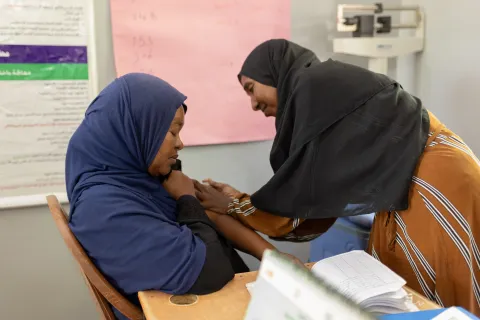
The women of Sudan are pioneers. They play a vital role in building trust, encouraging community participation in health programmes, and supporting their families. Despite working under challenging conditions, these women are essential to community health efforts and help protect future generations' well-being.
Sakina is a Sudanese woman in her mid-thirties and a mother of five girls. She lives in Aj Jazirah State, where the Blue Nile floods villages and farms. Despite these natural challenges, Sakina was preparing for a new mission. Her struggles were not limited to the floods- the country was grappling with war, harsh economic conditions, and a vaccine-preventable disease (VPD) outbreak that made life even harder.
As a healthcare worker and vaccinator, Sakina needed to conduct outreach sessions to reach flooded and inaccessible areas. The roads were muddy and often impassable. Using a four-wheel-drive vehicle, she transported boxes of vaccines. In the most remote areas, Sakina sometimes had to walk or use boats to reach those in need. She faced numerous challenges, including a lack of medical supplies and diseases caused by polluted water. Despite these hardships, her determination never wavered.

On one occasion, her vehicle got stuck in the mud, forcing her to walk a long distance to reach a remote village. Sakina brought hope during difficult times. She vaccinated children, shared health advice with women, and left feeling proud of her work. At the end of the day, although exhausted, she returned home with a sense of accomplishment. She knew she had made a difference and helped save lives.
In another part of Sudan, lived Souad. The ongoing war had left her home in ruins and scattered her family, but her sense of responsibility toward her community remained unshaken.
Souad did not have the chance to continue her education, but she understood the value of knowledge. Before the war, she took first aid courses and actively helped her community. She educated mothers, supported her neighbors, and participated in vaccination campaigns. When she heard about a new vaccination campaign to protect children from rapidly spreading diseases, she felt compelled to join.
"I must go." "I must be part of this programme. Children need vaccinations, and I can help."
The road was not easy. Cut-off routes, numerous checkpoints, and the constant fear of stray bullets made every journey dangerous. Yet Souad persisted. When she arrived at each village, the community welcomed her with open arms. She vaccinated children, raised awareness among mothers, and provided support to anyone in need. Each child she vaccinated felt like her own. Although extremely tired at night, she knew she was making a difference and helping to save her community.

Hawa lived with her son, Youssef. Like many Sudanese mothers, her heart was heavy with fear, but her hope for a better tomorrow remained steadfast. Life was extremely difficult; food was scarce, medicine was unavailable, and the threat of violence loomed constantly. Yet, Hawa knew she had to protect her son from diseases that could jeopardize his future.
When Hawa heard about the vaccination teams going door-to-door to protect children, she felt a spark of hope. "This is the opportunity I've been waiting for. I must protect Youssef," she thought. However, the teams could not reach every area due to the ongoing conflict. Hawa walked long distances, refusing to give up, and asked about the teams and their whereabouts. She met other mothers who shared her determination to vaccinate their children.
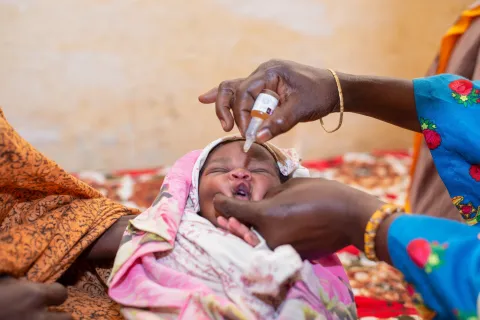
After a persistent search, Hawa finally found the vaccination team. Overjoyed, she felt as though she had discovered a treasure. She ensured Youssef was vaccinated, fulfilling what she saw as her most important duty as a mother. At that moment, she felt she had provided him with one of his most basic rights—protection from preventable diseases. Holding Youssef close, she returned home feeling empowered and hopeful for his future.
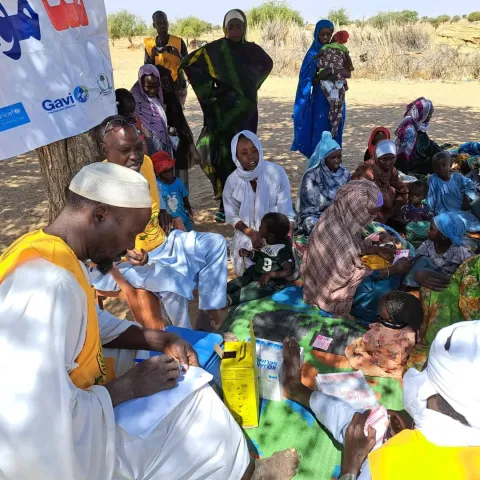
The stories of Sakina, Souad, and Hawa exemplify the courage and resilience of Sudanese women. They are representative of the 70 per cent of women among the more than 3,000 trained vaccinators who have contributed to reaching over seven million children with Measles Rubella (MR) vaccines. The funding from the donor contributed to the capacity building and logistics of distribution of vaccines and supplies for vaccination activities
The ongoing conflict in Sudan, which erupted on 15 April 2023, has displaced millions of people and intensified the need for a strong team to deliver high-quality immunization services and ensure everyone has access to essential healthcare. With UNICEF's support, and thanks to the generous funding of the Government of Canada through the Canada for COVAX – UNICEF GLOBAL COVID-19 Vaccine Delivery initiative, the government employs various strategies to provide immunization services effectively, especially during supplementary vaccination activities. Immunization efforts continuously adapt to Sudan's ever-changing and challenging circumstances, with ongoing initiatives aimed at enhancing the capacity of healthcare workers to deliver immunization services effectively. Despite facing unimaginable challenges, Sudanese women are actively working to protect their communities and ensure the health and well-being of future generations.