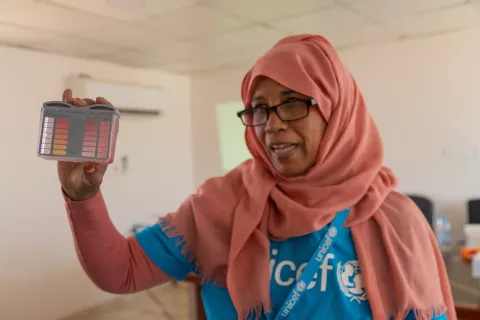
Cholera, another threat to children in Sudan
UNICEF and partners stepping up efforts to stop the outbreak

While the conflict in Sudan now in its six-month mark continues, children and families are facing yet another threat – cholera.
Following a recent declaration of the cholera outbreak by the Ministry of Health, at least three states – Gedaref, Gezira and Khartoum have registered confirmed cases, and these are rising.
The disease that causes acute watery diarrhea is life threatening to the already vulnerable displaced communities and those hosting them in the already congested areas. Young children, especially those under the age of 5, and those suffering from malnutrition are more vulnerable and at risk.
In Gedaref state, cholera has claimed the lives of 35 people including 9 children while more than 1,000 people are still fighting for their lives.
Gathering points hosting thousands of displaced people are over congested and overstretched. This coupled with lack of access to clean water and poor sanitation practices are abetting the transmission of the deadly disease. Without quick interventions, the risk of the disease spreading even further is high.
UNICEF is responding
UNICEF, Sudan’s Ministry of Health, and partners have stepped up efforts to stop the outbreak through an integrated multi-sectoral cholera response action plan that will improve people’s access to life-saving measures including clean water, treatment, and information.

Through the response, the Social and Behaviour Change team has also deployed a rapid response strategy focused on improving knowledge and awareness of the disease - how fast it kills, how to recognize it, where and how to get treatment, and how to prevent getting infected in the first place – all critical to containing the dangerous but preventable disease.
“Health Promotion is a key part of this cholera response,” says Abdelnasir Hassan Ali, Director General of the Gedaref State Ministry of Health.
“In a nutshell: making communities aware of the danger of this disease is the best way to protect them and prevent and fight this outbreak.”
The teams on the ground are also listening to communities to better understand the causes of the high infections and to make sure the response delivered is addressing community needs, preferences, and cultural practices. This will require a collaborative approach.
A total of 200 community health volunteers, trained in community engagement and awareness raising campaigns will conduct house to house visits, group discussions, mobile cinema sessions, and collecting social and behavioural data to better adapt and tailor the response.
Health Promotion Director Islam Mohamed Musa agrees, and adds - “We need to collect social and behavioural data to understand two things: one, where do people prefer to get their information? If I know this, I can reach them via those channels with life-saving messages. Two: what are the main behavioural drivers of infection and community concerns? This information helps me to focus on the right problems and use the right response strategy.”

UNICEF is also prepositioning critical supplies like water purification tablets, medicines, oral rehydration salts, Acute Water Diarrhea (AWD) kits, interagency kits, deworming tablets, and cholera kits to support the response.
To date, the response has been activated in eight affected localities in Gedaref state, reaching more than 80,000 people including over 46,000 children.