Building trust, saving lives
How community trust committees are turning vaccine hesitancy around in Sudan

Immunisation remains one of the most effective interventions for protecting children from life-threatening vaccine-preventable diseases and reducing child mortality. However, millions of children continue to miss out on the full benefits of vaccines due to barriers such as misinformation, disinformation, and lack of trust in vaccines and immunisation campaigns.
In 2023, when a Polio outbreak was confirmed in Sudan’s Red Sea state, the Federal Ministry of Health in partnership with UNICEF and WHO, launched a response campaign targeting children under five years across seven accessible states. Amid ongoing war and mass displacements, which have severely impacted child vaccinations, this campaign was critical in stopping the disease from spreading. Frontline teams in various states were determined to reach every child with lifesaving Polio drops. A critical component of their success was building trust among parents and caregivers, ensuring they played an active role in the campaign and promoted positive practices to encourage vaccine uptake.

Trust-building committees: a channel to reach every child
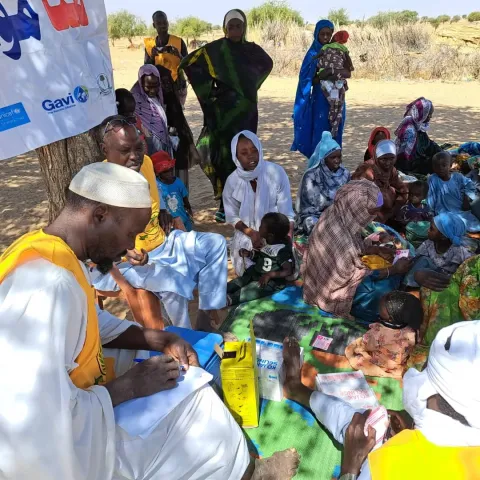
Before the campaign, the Federal Ministry of Health, in partnership with UNICEF and WHO, activated trust-building committees comprising dedicated members committed to generating demand for vaccine services. Their common goal was to protect all children from vaccine-preventable diseases, including Polio.
These committees are made up of trusted, influential community members, known for their excellent communication skills and knowledge about vaccines and the campaign. They are responsible for delivering messages and addressing hesitancy or refusals that may arise during the campaign.
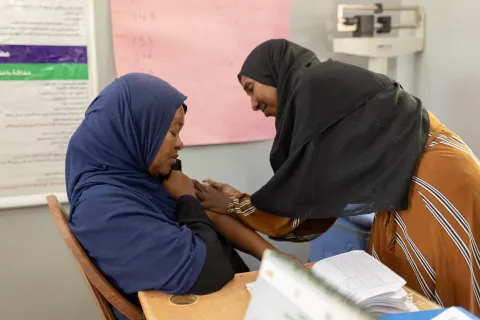
On day three of the campaign, we met Samira and Zahra whose love for their communities and belief in the vitality of immunisation services drove them to join the trust-building committee. Every campaign day, the duo coordinates with vaccination team leaders, collect refusal cases, and works relentlessly to visit parents and caregivers who are hesitant to vaccinate their children, persuading them to protect their children.
Samira and Zahra have been supporting health promotion interventions for six years, delivering messages to the most marginalized communities and addressing their health concerns. Zahra, a native speaker of the Bidawait dialect, one of the major local spoken dialects in the Red Sea, advocates for children’s rights, including the right to health and child immunisation. Although she originally lived and worked in the Qunub and Olieb localities, her passion and dedication drive her to intervene wherever she is needed, ensuring she reaches parents and caregivers who might otherwise miss out on critical services.
“My people deserve to understand and believe in the importance of health services, and our children deserve to be protected by vaccines so they can grow up healthy,” Zahra shared.
Through her efforts, the team ensures that language barriers do not prevent parents and caregivers from making informed decisions for their children. “My people need to be communicated with in their own language since most of them don’t understand Arabic. That way, they can learn more about health services, the side effects of vaccines, and have a platform to express their concerns. This also helps build their trust in the health system and services provided.”
Samira, a Human Rights advocate, dedicates her time to ensuring that everyone in Port Sudan is aware of the importance of child immunisations and that all caregivers accept and demand vaccination services. While Sudan had previously made significant progress in child immunisations, the ongoing conflict is reversing these gains. The disruption in health services, including immunisation efforts, coupled with mass displacements, is negatively impacting vaccination drives as people struggle with competing priorities.
“The war has ruined everything. People are afraid of these vaccines, thinking they are not effective. However, when their fears are addressed properly, they vaccinate their children,” Samira affirmed.
Turning refusals into acceptance
Zahra and Samira arrive at al-Iskan after hearing about a refusal and are determined to reverse it. Hiba, the mother of 7-month-old Safieldeen, has decided not to vaccinate her child.

“I wasn’t sure that the campaign was led by the Ministry of Health and if the vaccine is safe,” Hiba explained.
As is their usual practice, Samira and Zahra listen to the mother to understand her concerns before sharing information about the campaign and backing it up with printed materials specifically designed and produced for the campaign. They also take the opportunity to further educate Hiba about the importance of vaccinating her children and participating in catch-up campaigns for additional protection from diseases such as Polio whenever they are announced.
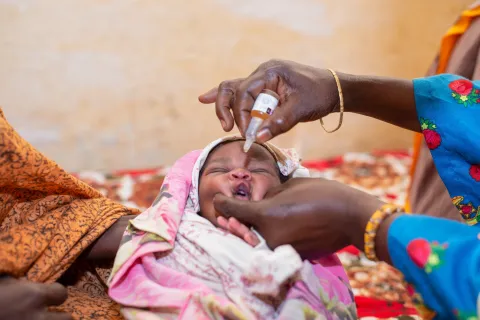
Before the team leaves, baby Safieldeen receives the drops that will protect him from the deadly Polio disease.
“My children’s health and well-being are a priority, and I will always confirm the vaccination teams are from the Ministry,” Hiba added, before committing to vaccinating her child during the third vaccination campaign.
As part of its social and behaviour change interventions, UNICEF is ensuring that trust-building committees, like those in Port Sudan, continue to counter vaccine misinformation and build vaccine confidence among communities. This ensures that every child under five years old, wherever they are, is reached with lifesaving vaccines.
Today, more than ever, as conflict and mass movements of displaced communities continue, every possible strategy must be employed to ensure every child under five years is vaccinated and protected.