Violence prevention and reduction – Creating trust among youth and adolescent labelled as gangs
A story of a passionate case worker helping gangs in Rajaf detention Centre.

As South Sudan continues to emerge from decades of war and conflict -- inter-group and gang violence is a major concern, particularly within Juba and other urban Centers across the country. Increasing gang violence including physical attacks resulting in injury and death, rape, and sexual violence, looting and other forms of harassment have increased as gangs have grown in prominence. The severity of this violence and its impact on civilians must be taken seriously as part of a holistic and proactive protection response.
Peter, a case worker deployed by GREDO, a UNICEF Child Protection partner was identified due to his wealth of experience in working with disadvantage groups.
While at the Rajaf detention Centre in Juba, he and other case workers have provided individual case management support to over 500 youth and adolescents arrested and detained recently.
In November 2023, there was a mass arrest of more than 500 youth and adolescents across Juba thought to be associated with gangs.
This has caused a state of fear among youth and adolescents in the capital. Since then, many of those arrested remain in custody awaiting individual decisions from authorities at the police training centers in Rajaf. These arrests were carried out by police at the national level after directives to address the growing issues with gang violence in Juba.
With an absence of livelihood opportunities for youth in South Sudan such as employment, education, or productive engagement with the community, many youths will continue to rely on gangs as a source of belonging and social support as well as basic daily subsistence from criminal activities. Many gang members also continue to struggle with substance abuse.
Continued dialogue between gang members, youth, police, community leaders/members and provision of case management and psychosocial support services is paramount.
"UNICEF was engaged directly by the SSNPS to help deal with this particular case as well as wider protection programmes for former gang members in Juba and other parts of the country.” the UNICEF South Sudan chief of Child Protection added.
To ensure quality case management and mental health psychosocial support services are provided, Peter, the dedicated case worker was deployed and leads a team of social workers and case worker responding to the gangs members detained at Rajaf Centre. Peter worked tirelessly to support the young individuals involved in gangs while they were in detention. He understood the challenges those young people faced and was determined to make a positive impact on their lives.
Each day, Peter would visit the detention Centre to meet and interact with the youth and adolescents, he would listen to their stories, and offer guidance and support. Peter knew that many of these young individuals had experienced trauma, poverty, and lack of opportunities, which had led them to join gangs for a sense of survival, belonging and protection.
In the first week of the intervention, Peter worked closely with the youth and adolescent at the detention facility to developed personalized case management plan and started providing case by case individual psychosocial support.
Peter with the support of the SSPNS, advocated for better living conditions in the Detention Centre, by ensuring that the youth and adolescents detained had access to food, clothes, water, health care services and recreational activities.
As time passed and with the concerted efforts of the case workers, more and more youth in the detention centre began to show signs of improvement and eagerness to re-engage with their communities. Some youth and adolescent began to open up to undertake better opportunities rather than previous desires to engage themselves in criminal activities that will endanger their lives.
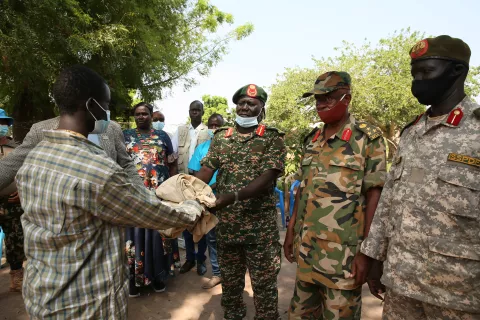
Hope and joy from family members after a successful reunification in Aweil for one of the boys arrested, detained and release through the efforts of the case workers.

Peter’s story is a testament to the transformative power of case workers in supporting individuals involved in gangs and anti-social and violent behaviour. Through his compassion, advocacy, and commitment, Peter was able to help these young people break the cycle of violence and build a brighter future for themselves and the communities.
This story shows that with the right support and guidance young people can change their life for better and even become role models and leaders in the future, making positive contributions to their communities.
With support from donors USAID-BHA and the European Union’s Civil Protection and Humanitarian Aid Operations (ECHO), it’s funding has enabled UNICEF in partnership with the South Sudan National Police Service, the Ministry of Gender Child and Social Welfare, the Ministry of Justice and partners like Grass Root Empowerment and Development Organization (GREDO), to implement case management, mental health psychosocial support, provided supplies and deployed 27 social workers to provide comprehensive case management services to the boys and men detained in Juba, including five inspirators (former gang members) providing peer to peer psychosocial services and recreational support. Additional funding was provided by the UNICEF Spanish National Committee and Norway through the Child Protection thematic funds.