Ordeals of child abduction: the road back to hopes and dreams
How two little girls survived the horrors of child abduction to be reunited with their family in South Sudan.

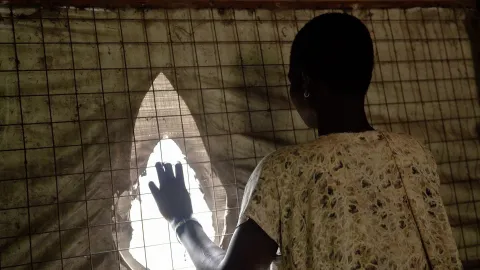
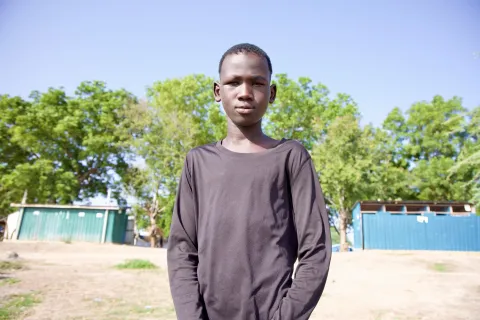
However long the night may be, the dawn will always break. This adage succinctly captures Nyalang's experience. Abducted from a remote village south of Malakal town in South Sudan’s Upper Nile State in June 2020, she was subjected to almost a year of child labour until she was released and reunited with her family.
One evening, armed men attacked Nyanlang’s village, killing her father and elder sister, and running away with her and her younger sibling, Nyandom. “They came in the evening and found me in the room. They shot the guns and took Nyandom in the compound. I also saw my elder sister falling with her child in her arms. My father was attending to cattle near the compound and they shot at him,” recalled Nyanlang.
During their abduction, they were forced to walk for one and half months. Nyanlang and Nyandom along with three other abducted children and a woman, trekked through marshlands, across shrubs, and through game reserves until they reached Pibor in neighboring Jonglei State.
On arrival, the two sisters were separated and handed over to a different set of captors.
Nyalang was forced into the role of a house girl at the tender age of ten: pounding and grinding grains, fetching water, cooking food, and running other household chores. “If I refused, they beat me up,” she said. “I was crying secretly to come back to my mother.”
One morning, her captor demanded that she follow him. Barefooted, they walked on narrow paths that meandered past thorny bushes. Soon, they arrived at the house of a community chief. “I thought he was going to eat me. We were told that if we run away, there were old men who would turn into lions and eat children,” she recalls. It was at that moment, Nyanlang saw her sister Nyandom for the first time in a year. “The chief didn’t eat me. He told us ‘we are taking you to your mother’,” she says. Thereafter, they were taken to a UNICEF-supported childcare center.
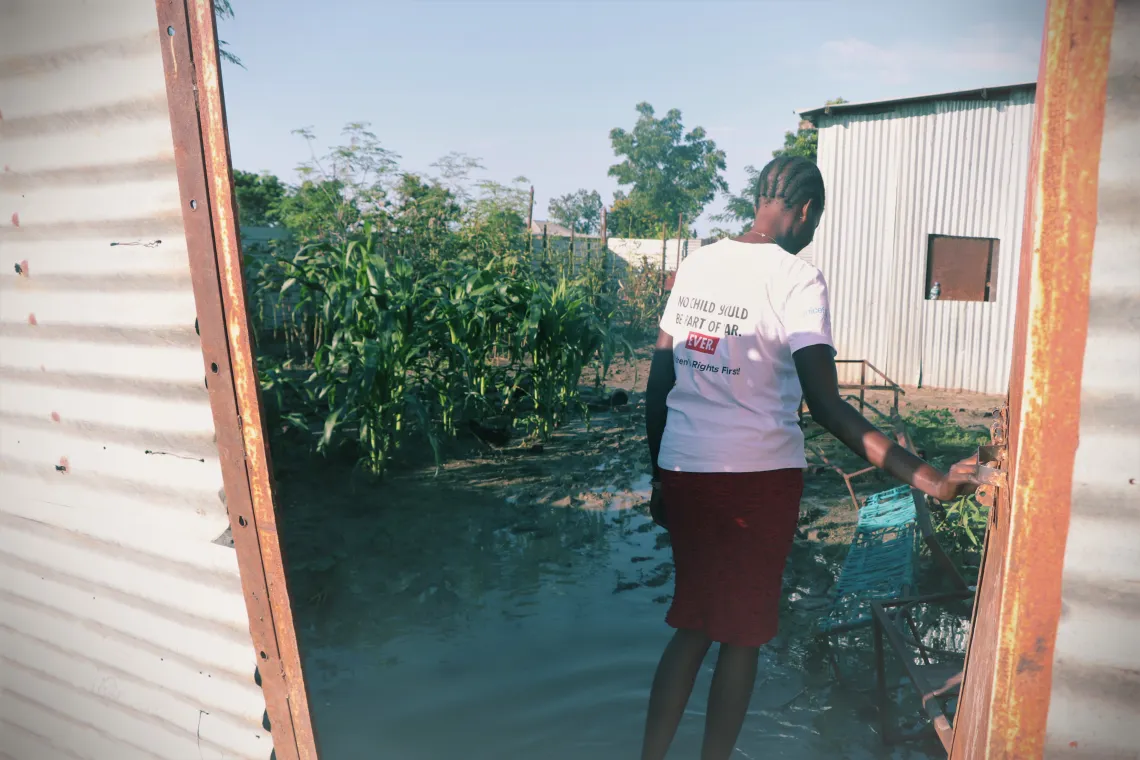
After a tense year of tracing, they were able to reunify the sisters with their family in July 2021. “My heart was jumpy. I was shaking in excitement,” Nyanlang said, thinking back to the first day back with her mother, Aleu. “I was sobbing out of joy for meeting my mother again.” Ms. Aleu was equally overwhelmed. She couldn’t believe that Nyanlang and Nyandom were back. “It was too exciting for Aleu to accept to be true,” says Nyanthab, their aunt and guardian. Nyanlang and Nyandom are currently living in a temporary home with their family in the outskirts of Malakal town, unable to return to their village due to flooding.
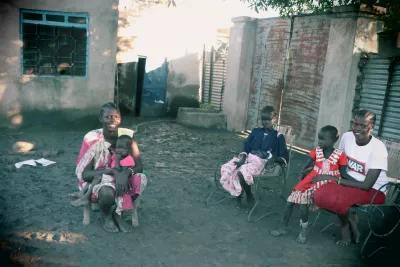
Although the sisters have regained their freedom and happiness, they are yet to fully shake off the memories of violence during abduction and of child abuse in the hands of their captors. “Occasionally, they will withdraw from people even in the middle of laughter and become strangely silent and moody,” says Nyanthab. “It will go away over time. They are still recovering, even Nyandom is still learning our language again,” Ms. Nyanthab says.
Nyanlang and Nyandom’s tale of conflict and natural disaster demonstrates the hardships many South Sudanese children go through. It’s estimated that more than 680 children were abducted across the country in 2020 alone. UNICEF supports centres across the country to help children access mental health support, education, training and family tracing services.
To meet Nyanlang’s family, I had waded with a caseworker through floodwaters to their temporary accommodation. As we entered their iron-sheet fence, the water level was knee-high. She was sitting next to her grandmother and Nyanthab on the highest part of their compound and playing joyfully with Nyandom. Despite part of her house being submerged by water, Nyanlang is hopeful for the future.
“I will start in primary one,” she said, smiling. “If I get a uniform, I will start going to class.” Together with partners, UNICEF will make sure of it.
UNICEF is thankful to Child Protection partners such as the EU, ECHO, the Federal Republic of Germany through KfW Development Bank, the Swedish International Development Cooperation Agency (SIDA), the United States Special Envoy to Sudan and South Sudan (USSESSD), the Spanish National Committee for UNICEF and War Child Holland.