A Long Road Home: Jal’s Journey Through Conflict and Separation
Voices of children caught in a cycle of conflicts

At 14, Jal Wal Both has already travelled farther than any child should have to go alone. Born in Bentiu, South Sudan, he was sent to Sudan as a young boy to live with his aunt and continue school. Life in Khartoum was stable. “Before the war, life was good. I was going to school,” Jal recalls. But when conflict broke out in Sudan in 2023, the routines that had protected him disappeared almost overnight. Fighting forced families indoors, neighbours shared food when movement became too dangerous, and fear settled into daily life.
One day, while his aunt was away at work, Jal fled with neighbours as violence closed in. In the chaos, he was separated from his aunt, the last family member still with him. He was 12 years old. Alone, he fled with other civilians to Rabak, about 260 kilometres south of Khartoum. Once there, he washed clothes to earn money, bought what food he could afford, and searched for places to sleep. Through each day of uncertainty, one hope kept him moving: “My plan was to find my parents again and stay with them,” he says. “I just wanted to go home.”
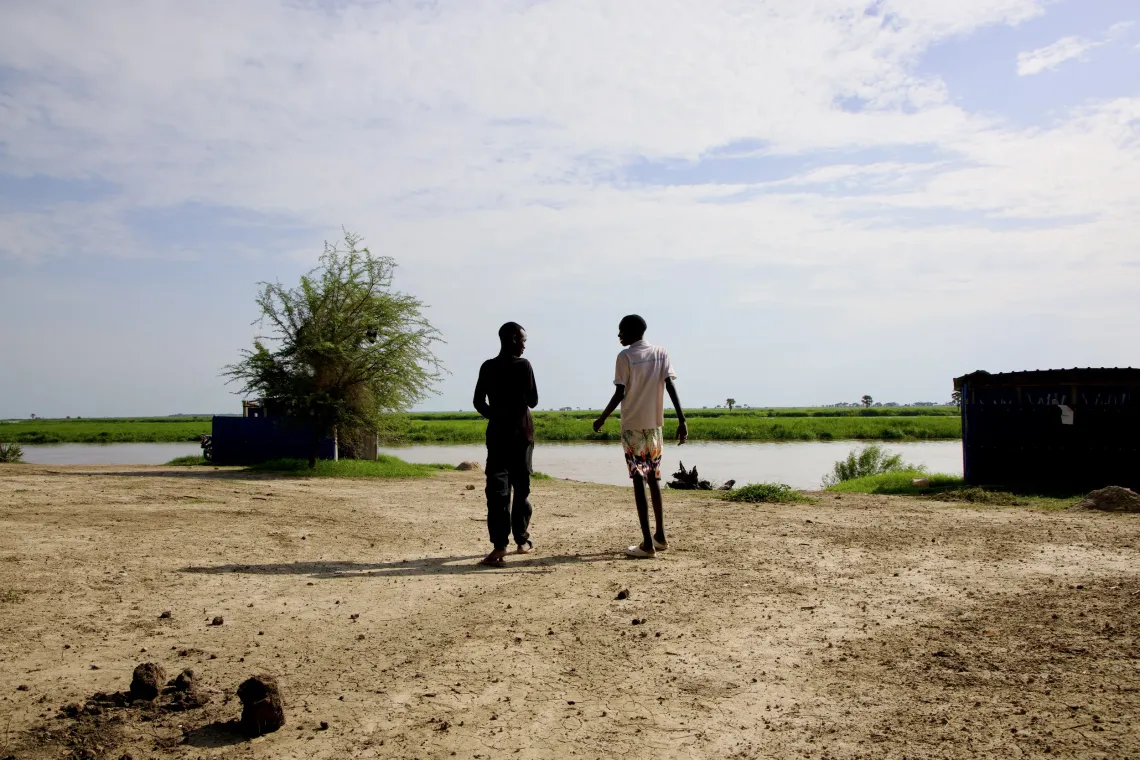
Jal continued his journey to Renk, one of the main border entry points for people fleeing Sudan into South Sudan. Thousands of refugees and returnees have passed through the area, including many unaccompanied and separated children. UNICEF supports services at reception points and provides child protection assistance with government and non-government counterparts, including identification of children at risk, case management, mental health and psychosocial support, and referrals. But Jal’s story also shows how easily a child can be missed in an overstretched emergency response. In Renk town, he continued to survive alone, pushing a wheelbarrow and selling water for food before deciding to continue towards Bentiu.
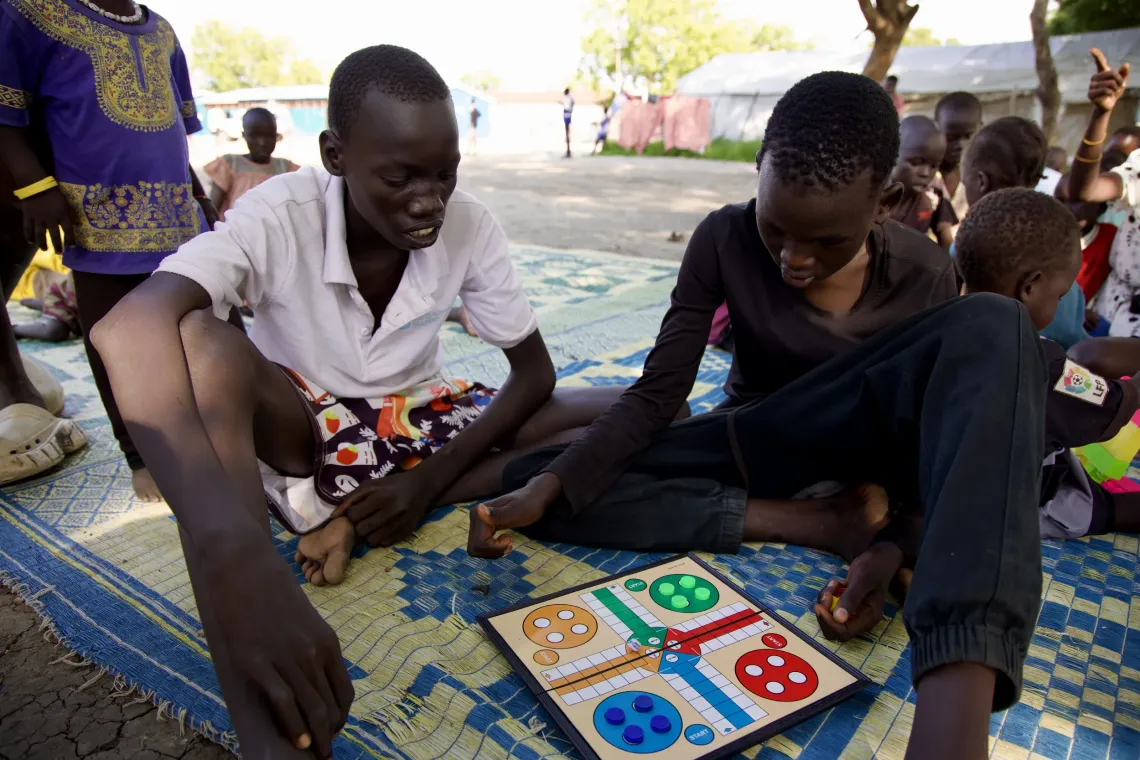
A case worker from UNICEF’s partner, NILE Initiative Development Organization (NIDO), identified him as an unaccompanied child. Jal was registered, received case management and psychosocial support, and was placed with a foster family at the Bulukat Transition Centre. He was introduced to NIDO’s youth and adolescent programme where he was able to relax, play games and make new friends.
Meanwhile Jal’s case was registered on the national Child Protection Information Management System (CPIMS+) and the case worker initiated family tracing procedures. NIDO reached out to UNICEF’s child protection partner in Bentiu, Greater Upper Nile Organization (GUNO). Within days, his mother in Bentiu was traced and a phone number was provided.
“It had been one year since I spoke to my mother. I was very happy when I spoke to her. It did not feel real.”
Her message was simple: “Come home”. UNICEF is supporting Jal’s safe return to Bentiu with a social worker, and continued follow-up will help ensure his protection after reunification. His journey is a reminder that timely child protection support can change the course of a child’s life. For Jal, after everything he has endured, the hope remains simple: “I just want to go home to be with my mother.”
Through the generous support of Norway, the Government of the Republic of Korea and EU humanitarian aid (ECHO), UNICEF’s Child Protection programme is helping build a protective environment for children affected by conflict, displacement and disaster.