Water and Sewage Improvements Transform Lives
in the Gaza Strip

Asmaa Wafi is a single mother trying to raise seven children in Khan Younis in the Gaza Strip. That job would have been difficult enough without the winter flooding that used to turn their lives upside down, bringing fear and filth into her home with the yearly rains. Asmaa and her school-age daughter, Yasmin, stand at the door to their house, showing the decline down which flood waters used to run right into their living quarters below.

“We were drowning in the winter water,” Asmaa recalls. The problem grew worse in her low-lying neighbourhood when sewage lines were connected to the rainwater drains, sending a rush of waste into residents’ homes when it rained, flooding their rooms and forcing them to leave. “Many nights we called the Civil Defence authorities and the municipality. We suffered every winter from the smell of sewage and the skin rashes and mental health effects on children.” Here Asmaa describes how the sewage water would inundate her home from the street above.

Now Asmaa and her children no longer have to fear the winter rains. UNICEF, with funding from the Kuwait Fund, has completed a $3.3 million project to stop the winter flooding in Khan Younis and Deir al-Balah, protecting 80,000 people from flooding and waterborne disease. The project also improved water pumping and wastewater treatment stations to ensure that families will have regular access to water, which requires electricity to reach their homes. Having water pumped into her home is a great time and money saver for women like Asmaa, who can irrigate her trees and using the water to cook and clean without purchasing tanked water.

The project installed four kilometres of large wastewater pipelines underground, diverting rainwater and sewage away from residential areas to wastewater treatment plants. The construction also provided jobs for skilled workers in Gaza, where the unemployment rate was 44 per cent last year. Here workers put in place large cement wastewater pipes after excavating the street.

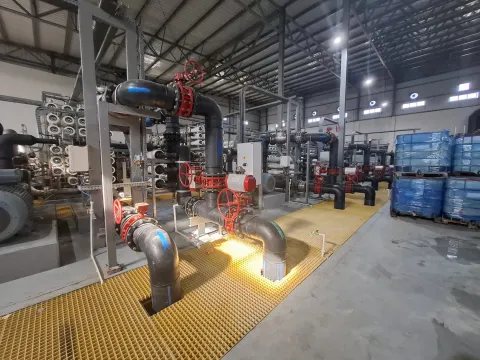
Solar systems were also installed at six different water and wastewater facilities throughout the Gaza Strip, equipping them to run on solar power for more consistent service. Residents have endured long blackouts—as long as 16 hours a day—due to a lack of gas and resources to operate Gaza’s sole power plant. Repeated escalations of the conflict has caused major damages and degraded water and electrical infrastructures. Closure of the Strip in place since 2007 tightly restricts the import of heavy equipment. As a result, upgrades to water pumping and treatment facilities like this one in Khan Younis depend upon UNICEF and other agencies that are able to undertake these types of humanitarian programmes.

Asmaa is thrilled with the changes in her daily routine—now she can focus on providing for her seven children. She is able to furnish her home to increase its cosiness in wintertime without worrying about flood waters and sewage destroying carpets and couches. She doesn’t have to fret about her children being unable to go to school or get home because the flooding has inundated their way. “Now life here is much better,” she says, with a smile. “The project saved many people in the area, especially our children and the elderly.”

Diarrhoea, which can be life-threatening, is one of the main reasons that children visit primary care centres in the Gaza Strip. Reducing wastewater flooding and better access to water for cleaning and personal hygiene are integral components in UNICEF’s strategy to reduce waterborne illness among children in Gaza. Murals and public advocacy encouraging good personal hygiene and handwashing were also a key component in this lifechanging project.