The Struggle for Clean Water Continues in the Decimated Gaza Strip
UNICEF and its partners are installing water tanks in areas where displaced people have congregated, trying to make lifesaving clean water more easily accessible.
- English
- العربية
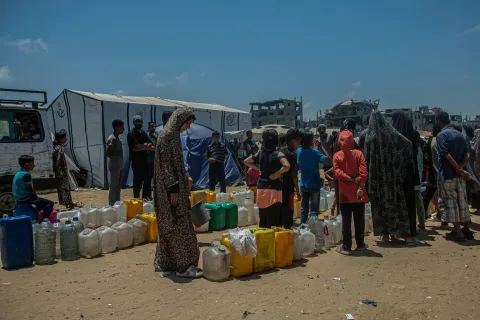
The destruction of homes and infrastructure in the Gaza Strip over the last two years has left tens of thousands of families living in flimsy, makeshift shelters or tents. Very few have access to piped water, and winter flooding and uncleared wartime debris create conditions where bacteria and rodents are rampant. Diseases like Hepatitis A or Acute Watery Diarrhea spread easily and threaten the health of families—especially young children.
UNICEF and its partners are supplying vital clean water to more than 1.6 million people at some point in time, including more than 600,000 children, in Gaza city, Middle and North governorates. This includes installing water tanks near tent cities, trucking water to fill them from private desalination plants or domestic wells every two days, and also making sure that families have clean containers to transport water, supplied as part of a hygiene kit.
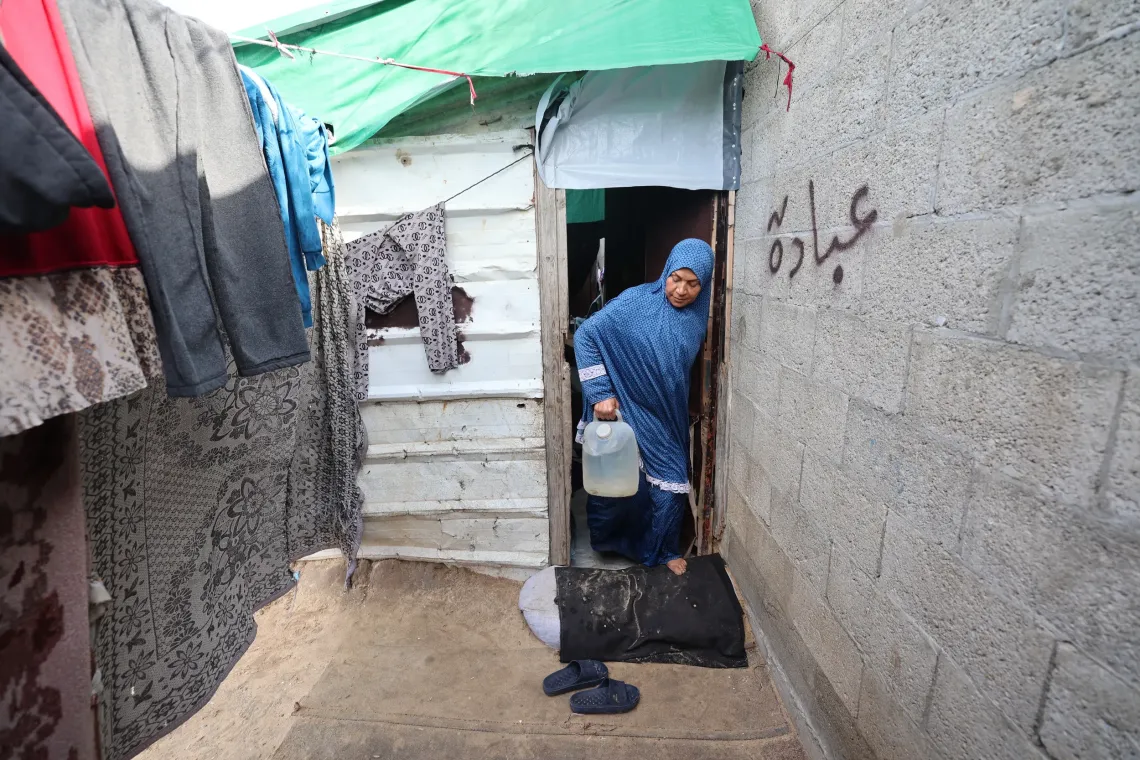
“Before the water tank was installed, I had to walk long distances to get water, even when I was unwell, says Latifa, a mother of eight, whose husband died during the war. “I would come back exhausted, just to bring enough water for drinking and washing dishes.”
Like most Palestinians in the Gaza Strip, Latifa and her family have been displaced several times from their original home in Shuja’iyya in eastern Gaza city. Now she lives in a rudimentary tent in al-Zawayda, central Gaza. “Water was scarce, and sometimes it wasn’t safe. That puts children and sick people at risk.”
The installation of a water tank near her home has reduced the burden of finding water, allowing her to focus on the other important needs of her large family.
“We need more water tanks in the camps,” she says. “Life without clean water is unbearable.”
Providing Minimum Standards
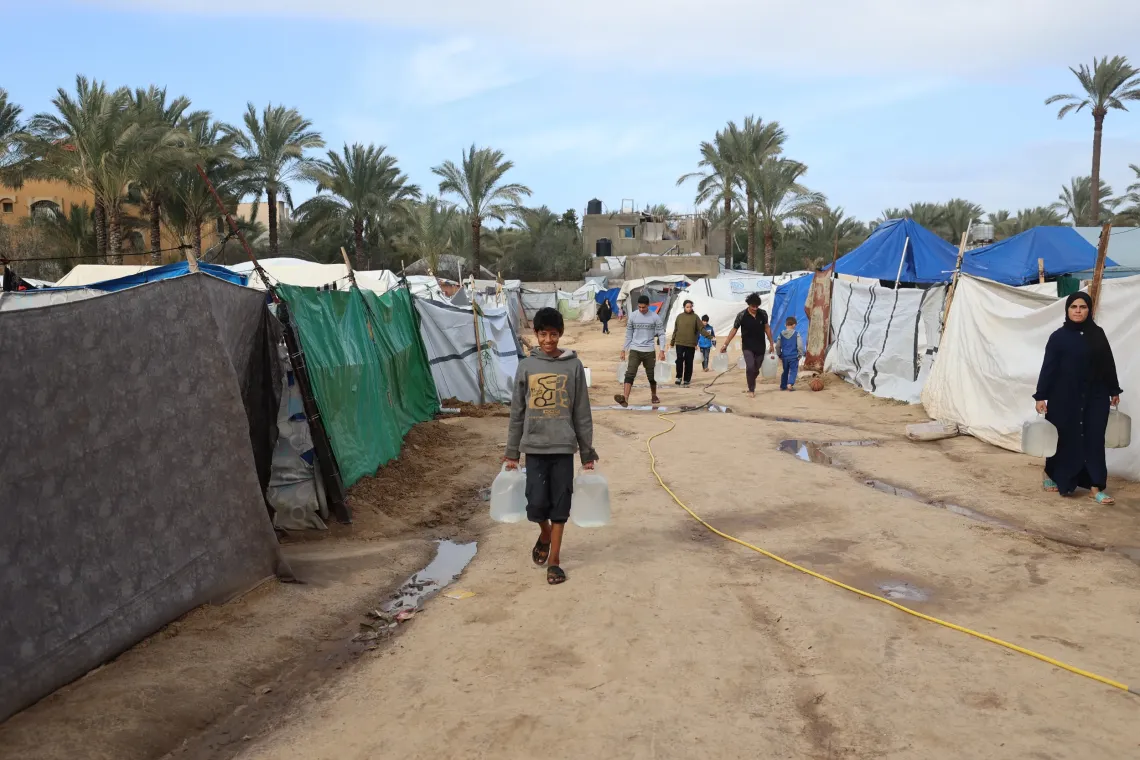
UNICEF, with the support of the King Salman Humanitarian Aid and Relief Centre (KSrelief), has managed to provide these families with the minimum humanitarian standards of 6 liters of per person per day of potable water for washing up, and 9 liters per person per day of clean water for drinking.
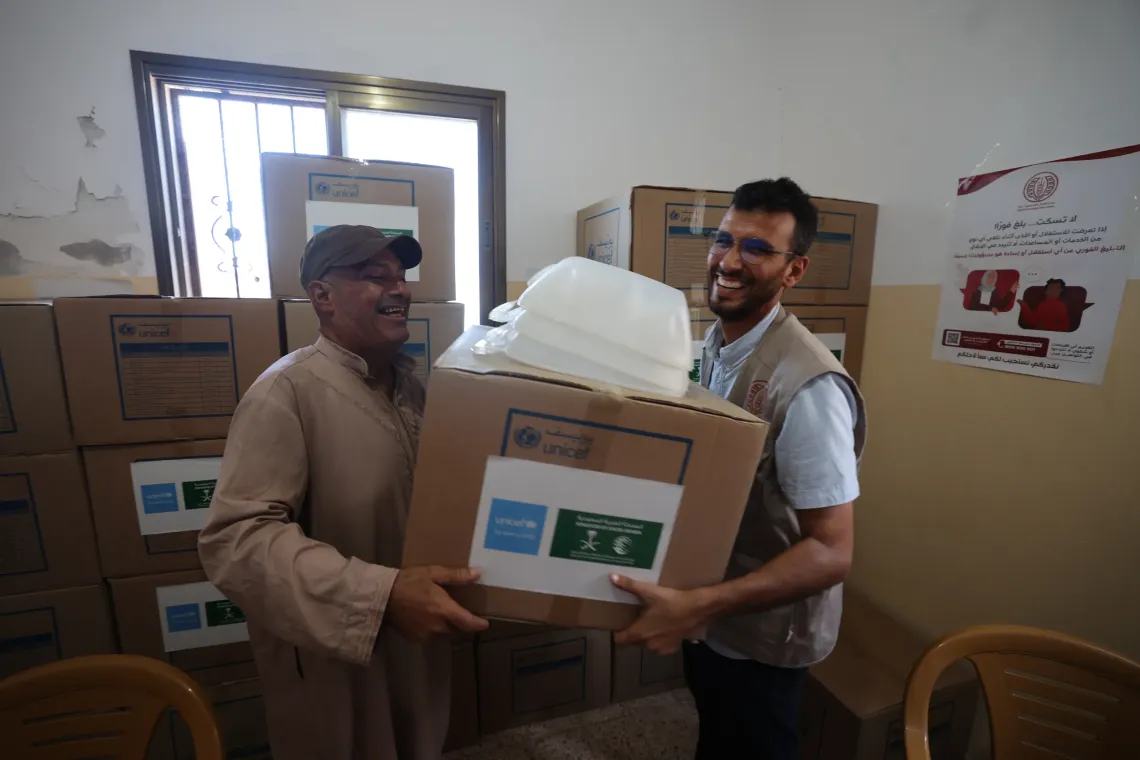
The Supporting WASH Lifesaving Needs programme includes emergency water supply services and the distribution of critical hygiene items, benefiting more than 200,000 people in the southern and middle areas of the Gaza Strip.
A total of 200 tanks (holding 2,000 liters each) and 300 tanks (holding 1,000 liters each) have been distributed to community shelters, health facilities, and learning spaces across North and South Gaza, benefiting approximately 116,000 people. In addition, 17,000 hygiene kits have been distributed, reaching around 106,000 people.
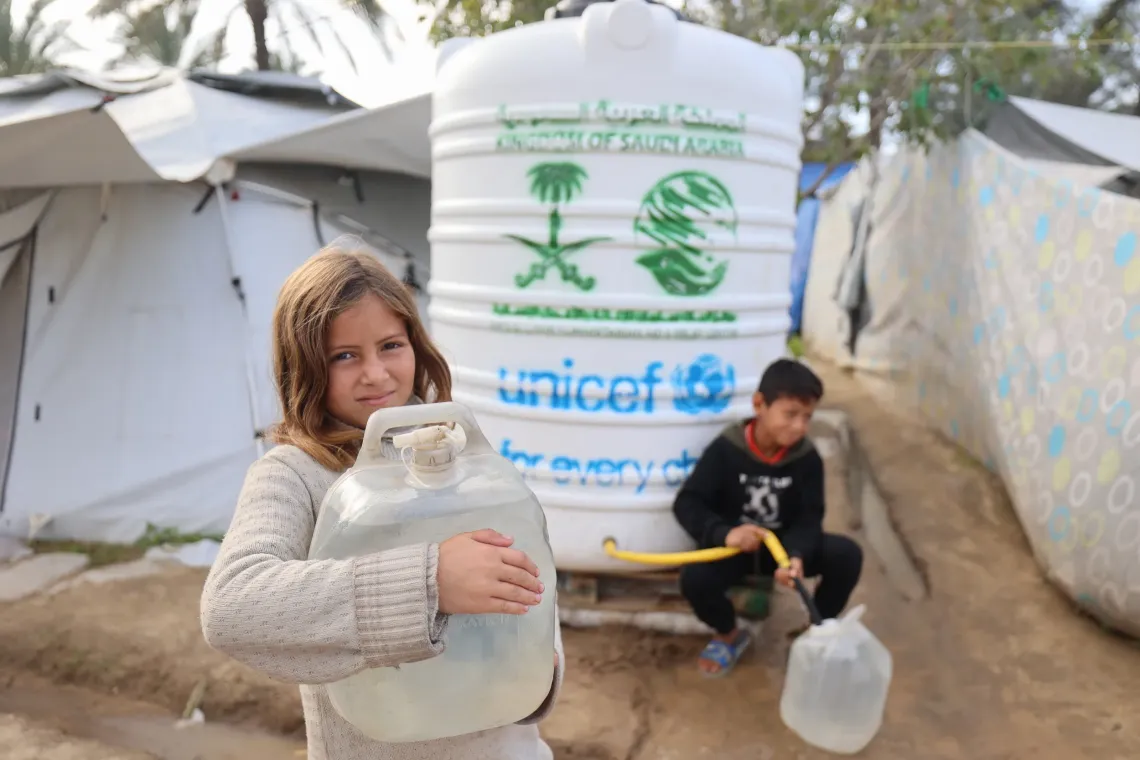
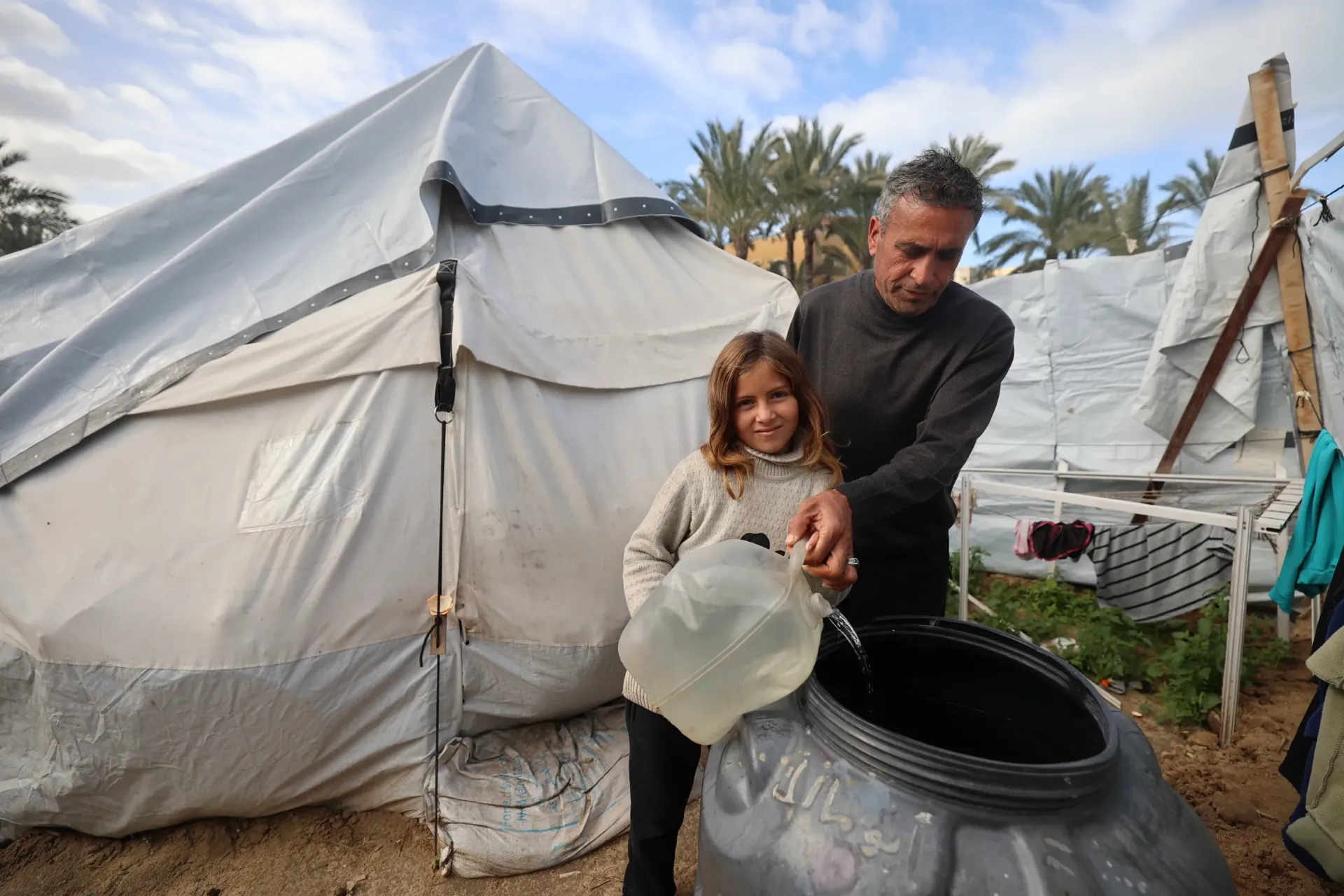
“After we were displaced, the hardest thing was finding safe water,” says twelve-year-old Fatima. Her family was forced to leave Jabaliya Camp when a strike destroyed their home. Now they live in Deir al-Balah, in central Gaza, in a makeshift tent.
“My father used to walk far to bring water,” she says. “Sometimes we had no choice but to use water that wasn’t safe.”
But the installation of a water tank not far from where they live eased that burden and helped them to obtain water for drinking. The chore of collecting water often falls to children, so it is important that the area is nearby and secure.
“Now I can help my family bring water,” says Fatima, “and I feel more comfortable knowing there is a safer source nearby.”