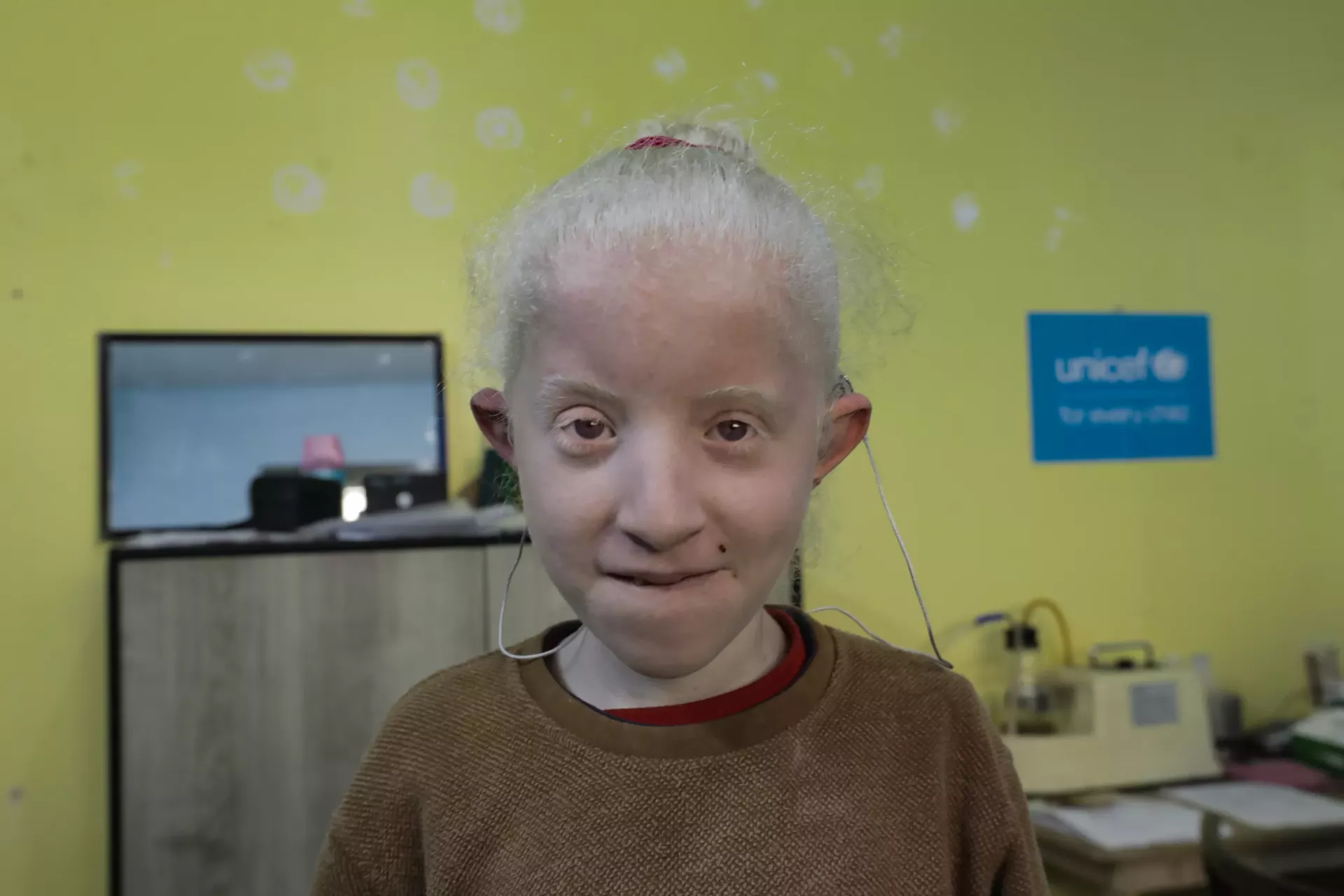
UNICEF delivers critical hearing aids to Gaza children
Without the devices, children with severe hearing loss are unable to hear danger from bombings or engage with their family and friends
- English
- العربية
In the Gaza Strip, conditions continue to worsen. For more than two months, humanitarian assistance has been blocked from reaching over two million Palestinians—as bombardment, malnutrition, dehydration, and disease continue unabated.
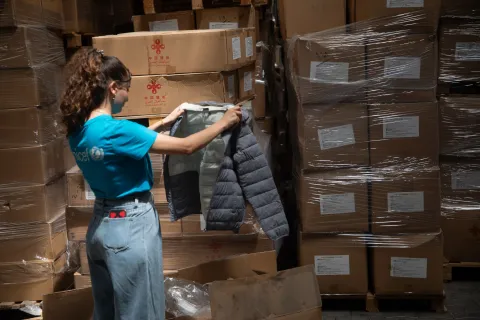
Despite the blockade, UNICEF has managed to deliver 148 hearing aids inside that had entered during the ceasefire. This support is just a fraction of the estimated 10,000 children with hearing loss. About 5,000 of those are experiencing severe hearing loss, often the result of war injuries and a lack of functioning health care.
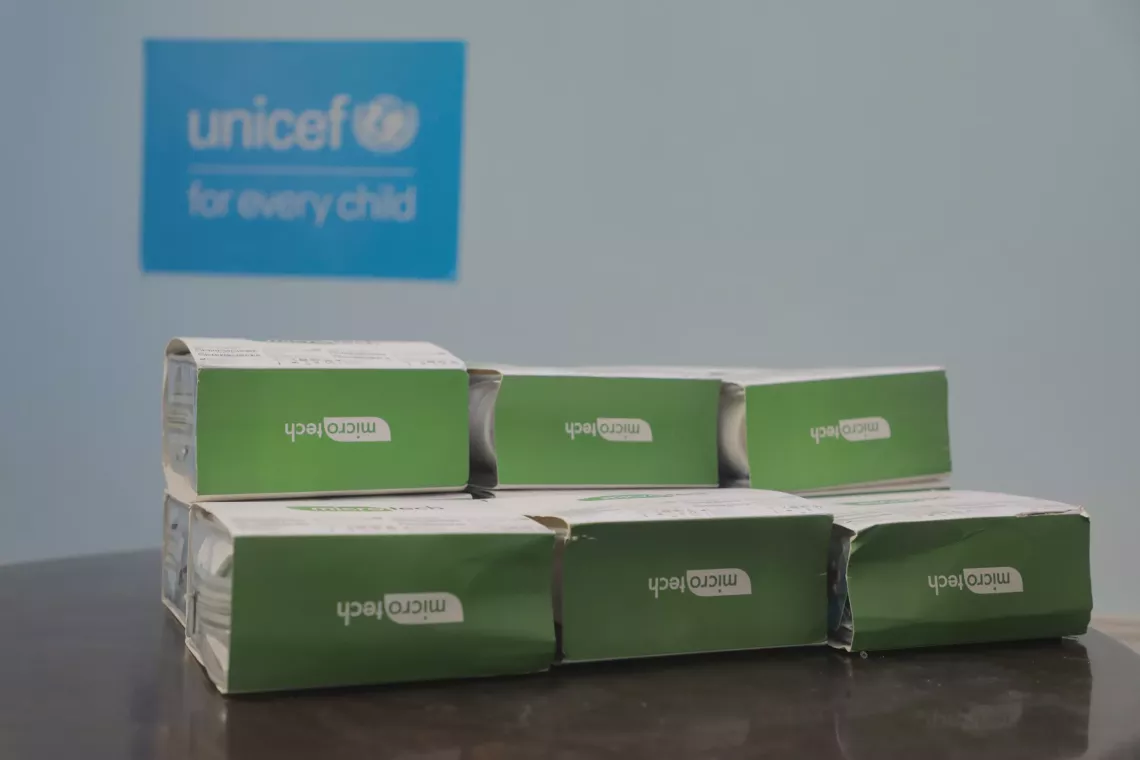
Utilizing flexible humanitarian funding UNICEF procured those hearing aids while continuing to advocate for increased humanitarian access to the Gaza Strip to deliver them and other types of assistance. With hearing aids and batteries scarce due to market shortages, almost all of Gaza’s hearing-impaired children are left to live in extremely dangerous conditions without these critical devices.
“UNICEF remains in the Gaza Strip, doing what we can to support and protect children,” UNICEF Executive Director Catherine Russell said on May 2. “But the aid blockade and more than 18 months of war are pushing Gaza’s children to the brink. We reiterate our call for the aid blockade to be lifted, for the entry of commercial goods into Gaza, for the release of the hostages, and for the protection of all children.”
Heightened Danger
Reem, 13, and Abdelaziz Al-Hattab, 10, are both living with chronic calcium deficiency, a condition that impairs their hearing and sight.
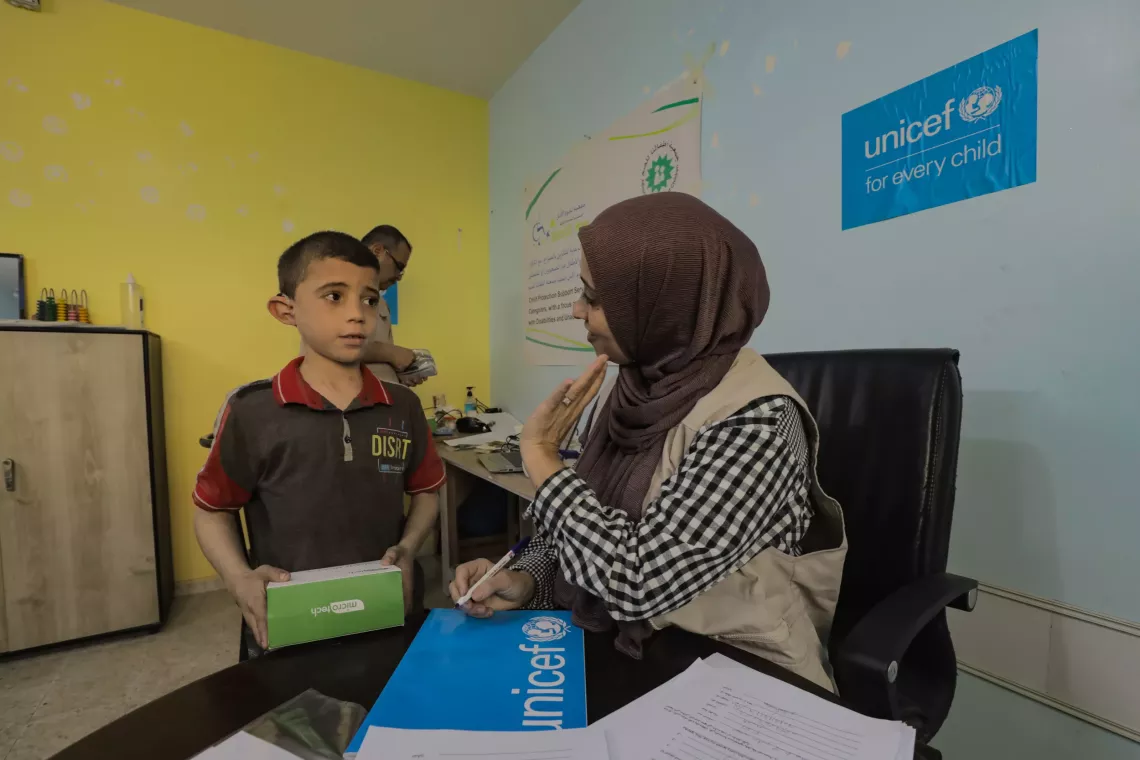
“Throughout the war, the suffering has been immense,” says their mother. “I have five children, and four of them have calcium deficiency—they rely on hearing aids to hear.”
“The war made everything harder. I was terrified of their safety. During the bombings, I would call out to them, but they couldn’t hear me. We had to flee our home many times. In one displacement, we became separated; in another, I called to my daughter Hala—she was right beside me—but she didn’t hear me. The stress of that moment made me dizzy.”
UNICEF was able to outfit the boy and girl with assistive hearing devices that can save their lives in these terrifying conditions.
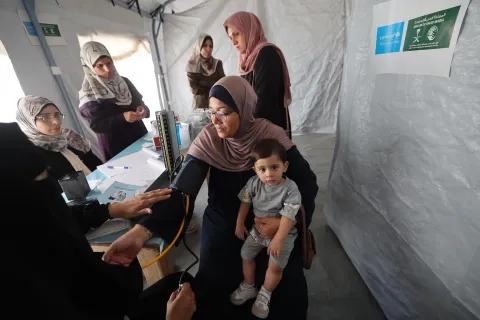
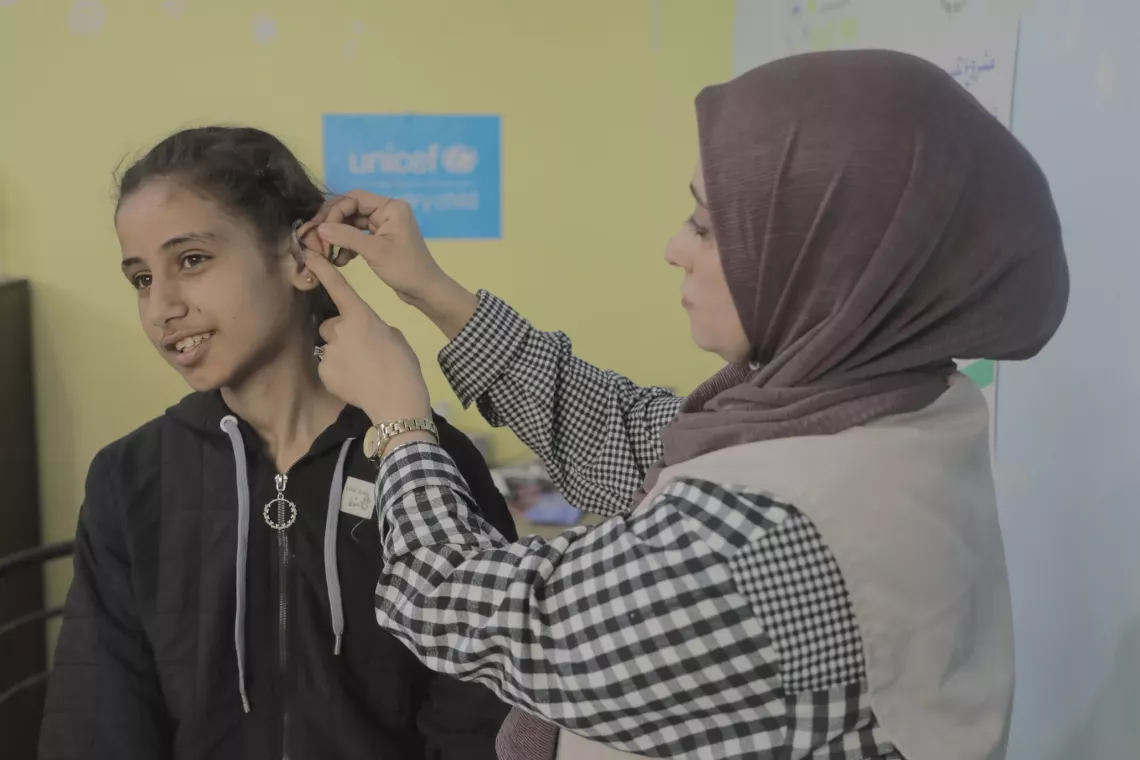
UNICEF’s partners are identifying children with hearing loss through screenings and audiometric testing and then fit with custom earmolds produced locally to ensure the hearing aids stay in place. Already 50 children have received hearing aids, with more fittings planned.
Maryam and Ali Al-Hattou, ages 13 and 9 respectively, were both born with impaired hearing. Their mother was killed during the war in an airstrike on their home. Both children lost their hearing devices in the same attack, and Maryam was left trying to use a single device that frequently failed.
“I enrolled them in a makeshift tent school,” says their aunt Suad, now their caretaker. “But Maryam would often come to me and say, ‘I couldn’t hear anything during class.’” Suad was elated to hear that there were finally assistive devices available.
According to the Palestinian Central Bureau of Statistics, hearing impairment accounts for nearly 20% of all disabilities in Palestine. UNICEF continues to support the most vulnerable children in the Gaza Strip, including children with disabilities. These children have benefited from specialized support such as individual counselling, case management, and cash transfers, addressing both the immediate and long-term psychosocial needs of displaced children and their caregivers.
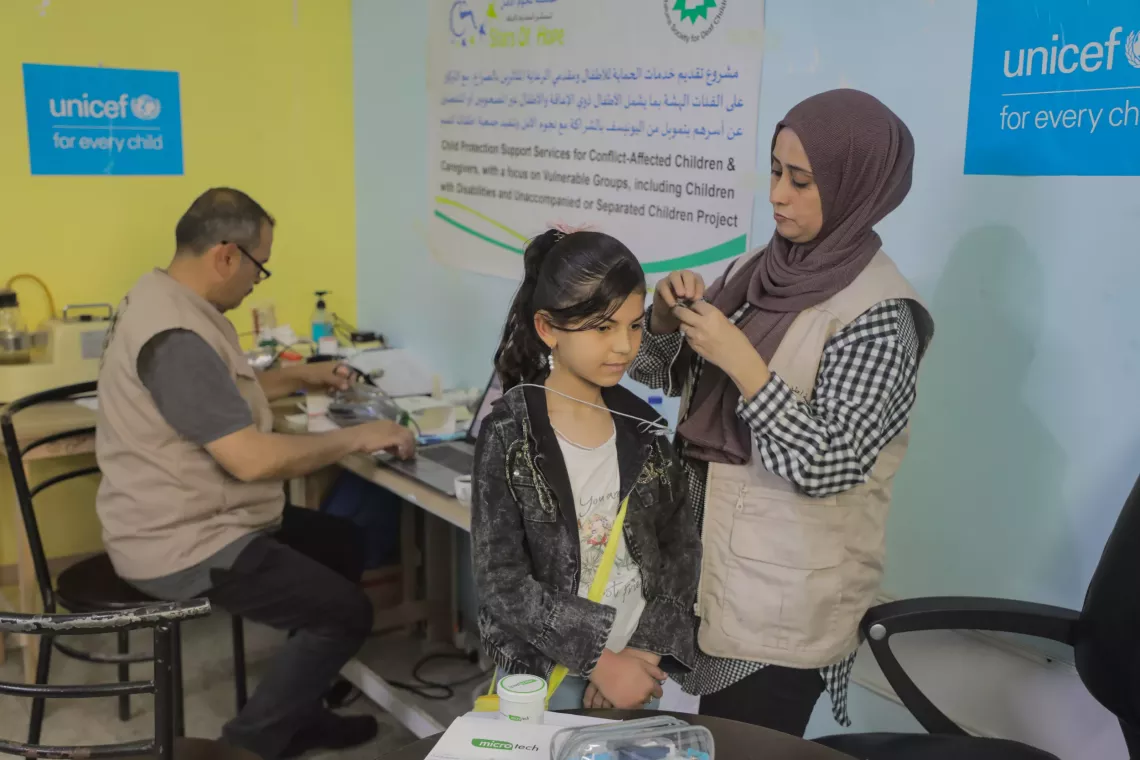
“Mais’s father had promised her a new device, but he was killed during the war before he could fulfill that promise,” says the mother of nine-year-old Mais Shannan. “Now Mais finally has her hearing aid—and she can hear me again.”
Step by step, this joint effort is helping Gaza’s children regain their ability to hear, learn, and reconnect with the world around them.