A Roadmap to Recovery, Written by Children
Through The Gaza We Want initiative, more than 11,000 children have shared their visions for recovery, dignity and hope.
- English
- العربية
In forums far away, the future of Gaza has been put up for debate. But as the world talks of recovery, children here have had more than two years to envision the home they want back.
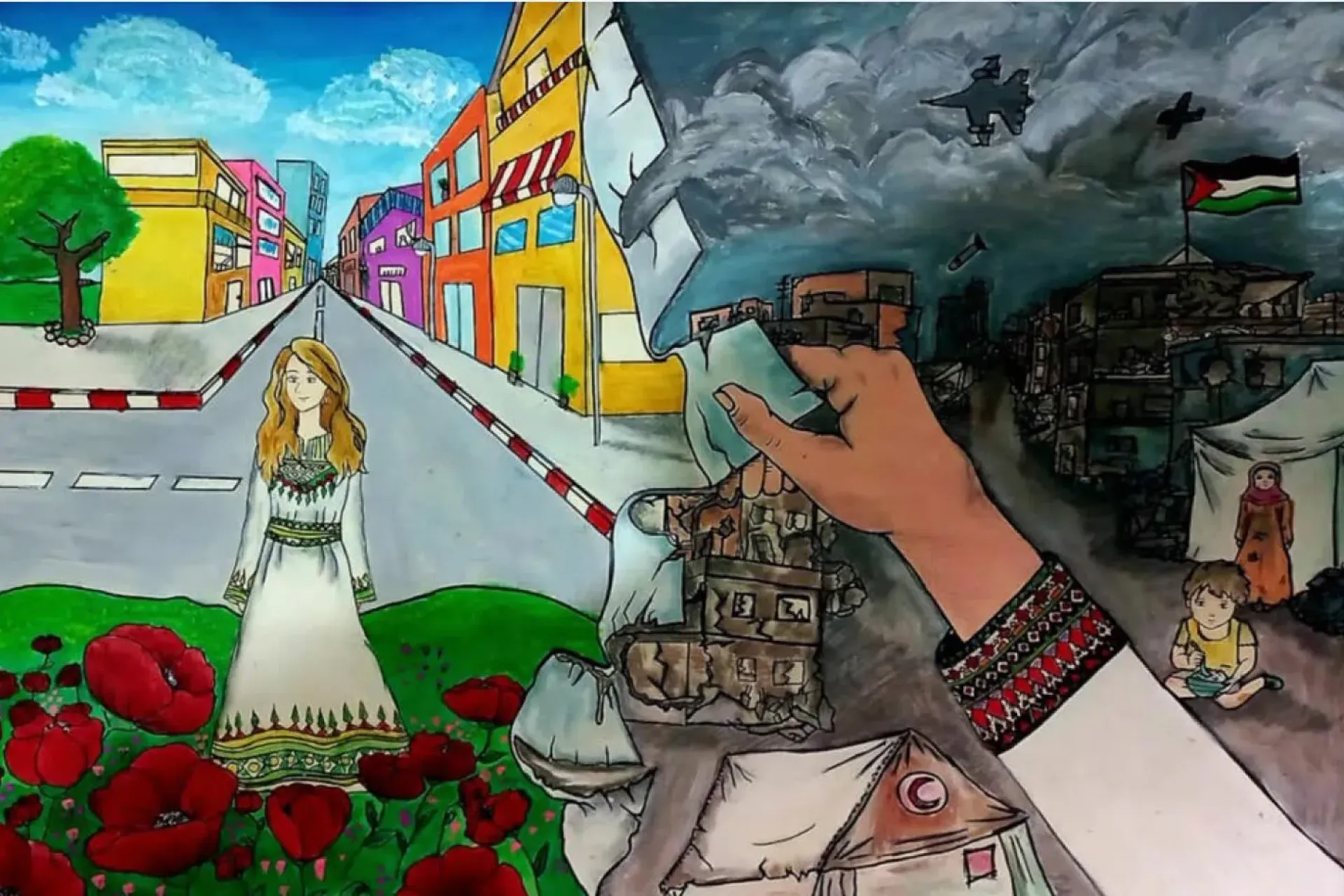
Their perspectives are unlikely to be found in reconstruction proposals. They’re readily on display though in makeshift shelters and classrooms across the Gaza Strip, coloured in pencil and pressed in ink.
“The Gaza I want,” begins a poem by 13-year-old Malak in Khan Younis, “is not a tent pressed against the wind…I want it writing its school assignments, not the names of the deceased. Counting stars in the sky, not airplanes.”
Since the start of this war, the threat of bombardment has followed kids to bed each night. When asked what they need prioritized in recovery plans for Gaza, some 90% say psychological care.

That’s just one figure from a UNICEF-supported survey, part of an initiative that gives children the opportunity to share with the world their visions for their home. The Gaza We Want initiative followed child protection partners across the Strip as they documented kids’ accounts not only of what they’ve endured, but of what must come next.
Safety, shelter and support through trauma are most urgently sought. So too does Gaza’s rising generation of doctors, teachers and engineers long to return to their classrooms.
“The Gaza we want is simple and human. Where children go to their schools, not tents. Carrying pens, not stones,” writes 15-year-old Asma. “We want mornings that begin with hope, not amid the rubble of ruin.”
Children ask for their parks to grow green again, their streets to smell not of the smoke of bombs but of baking bread. They ask that hospitals be a place of healing. And that neighbours can meet once more in playgrounds and places of worship.
“I want Gaza back, better. Not white and black: I want it full of colours. I want it full of flowers. I want it free – strong – as it should be. Don’t ask me how, just hear my dream.”
More than 11,000 children across the Gaza Strip submitted artwork and writing to The Gaza We Want initiative, while 1,603 participated in a structured questionnaire. Each activity was designed to be trauma-sensitive, inclusive and voluntary. No child was asked to re-live violence; they were asked to imagine dignity.

When thousands of children across age groups and geographies invoke similar images – of modern schools, hospitals, parks and dignified neighborhoods – this is no coincidence. It’s an appeal for the world to listen and act.
Children also told UNICEF what they’d like prioritized in reconstruction efforts. First: safety, shelter, learning spaces and mental health support. Then: permanent homes, schools, health clinics and parks. And later: universities, cultural centres and places of remembrance.

This is a roadmap to recovery from children themselves, who have an internationally recognized right to be heard on matters that affect them.
“Life has been so difficult, no child should ever have to live through this,” shared 14-year-old Mayar. “The Gaza I want is a beautiful place with hospitals, schools and safe buildings. I was injured in the war and it affected me a lot. Whenever I hear an airstrike, I get scared. But during the Gaza We Want activity, I felt so much better in my head.”
No child will emerge from the horrors of this war without the imprint of trauma. But Gaza’s future leaders are asking to leave their own mark.
Learn more from the children we surveyed in The Gaza We Want: Children’s voices on life, recovery and the future of the Gaza Strip.