Oday Was Acutely Malnourished and Weak—But Care and Nutrition Revived Him
Gaza’s At-Risk Children Can Recuperate Quickly When Assessed and Treated in Time
- English
- العربية
Ten-month-old Oday was born into an already precarious existence in the Gaza Strip before he lost his entire immediate family in a bombing.
An estimated tens of thousands of children like him are believed to have been orphaned after nearly two years of conflict. Now, in addition, Gaza’s children are nearing a full-scale famine.
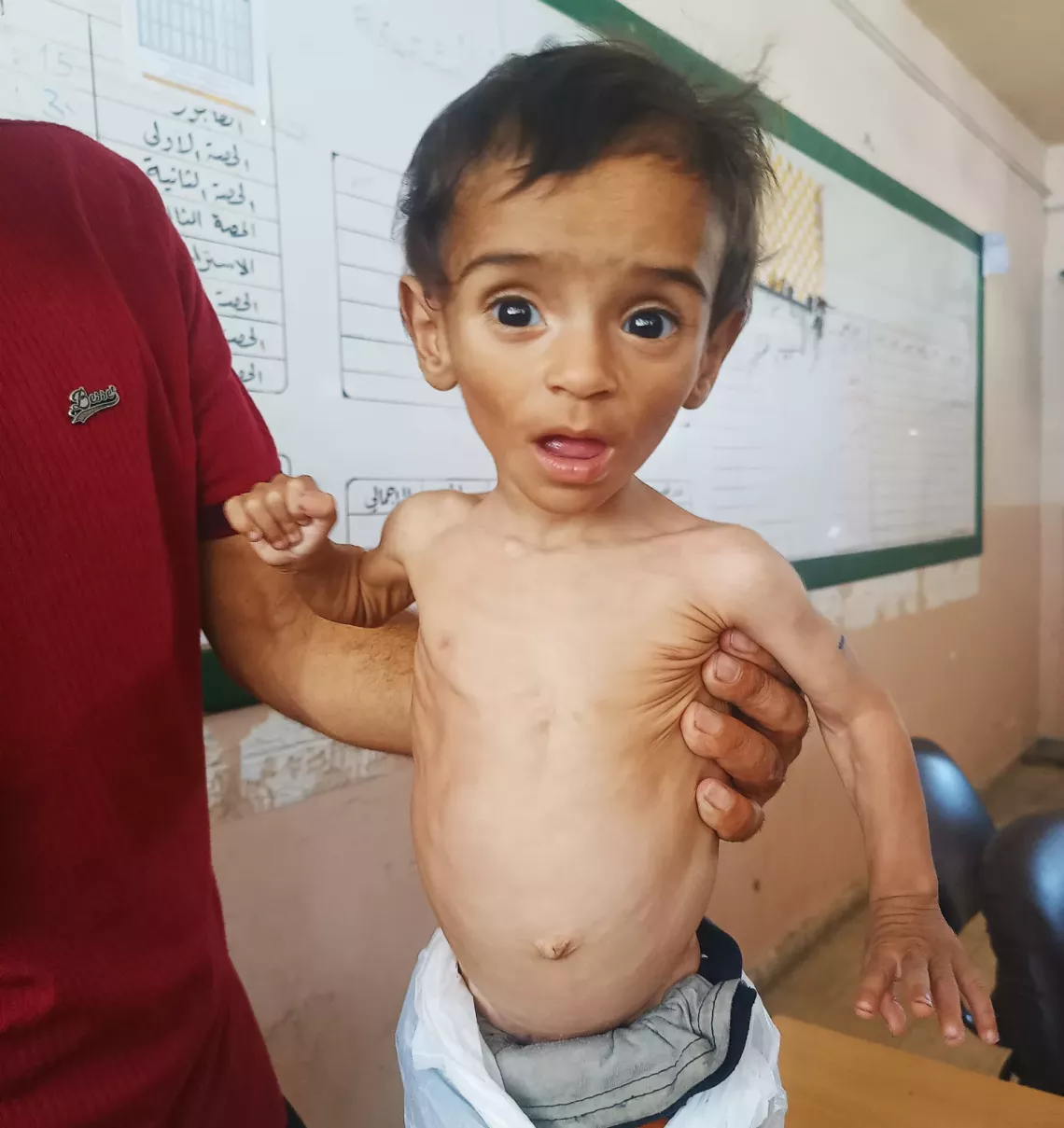
“His body was so weak, his eyes sunken,” says Oday’s uncle of the baby’s appearance only a few weeks ago. “He couldn’t sleep well, and each day his condition got worse.”
The decimation of Gaza’s agriculture fields and commercial markets, scarcity of clean water, and severe restrictions on the entry of humanitarian aid, are pushing Gaza’s 2.1 million people into a food security catastrophe.
UNICEF and its partners report that acute malnutrition is rising at unprecedented rates. One fourth of the Gaza Strip’s residents—some 500,000 people—are enduring famine-like conditions, with parents no longer able to shield their children from hunger by giving them food and going without.
In Gaza City, malnutrition levels among children under five have quadrupled in two months, reaching 16.5 per cent.
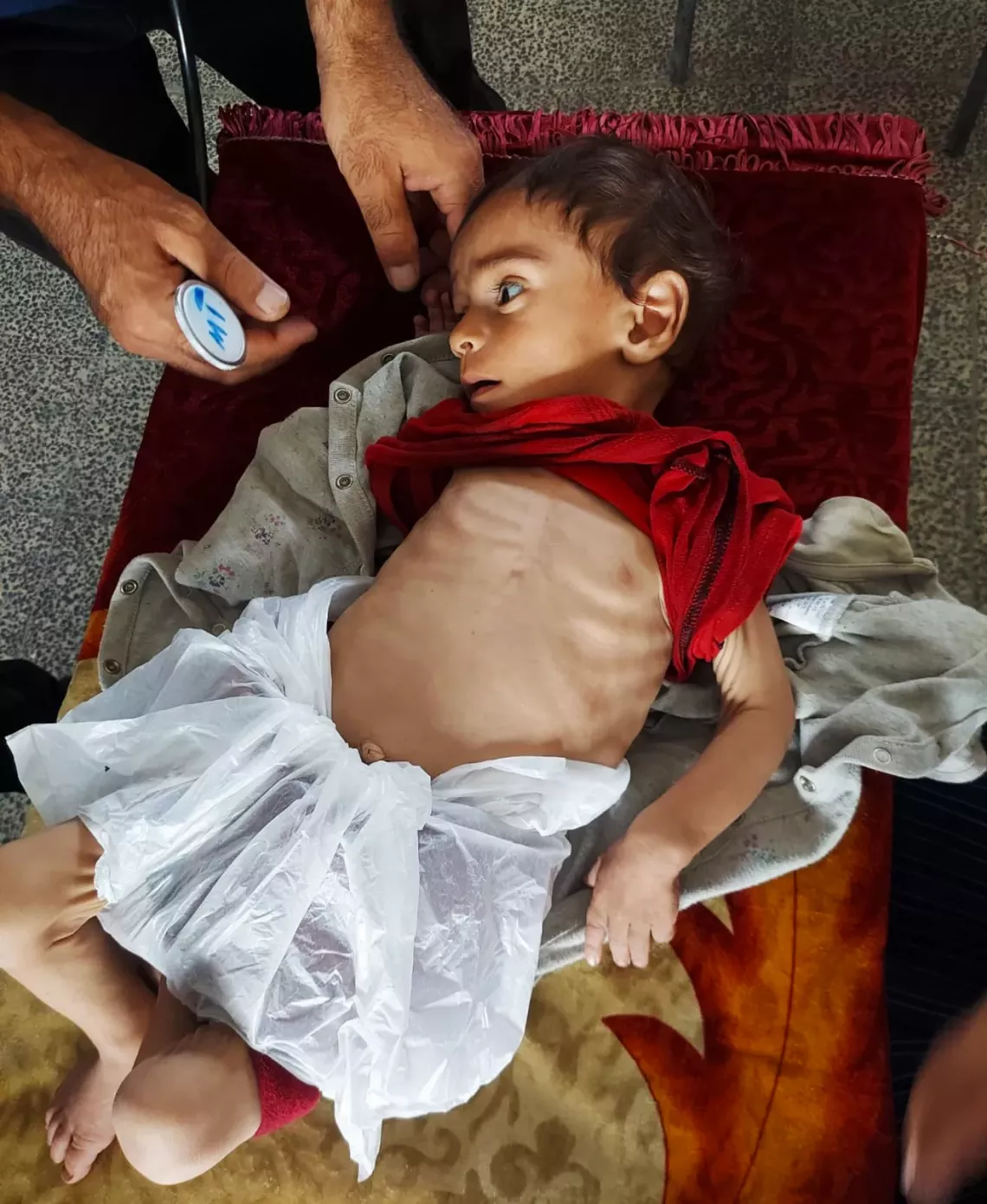
Oday, too, struggled to get enough food. Cared for by his uncle and aunt, the infant was discovered gaunt and weak by a community leader at the temporary shelter where they are staying. Most of the Gaza Strip remains under Israeli military evacuation orders and the majority of homes are damaged or unliveable. Oday had no birth certificate or identification papers, having lost them in the attack that killed his family.
But what happened to Oday shows that, "Even in overcrowded shelters and under immense pressure, timely support can save a child’s life,” according to Melanie Galvin, Chief Health and Nutrition for UNICEF State of Palestine.
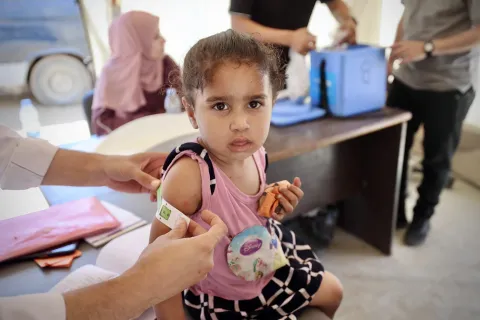
The community leader urged the family to seek immediate care for Oday at the mobile clinic that was operating out of their shelter, at the Al-Rafidin School. The medical team there screened him, measuring his upper arm at 9.3 MUAC cm, the recognized means of testing for malnutrition. Oday had Severe Acute Malnutrition and was dehydrated, with severe wasting.
"I’ll never forget how they treated us—I never felt alone,” says Oday’s uncle of the multi-sectoral process that got them help. “Someone was always there to comfort us and guide us every step of the way."
Thankfully, a stabilization centre was nearby where Oday could be admitted for intensive feeding. For ten days, he was closely monitored while receiving therapeutic nutrition. To recover from acute malnutrition, patients need special calorie-rich foods delivered on a schedule—a regular diet is often inadequate for safe recovery.
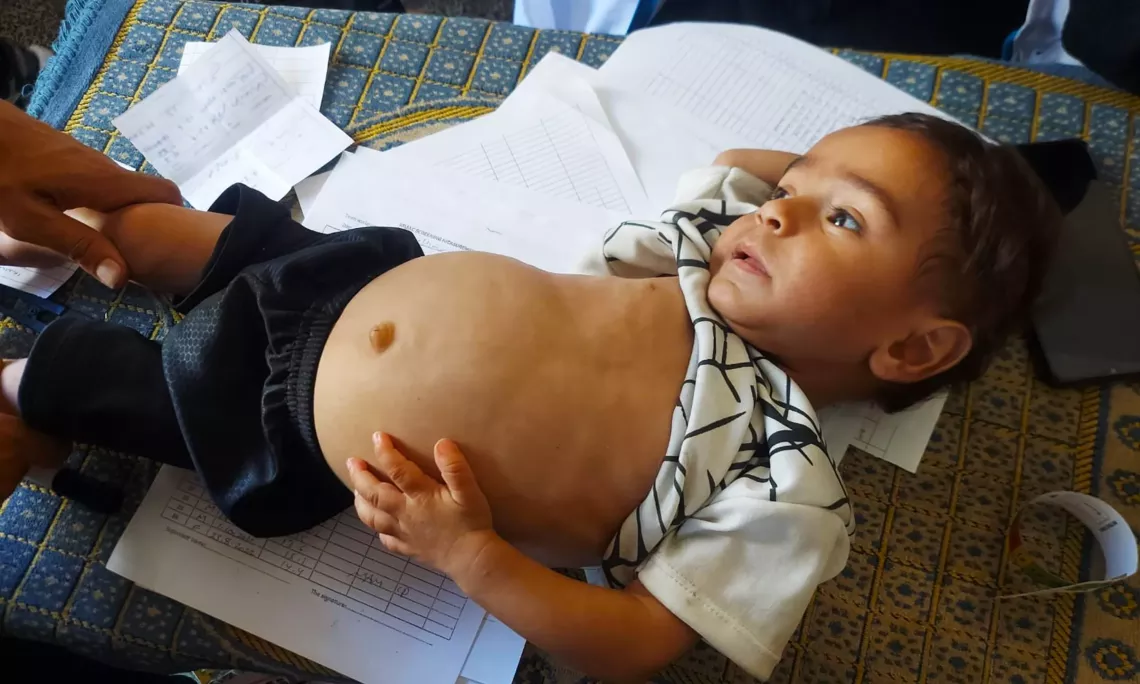
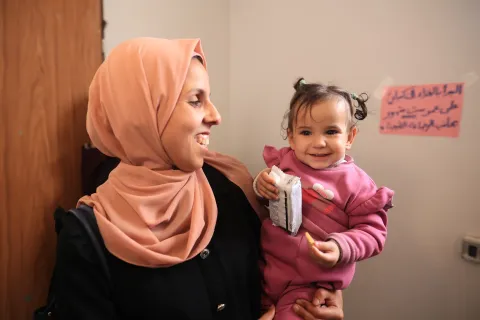
In just ten days, Oday was smiling again, his MUAC measured at 11.2 cm, and his body taking on a rounded appearance. He has also started crawling and responding to sounds.
"Oday is not just a survivor—he is a symbol of hope. In the heart of displacement and loss, a small child began to smile again. That’s the power of early intervention,” Melanie notes.
Oday’s case illustrates the life-saving importance of early assessment and treatment for acute malnutrition. For that to happen at scale, Palestinian families in the Gaza Strip need an immediate and sustained ceasefire, access to humanitarian assistance and commercial foods, and the opportunity to rebuild local food systems.
Despite all the challenges, UNICEF, with the support of the Governments of Australia, Canada, Japan, and the Netherlands, as well as the European Union Humanitarian Aid (ECHO) and the UK Foreign, Commonwealth and Development Office (FCDO), continues to address acute malnutrition and provide life-saving nutritional supplies and services to children and families in the Gaza Strip.