How humanitarian cash assistance is helping families in the Gaza Strip
Cash transfers – one of the most effective forms of humanitarian assistance - enable families to purchase essential items like food, water, and hygiene products.
- English
- العربية
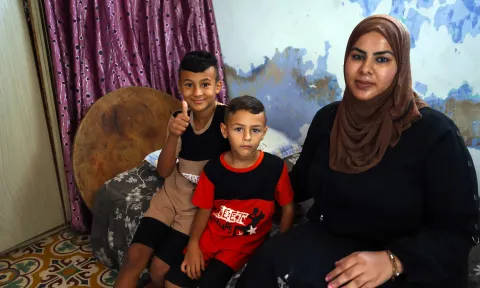
Mohammed, a 10-year-old boy, with deep brown eyes and a sad face is living with his family in a small, makeshift tent on the grounds of a shelter in Rafah. "I want to return home desperately and play with all my toys," says Mohammed.
Unfortunately, Mohammed and his family were forced to evacuate their home due to the ongoing escalation of hostilities. For now, home is the tent. The family sleeps on the bare floor.
Mohammed is battling cancer, a condition he has bravely endured since he was 3 months old. Amid the current ongoing escalation, children like Mohammed are enduring unimaginable suffering, stripped of their basic rights, surrounded by fear, and deprived of basic necessities like food, clean water, medicine and the fulfilment of their fundamental rights as children.
"Whenever I hear the loud explosions, I rush to my mum and cry," says Mohammed’s brother, 6-year-old Salah, expressing the deep fear that grips him.

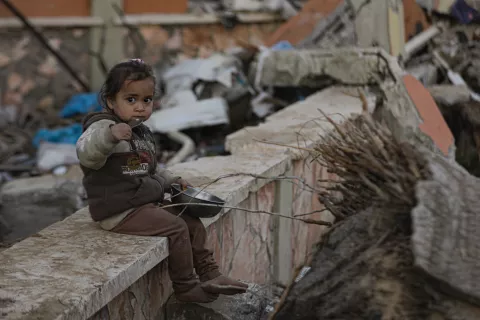
In the Gaza Strip, over a million children like Mohammad and Salah find themselves trapped in dire circumstances marked by destruction, relentless attacks, displacement, and acute shortages of essential necessities.

In collaboration with the Ministry of Social Development and supported by UK FCDO and EU Humanitarian Aid, UNICEF is providing humanitarian cash assistance to families to help them meet their needs.
Cash transfers – one of the most effective forms of humanitarian assistance - enable families to purchase essential items like food, water, and hygiene products.

Since the start of the escalation, UNICEF distributed humanitarian cash assistance to over 500,000 people, reaching 233,656 children.
"We used the money to get crucial supplies for the children: milk, diapers, medicine for my sick child and flour for making bread," says Eman, Mohammad’s mother.
"I long for an end to this conflict, yearning for the certainty that my children will be safe with me.”

Amidst the hardship in the Gaza Strip, the humanitarian cash assistance becomes a lifeline, offering a renewed sense of resilience. UNICEF takes a targeted approach to ensure the cash assistance reaches those who need it most. The beneficiaries include families with many children, those with a person with a disability, pregnant and lactating women, and female-headed households.
But more commercial goods are needed in the Gaza Strip to help make the cash grant programme more sustainable and allow agencies like UNICEF to scale it up. UNICEF is advocating for the immediate entry of commercial supplies to replenish markets with goods like food, fuel, hygiene materials and construction materials.
Beyond that, an immediate and long-lasting humanitarian ceasefire is the only way to end grave violations against children and enable the urgent delivery of desperately needed lifesaving aid.