Hope amid the Pain: Palestinian Children in the Gaza Strip One Year after the Ceasefire
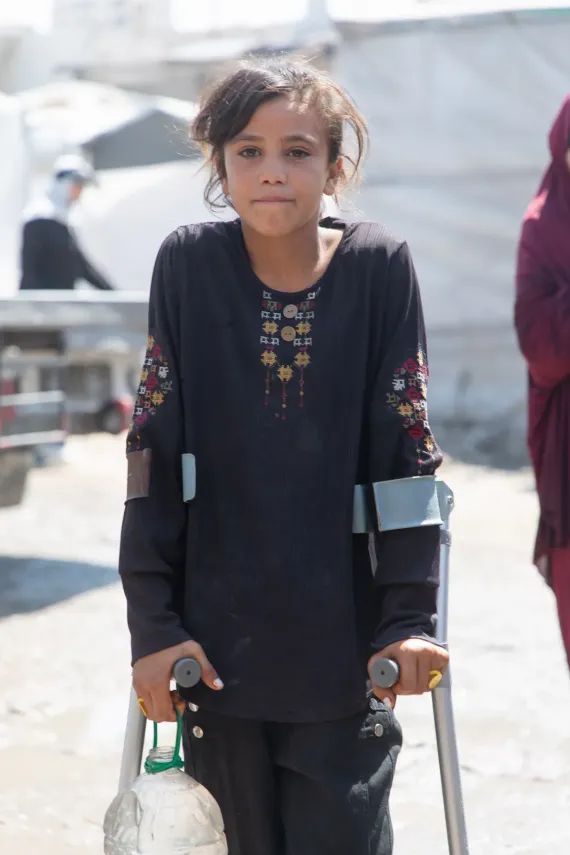
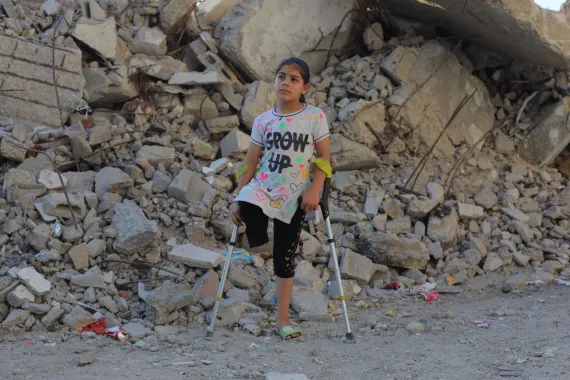
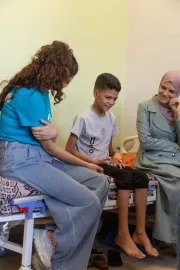
More than 340 children have been reported killed, and over 600 others injured, many suffering life-altering injuries. Violence, displacement and loss continue to shape everyday childhood.

One year since the ceasefire, childhood in Gaza is still defined by survival.
More than 340 children have been reported killed, and over 600 others injured, many suffering life-altering injuries. Violence, displacement and loss continue to shape everyday childhood.
The so-called “Yellow Line” marks the edge of current Israeli physical presence. Nearly half of the children reported killed since the start of the ceasefire have lost their lives in areas near the line. Its gradual expansion continues to forcibly displace families while the lack of clear demarcation on the ground puts children at grave risk.
The ceasefire created more space for humanitarian action, but it has not yet delivered the safety, stability and recovery Palestinian children need and which is a requirement of the ceasefire agreement.
UNICEF-SoP/2026
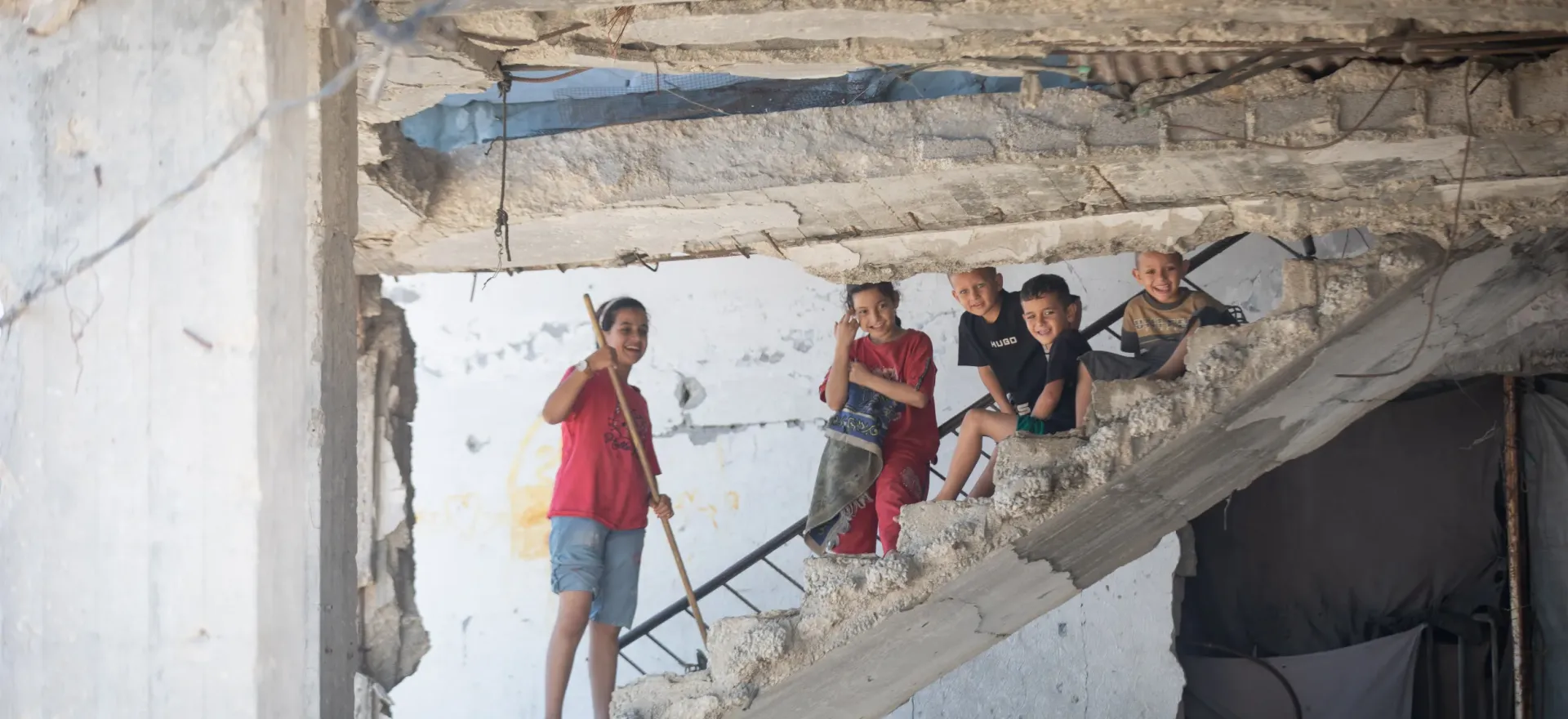
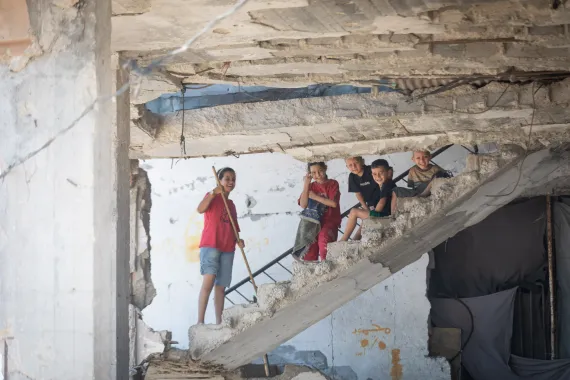
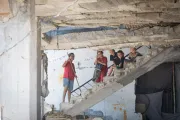
A group of children pose together on the staircase of a damaged building in the Gaza Strip claiming a space to play and sharing a moment of happiness amid the destruction surrounding them.
Across Gaza, Palestinian children are still dreaming and planning for a better future. The ceasefire has not delivered the safety every child has a right to, but improved access has enabled UNICEF State of Palestine and partners to expand lifesaving support and begin restoring some of the services children depend on.
UNICEF-SoP/2026
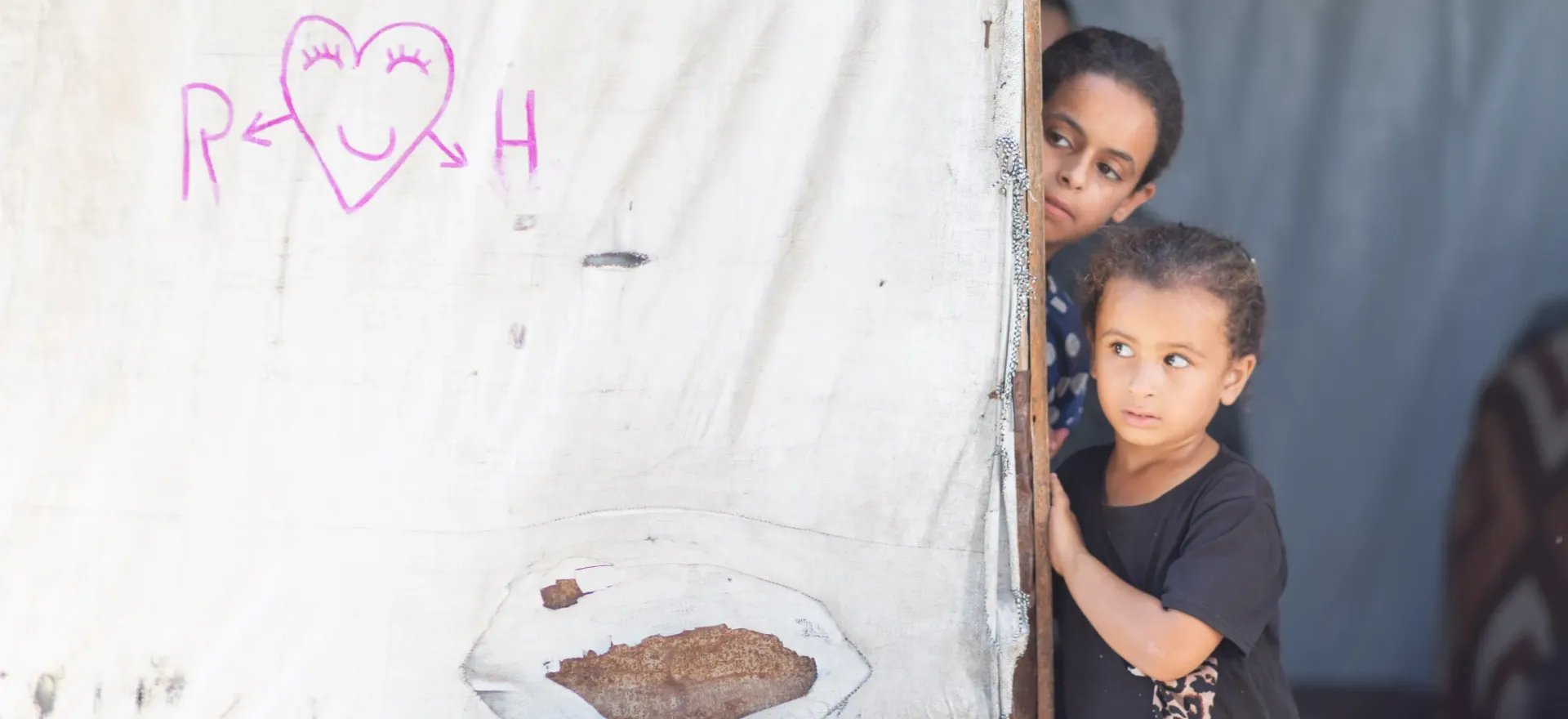
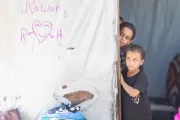
Two girls look out from the doorway of makeshift home in the Gaza Strip.
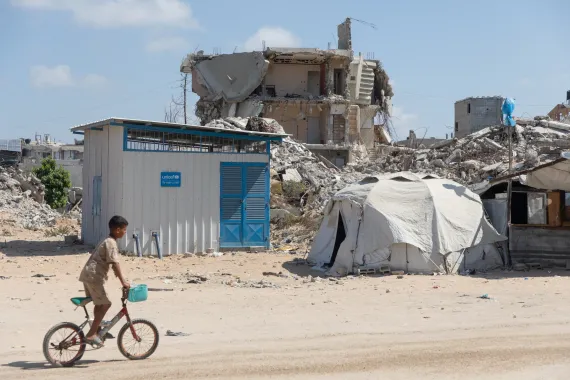
Beyond the direct harm, some 800,000 children remain displaced, many with no home to return to. Families are living in tents, overcrowded areas or damaged buildings, surrounded by rubble and accumulated solid waste. Some 60,000 of these children are living without one or both parents killed during the war, or since the ceasefire.
For Palestinian children in Gaza, the rights to safe water, sanitation, health care, education, protection and play remain far from fully realized.
Put simply, children have suffered too much already.
What children need now:
Safety and protection, wherever they are in Gaza, across the State of Palestine or Israel
- Parties to the conflict uphold the terms of the ceasefire and UNSC Resolution 2803 and their obligations under international humanitarian law.
Humanitarian assistance that can bridge from survival to recovery
- Parties to the conflict provide access and protect humanitarians to enable assistance for communities wherever they are.
- Donors and partners commit to providing flexible and sustained resources to protect and improve services and children’s lives.
Restore critical services and systems for lasting recovery
- As per the ceasefire plan, Israel enables the large-scale entry of the materials, equipment, and technical supplies needed to rehabilitate critical infrastructure and restore essential services. This includes the re-electrification of Gaza to reduce the need for costly emergency power solutions.
Children’s voices at the centre of recovery
- Put Palestinian children at the centre of recovery and invest in their healing, learning and futures. Recovery is about more than rehabilitating facilities, delivering supplies or restoring services. It is about children returning to school, spending time with friends and family, playing safely, receiving health care when they need it, and regaining a sense of stability and everyday life. This is what meaningful recovery should look like for the next generation of Palestinian children.
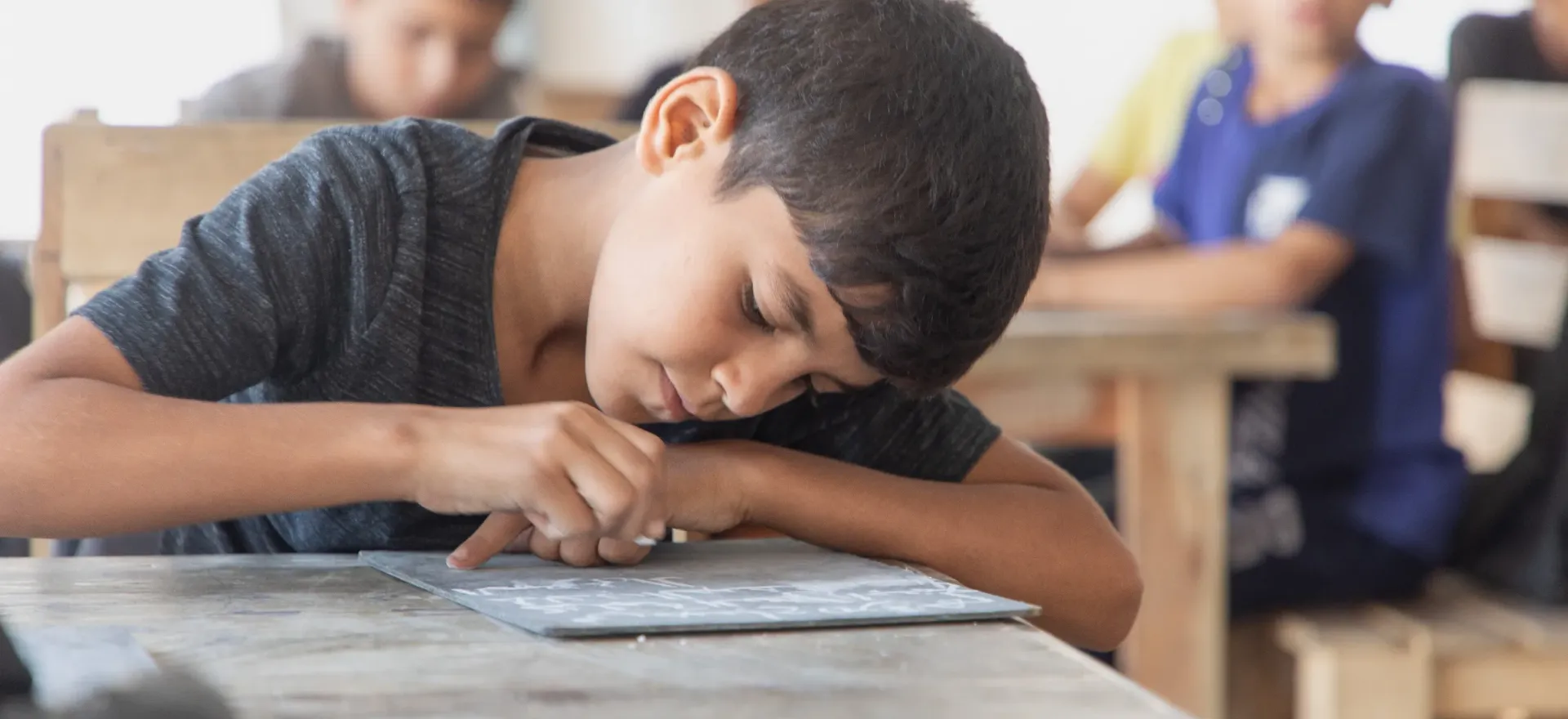
UNICEF-SoP/2026
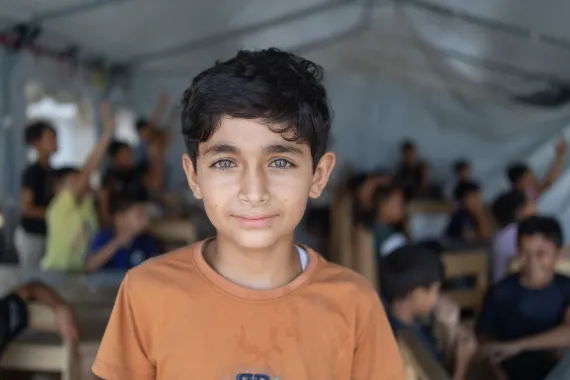
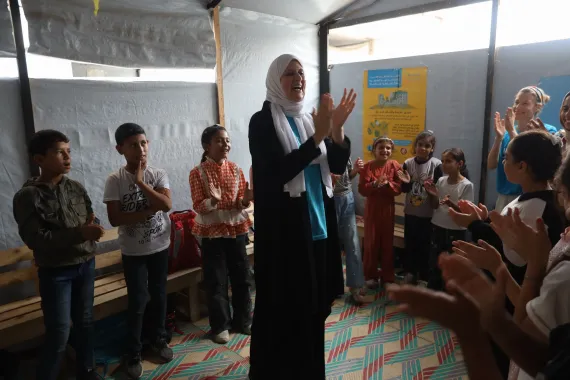
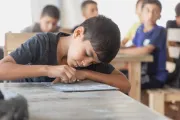
Eid, 11-year-old, “I like coming to school because I can study, learn and gain knowledge. I also enjoy being here because I can see my friends. My old school was inside a building, but now I study in a tent. I hope my school will be beautiful again and no longer damaged."
One Year Since the Ceasefire: Childhood in Gaza Still Defined by Survival
One year since the ceasefire, more than 500,000 children have returned to some learning across the Gaza Strip. But childhood is still too often defined by survival. Jamal and Hamza dream of returning to school. Instead, they spend their days collecting waste to earn money and help support their family. Having lost their home and their brother during the war, they now live with nine other family members in a damaged tent, facing dangerous conditions every day.
One year since the ceasefire, some 60,000 children are growing up without one or both parents. Two and a half year old Rital is one of them.
One year since the ceasefire, children have been forced to take on the role of adults. Norhan, 15, is caring for her 1-year-old sister Narjis who was born prematurely after her mum was killed during pregnancy.
One Year Since the Ceasefire: Childhood in Gaza Through the Lens
Download The Full Report
One year since the ceasefire, what has changed for children in Gaza? And what challenges remain?
Explore the stories, facts and realities behind the headlines.
Download the full report: Hope Amid the Pain: Palestinian Children in the Gaza Strip One Year after the Ceasefire