Helping children in Gaza access the nutrition they need to grow and thrive
Since the 2025 ceasefire announcement, UNICEF and partners have screened over 300,000 children aged 6-59 months for malnutrition.
- English
- العربية
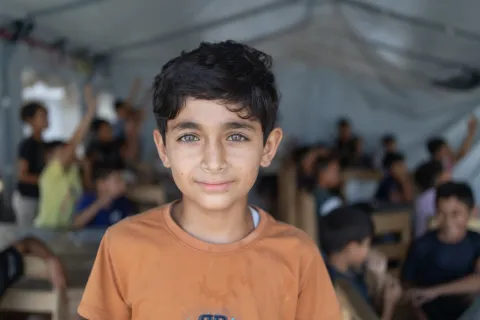
For children in the Gaza Strip, growing up amid insecurity, displacement and challenging living conditions, their nutritional wellbeing is fragile. Like eight-month-old Nour who with her mother, Noura, has been displaced several times during the war.
“My daughter is malnourished, and I’m also not eating well myself, which makes caring for, and feeding her, even more difficult,” she says.
Across the Gaza Strip, despite improvements in reducing acute malnutrition over the past year limited access to nutritious and diversified diets, combined with dire living conditions, puts young children at increased risk of malnutrition.
UNICEF and partners are working to identify children at risk, to provide early treatment to prevent and tackle malnutrition. A new UNICEF programme is also now providing support for children over five years.
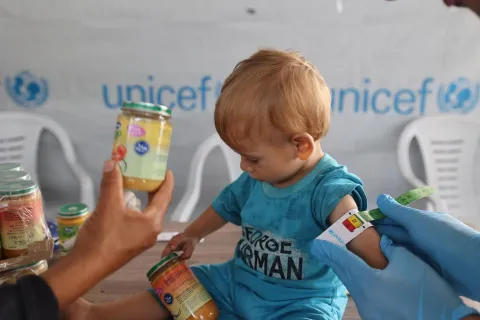
In the first half of the year, 459,736 children aged from 6-59 months were screened for acute malnutrition. More than 16,400 children received treatment for moderate acute malnutrition, while nearly 3,000 children with severe acute malnutrition received treatment and care.
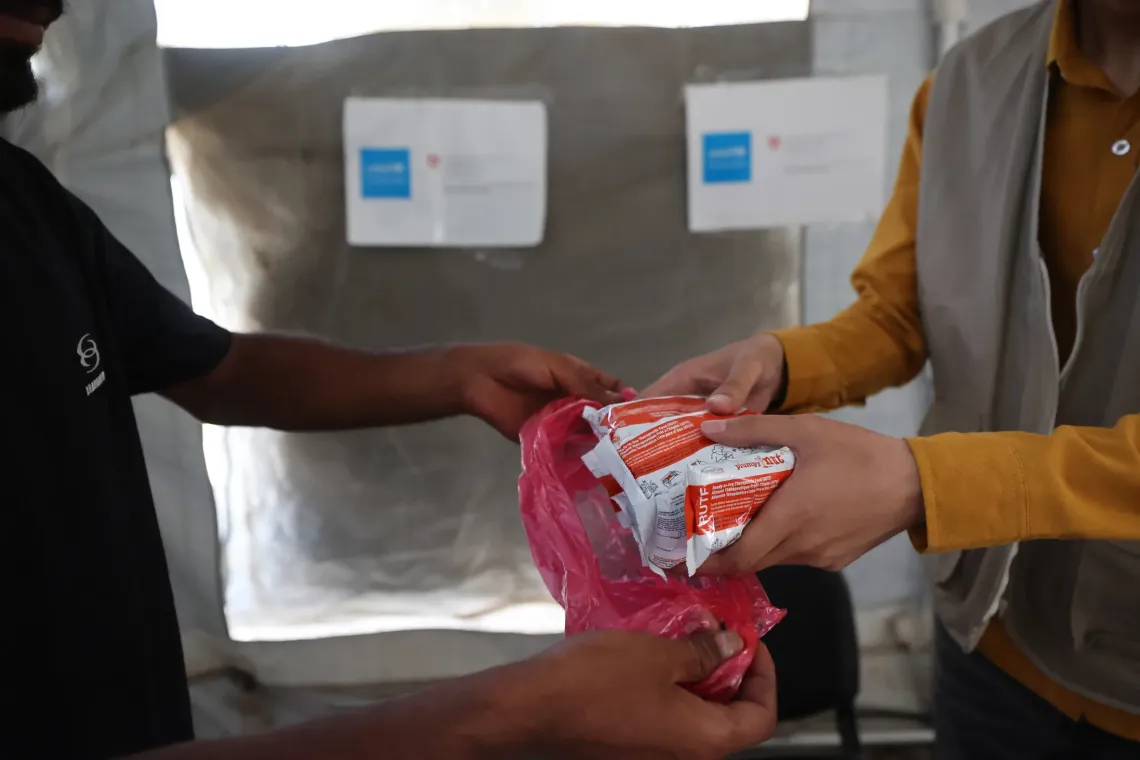
For children of all ages prevention is critical. . Nearly 100,000 children aged 6–23 months received ready-to-use complementary food, providing essential nutritional support during a critical period of their development.
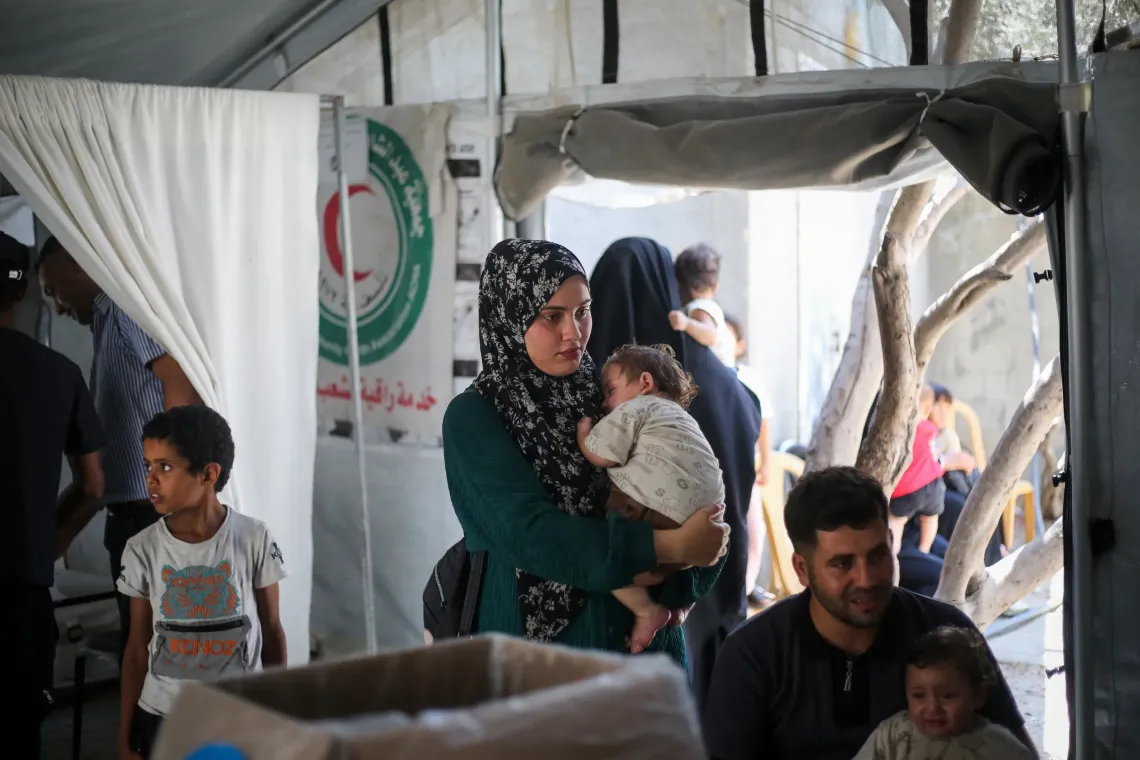
One-year-old Moreed is among the children receiving this support. “I do my best to make sure my children are healthy, so I come here regularly for follow-up. I also receive RUCF for them as part of their nutritional support,” says his mother Saja.
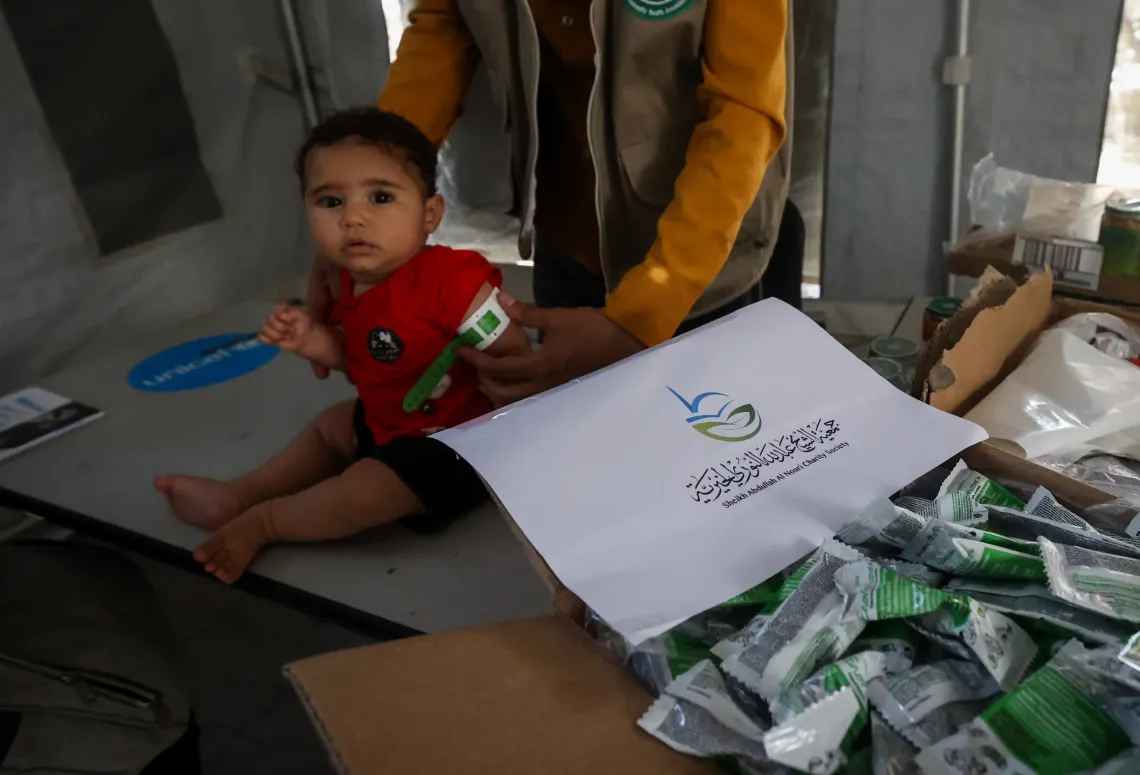
Safa, mother of seven months old Khadija, also brings her daughter for regular check-ups and nutritional support.
She explains that “everything is difficult, especially when it comes to [accessing] food and water. Some food may be available in the markets, but we don’t have enough money to buy it, so we rely on community kitchens. But the meals we receive do not have much [diet] variety.”
For children like Nour, Moreed, Khadija and thousands of others, early identification and timely provision of nutritional support can make a critical difference to their health and development.
With the support of donors including the Governments of the Netherlands, Czech Republic, France and Germany, the Sheikh Abdullah Al Nouri Charity Society in Kuwait and the Tanmeia Charity Society in Kuwait, UNICEF’s nutrition response is helping children receive the treatment and care they need to grow, develop and stay healthy despite the challenging conditions they face.