Gaza’s Children Protected from Poliovirus Outbreak After Challenging Vaccine Campaign
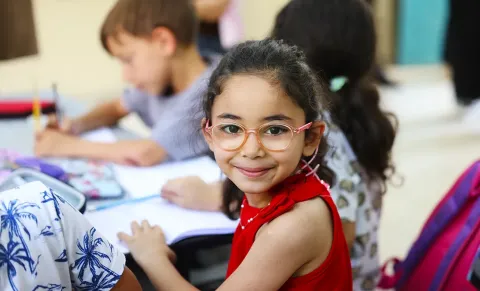
More than half a million children in the Gaza Strip have received a second dose of the polio vaccine, completing the required vaccination regime and protecting 94 per cent of children under age ten from the life-threatening disease.
- English
- العربية
More than half a million children in the Gaza Strip have received a second dose of the polio vaccine, completing the required vaccination regime and protecting 94 per cent of children under age ten from the life-threatening disease.
The successful completion of two rounds of vaccination despite bombardments, displacements, and increasing instability in the Gaza Strip was a herculean feat that required coordination with several UNICEF partners, as well as the implementation of critical area-specific, temporary humanitarian pauses.

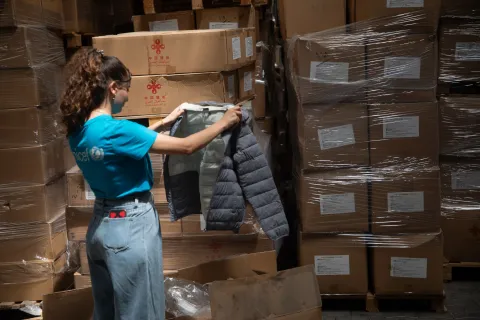
In all, UNICEF, in collaboration with the Palestinian Ministry of Health, the World Health Organization (WHO), the United Nations Relief and Works Agency for Palestine Refugees (UNRWA) and other local partners procured and delivered 1.6 million doses of oral polio vaccine type 2 (nOPV2) into the Gaza Strip , along with vaccine carriers, refrigerators, cold boxes and all the equipment to maintain the vaccines at a temperature between 2°C and 8°C.
The second round of polio in Gaza saw the addition of Vitamin A to the campaign. Vitamin A, among its other benefits, strengthens immune function, something the children in Gaza sorely need due to chronic diet deprivations. Since Vitamin A is also squeezed into the mouths of the children, it makes it very easy to add to an oral polio campaign, where efficiency in providing services to large groups of families quickly is important.
“The campaign in Gaza required hundreds of teams working in small spaces, and hundreds more teams on the move to find families who may have been reluctant to travel. But come they did. Nearly half a million children got vitamin A in this round, a resounding success” said Jean Gough, Special Representative, UNICEF in the State of Palestine
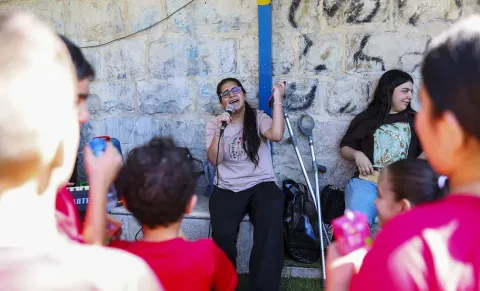
More than 840 social mobilizers and 78 town announcers helped to raise awareness about the importance of being vaccinated and where families could get vaccinated . “These efforts were highly effective, with mobilizers actively engaging communities, bringing families to vaccination sites, and increasing awareness across densely populated areas,” explained Nesma Seyam, Social and Behavioral Change Officer in the Gaza Strip.
“We also organized extensive media outreach including 15 daily radio spots, social media posts on UNICEF’s platforms, and campaign announcements on popular channels, reaching over 130,000 users, with support from local influencers amplifying the posts. This really contributed to the demand for vaccines we witnessed,” added Jose Lainez, Social and Behavioral Change Specialist, UNICEF in the State of Palestine.
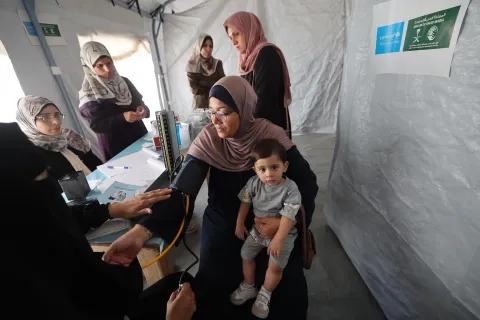
These dedicated teams of social mobilizers worked daily in communities in all the phases of the campaign supporting the fixed and mobile vaccination teams at pre-designated locations, that increased vaccination coverage in the communities.

After the successful campaign in the middle area and the south of the Gaza Strip, the third phase in northern Gaza had to be temporarily postponed due to deteriorating security conditions that didn’t allow the families to reach vaccination centers and for our staff to operate safely.
When the third phase was completed on November 5th, the campaign had achieved its coverage objective in the middle area and southern Gaza respectively. However, the ongoing hostilities and lack of access to north Gaza have limited vaccination rates leaving an estimated 7,000-10,000 children in Jabalia, Beit Lahiya, and Beit Hanoun remain unvaccinated and vulnerable to the poliovirus.
“The campaign was not easy” said Melanie Galvin, Chief of Health and Nutrition in UNICEF State of Palestine. “Temporary humanitarian zones were identified in each of the three phases of the campaign, but the teams also worked in special coordinated areas outside these zones. These teams worked wearing the protective equipment all day while they did their campaign work”, Galvin added.
“The North Gaza phase was a particular challenge, with more active fighting and more coordination required. UNICEF provided as many sites as possible so that families would not have to move far to get the vaccines. No campaign is ever easy. The Gaza campaign was certainly amongst the hardest I have been involved in.” said Fairouz AbuWarda, UNICEF Programme coordinator in the North of the Gaza Strip.
Nevertheless, more than 90 per cent of the targeted children throughout Gaza were immunized with two doses, providing the needed protection from polio for the community.

UNICEF and its partners will continue to offer routine immunization at clinics throughout the Gaza Strip and surveille the situation by testing both children and environmental waste to determine if additional steps are needed to prevent an outbreak.
Poliovirus was first detected in the Gaza Strip in July 2024 and in an infected ten-month-old child in August. The virus, which has not been found in the Gaza Strip for decades, can cause paralysis and death in the worst cases. Fears of an outbreak were aggravated by worsening hygiene and lack of clean water in the Gaza Strip over the last 12 months of war.