After Two Years of War: Gaza’s Education System on the Brink of Collapse
Most of the 658,000 school age children have had limited access to face to face learning for over two academic years.

After two years of war and intense bombardments, Gaza’s education system stands on the brink of collapse. More than 97 percent of schools have been damaged or destroyed, and 91.8 percent of all education facilities will require either full reconstruction or major rehabilitation to become functional again. Most of the 658,000 school age children have had limited access to face to face learning for over two academic years.
The current ceasefire is volatile. Reportedly 46 children were killed in October over one 24 hour period, in Israeli air strikes. Children and their families live in fear.
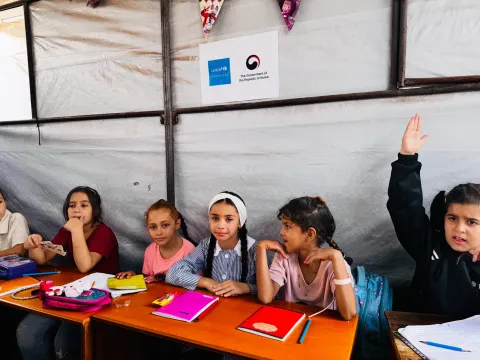
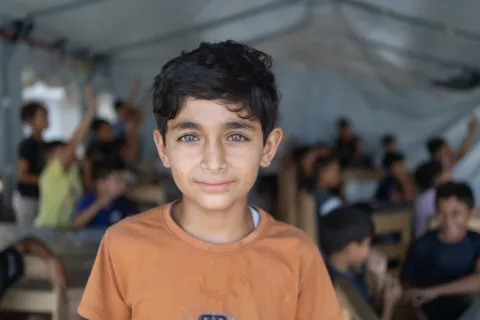
Despite famine and shortages in water as well as all the basic necessities to sustain the dignity of human life the Palestinians continue to prioritise education. Currently UNICEF has generated spaces in 78 learning centres to accommodate 109,310 children (54% of them are girls) to provide Non-Formal Education learning. These children attend three days a week for 3 hours as demand is so high and space so limited. The team is also working to ensure children can attend on other days of the week so they can be supported to play and heal. UNICEF is committed to inclusion and we have been able to start disability and nutrition screening to identify children and families who need more support.
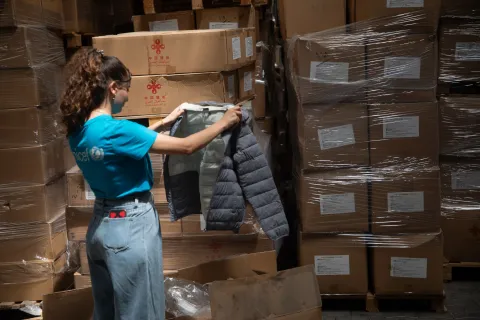
Although there is a ceasefire providing education remains challenging. So far it has been impossible to get in educational supplies. Teachers are writing on tent walls. UNICEF has stationery, back packs for children and resources for teachers waiting at the borders, but it is not considered as lifesaving humanitarian aid so we have not been given permission to enter the materials into Gaza yet.

With the Education team in Gaza and working closely with the Palestinian Authority a key priority has been to find spaces where we can build more learning centres to meet the demand. In the South we have found school buildings where we have rehabilitated classrooms and fenced areas in the playground to accommodate semi-permanent classrooms.
Last weekend of October, the team was able to visit 28 new sites looking for new spaces. In the South we have found suitable sites to scale up, but in Gaza city it was a different story. The destruction in the last two months was indescribable and as we drove around to all areas I witnessed the national colleagues becoming more hopeless as the day went on as they realized how mammoth the task of reconstruction was going to be.
We could not always find locations for learning centres as what remained of the roads were at times unpassable and when we found the space there was only rubble. When we did find potential spaces, they needed to be cleared of unexploded ordinance, chemical hazards and rubble.
Despite the challenges, UNICEF with the support of donors such as the European Union Humanitarian Aid, Education Cannot Wait, the Governments of Korea and Finland, and the Akelius Foundation, remains committed to bringing learning back to Gaza’s courageous children.