Teaching beyond silence in Galkayo
Bringing education and opportunity to students often left behind.

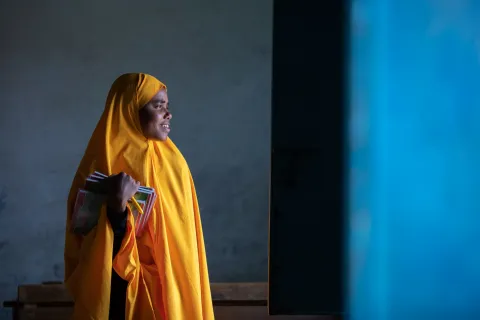
Every morning in Hormar IDP settlement in Galkayo, 21-year-old Iqra Nuur Mohamed arrives at Galkayo Primary Model School ready for another day of teaching children who communicate without words. For the past three years, she has worked as a teacher for deaf and hard-of-hearing children, using sign language, patience, and routine to help her students learn.
Teaching is Iqra’s full-time work, and she spends most of her time with her students. “When I talk to them and ask what they are most excited about in life, they point to their books and pens,” she says. “That is how I understand how important learning is for them.”
Galkayo Primary Model School is located inside Hormar IDP settlement and serves 480 students, including 240 girls. Sixty-nine of the children live with disability, among them deaf and hard-of-hearing students. Many were displaced by conflict and have faced long interruptions in their education. The school is one of the few special needs schools in Somalia, providing adapted learning for children who might otherwise be left out.

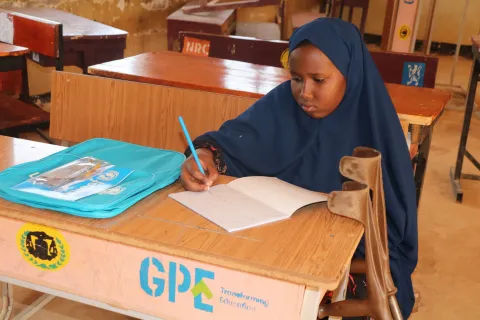
Iqra teaches using sign language, supported by training she received on special needs education. Her classroom is calm and structured, allowing students to follow lessons at their own pace. One of her students is 16-year-old Imran Hassan, a Grade 8 student born in Galkayo. Like many students at the school, Imran has taken part in school-based awareness sessions that teach health, hygiene, and wellbeing.
From June 2025 to date, the Galmudug Ministry of Health, through its Health Promotion Unit, has implemented Social and Behavior Change (SBC) activities in Galkayo under the Joint Resilience Programme. These activities focus on practical health behaviors, including immunization, nutrition, and hygiene, using simple and accessible approaches suited to the context.

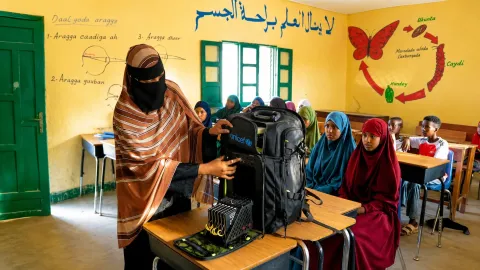
For children with hearing impairments, school-based SBC activities rely on visual materials and adapted communication, ensuring students are not excluded from important health messages. “Health and learning are connected,” Iqra explains. “If a child is unhealthy or absent, learning becomes very difficult.”
Another important reason children continue attending school is the school feeding program provided by WFP. Students receive two meals each school day, which helps improve attendance and concentration. For families living in displacement, school meals also reduce pressure at home and encourage parents to keep their children enrolled.
Iqra sees the impact daily. “When children eat at school, they stay longer, they focus better, and they come back the next day,” she says.

Supported by the German Government, UNICEF and WFP work with the government and partners through the Joint Resilience Programme, linking education, health awareness, and school meals to support displaced families and help children remain in school.
As the school day ends, Iqra watches her students gather their books and bags, signing goodbye to one another. Tomorrow, she will return to the same classroom, continuing her work. In a place shaped by displacement, her teaching offers something reliable, a chance to learn, to communicate, and to move forward, one lesson at a time.