Joint Resilience Programme saves lives while investing in the future
UNICEF, WFP and FAO unify programmes for a full package of services
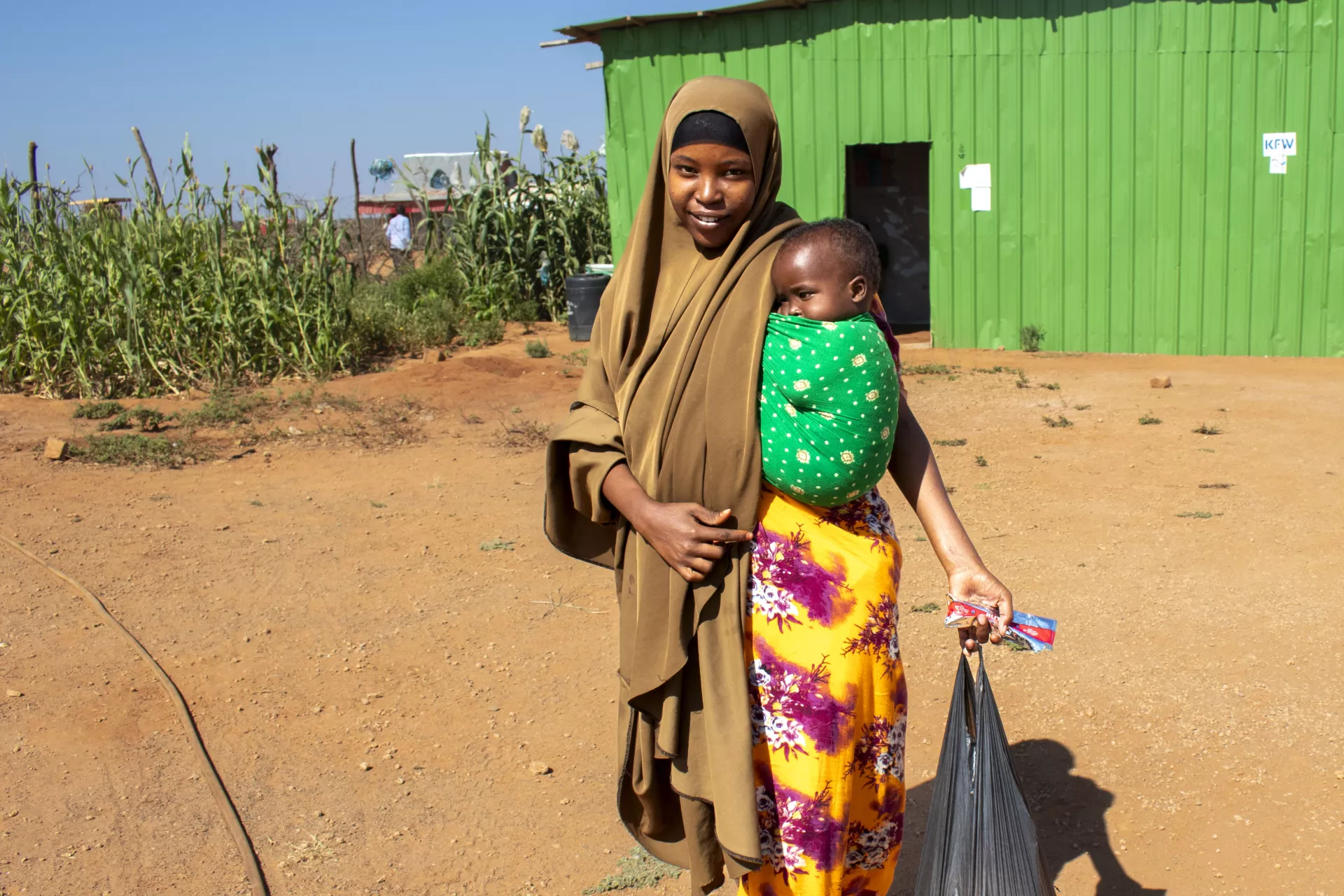
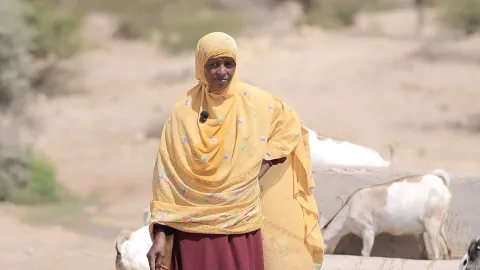
There has been a new wave of malnutrition because of the recent floods brought on by El Niño. “The aid we are given is not enough. There is not enough to eat,” says Ahado, a mother of 3 children. When the three-year drought tapered off in the middle of 2023, many people were able to work as day labourers in the surrounding farms and households. However, once the sudden floods hit at the end of 2023, the crops were gone along with those jobs. There are over 3.9 million internally displaced people (IDP) in Somalia, with around 150,000 of them living in the five IDP camps in Dollow.
To assist those displaced by the climatic shocks in Dollow, a Joint Resilience Programme (JRP) was initiated from 2018 through 2024, with support from the Government of Germany through KfW and BMZ. This is a multi-partner strategy between UNICEF, WFP and FAO working with the Government to assist the most vulnerable families with a complete package of interventions with food security, health services and education while simultaneously teaching skills for them to become more resilient to the effects of climate change.
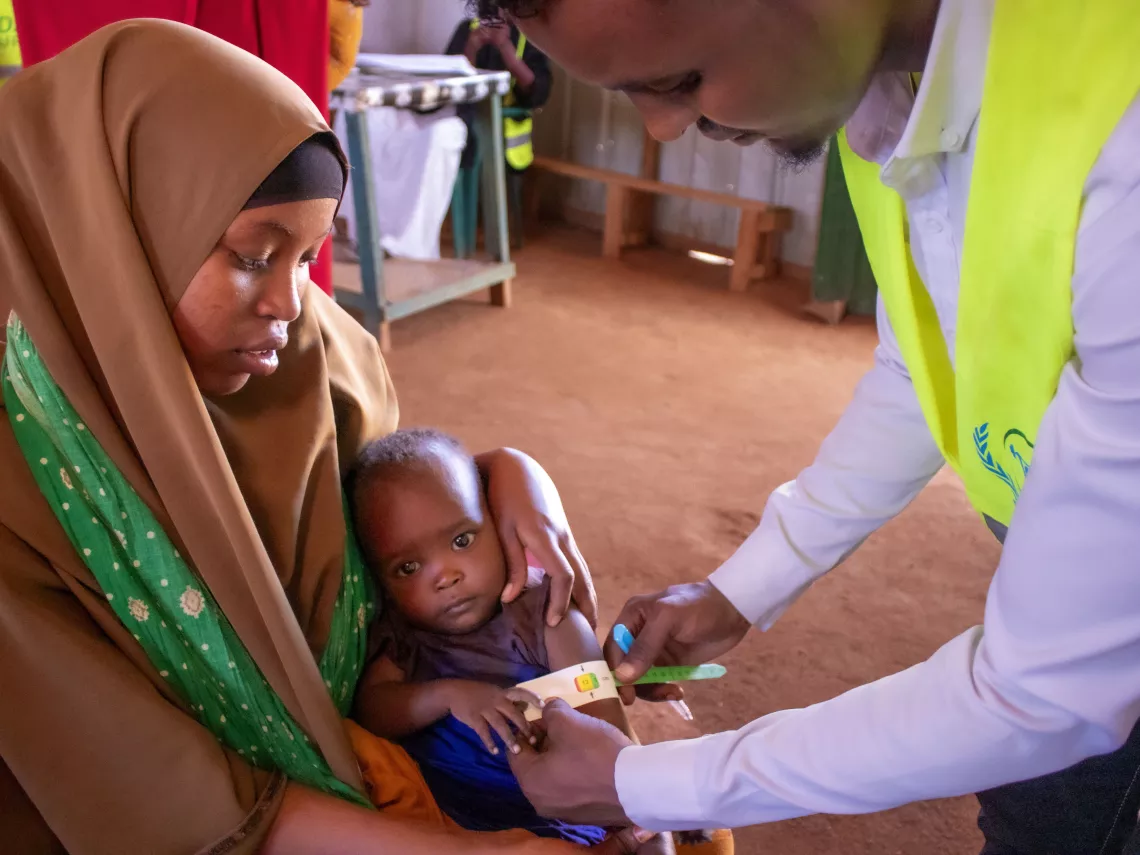
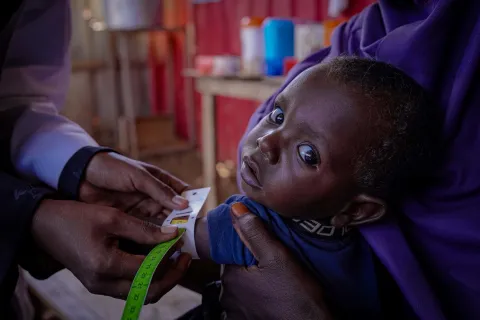
Ahado says “Fahia is feeling better and crawling around, she was not moving around very much before. She would just sleep.” This is the fourth week that seven-month-old Fahia is being treated for severe acute malnutrition at the Ladan Health and Nutrition Centre supported by the JRP. “She is still coughing and doesn’t always feel like eating,” says her mother. Despite the cold, Fahia is recovering well from severe acute malnutrition. The health worker says that Ahado needs to watch her baby closely, as a cough can easily turn into pneumonia. Fahia is being treated with ready-to-use therapeutic food (RUTF) and medicines supplied by UNICEF with support from the US Government through USAID. Ahado and her family had to leave everything behind when the drought dried up their fields in 2022 and walk for many days to reach safety in the Ladan IDP camp.
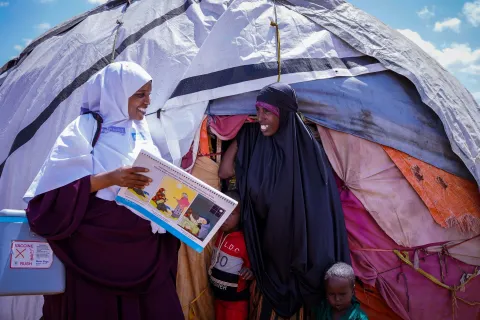
In the Dollow region, 15 per cent of the children under five years of age are malnourished due to a mix of climate disasters, insecurity and displacement. Malnourishment can not only be life-threatening, but it can also have long-term effects on the development of a child physically and mentally. As part of the JRP programme, households have access to free health, nutrition, water, sanitation and hygiene (WASH), and child protection services at UNICEF-supported sites.
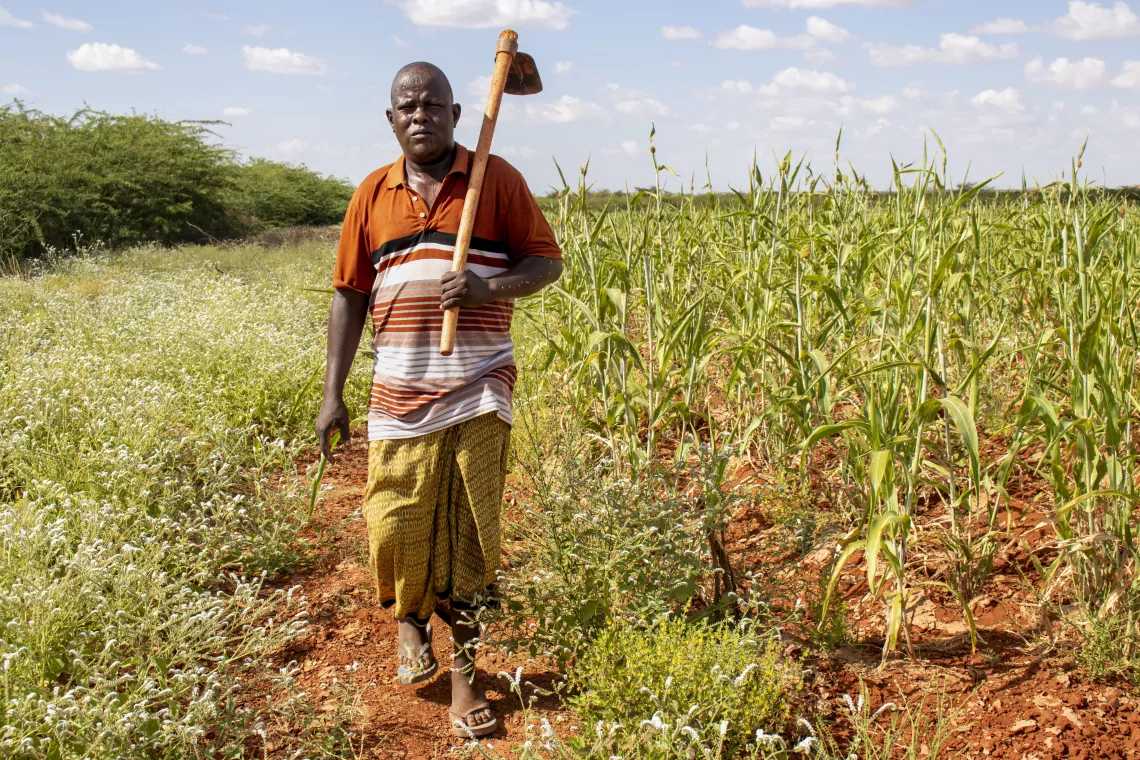
Down the road, the success of the JRP can be seen in the crops. “There are two things I am very happy about that are related to this field. I can feed my family and I can feed my small herd of livestock,” says Ali Ibrahim Ahmed. He reflects on the year 2022 when his family walked for 19 days to reach the Kabasa IDP camp after they lost their livestock and crops in the Bakool region to the drought. By the time they reached the camp, half of his 11 children had to be treated for malnutrition in the Trocaire stabilization centre.
“When I arrived in Kabasa, my children were given treatment and became healthy. They also go to school,” Ali states. UNICEF provides free essential health services to children under five years old, and learning spaces where children can get an education in a safe space. Through the JRP, WFP treats children with moderate malnutrition and provides cash assistance to improve food security and stability.
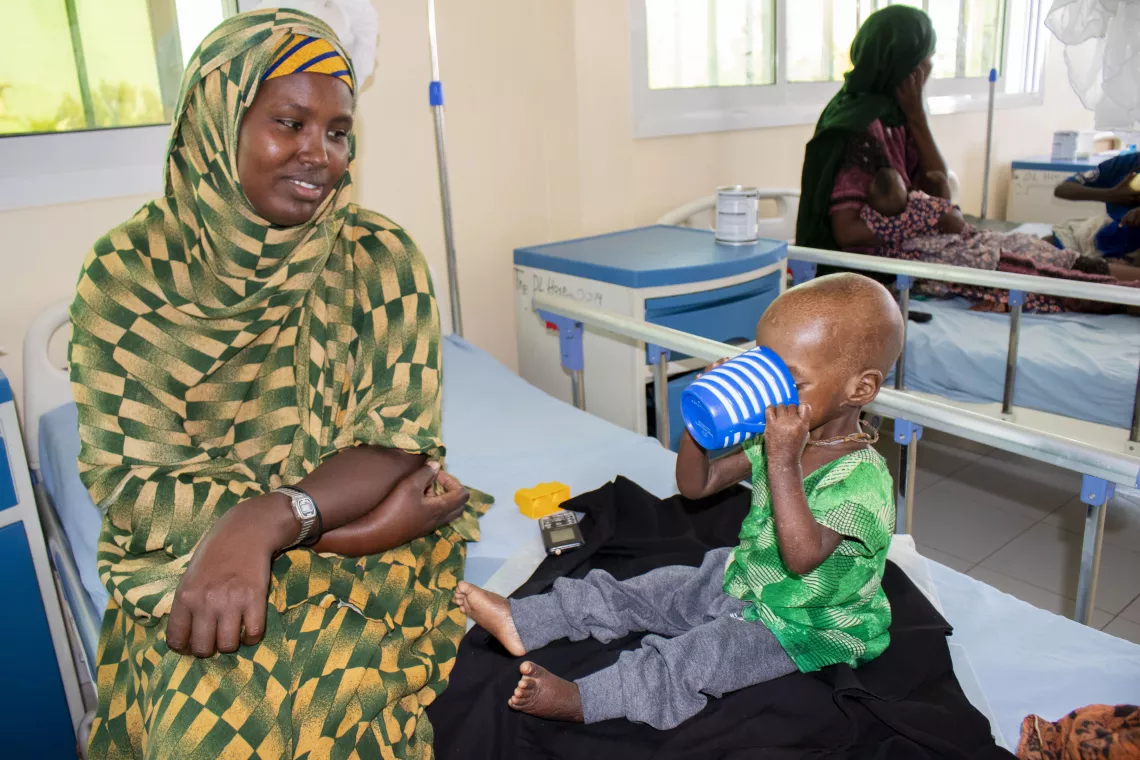
As part of the JRP, UNICEF supplies the Dollow Hospital Stabilization Center with medicines, medical supplies, staff incentives and training through our partner Trocaire. This is where Ali’s children received care for severe malnutrition and underlying medical complications.
Eighteen-month-old Salma has been in the stabilization centre for two weeks, being treated for severe acute malnutrition and malaria. Kulmiye Abdi Issak and her family are pastoralists who raised goats but were displaced from the Bay Area to Ladan IDP camp during the drought in 2022.
“She likes the milk and is gaining weight. See how she sits up now,” says Kulmiye, happy that Salma is recovering well. Salma is being treated with therapeutic milk full of vitamins and minerals, ready-to-use therapeutic food (RUTF) and malaria medicine.
In 2022, with support from the JRP, FAO worked with the local government and host community members to provide IDPs with land for agricultural purposes. FAO also trains farmers, like Ali, to grow a new genre of crops and use advanced irrigation. The harvest is shared with the IDP community to assist with food security. On this plot of land, Ali grows enough vegetables to feed his children and he sells the extra for a small income.
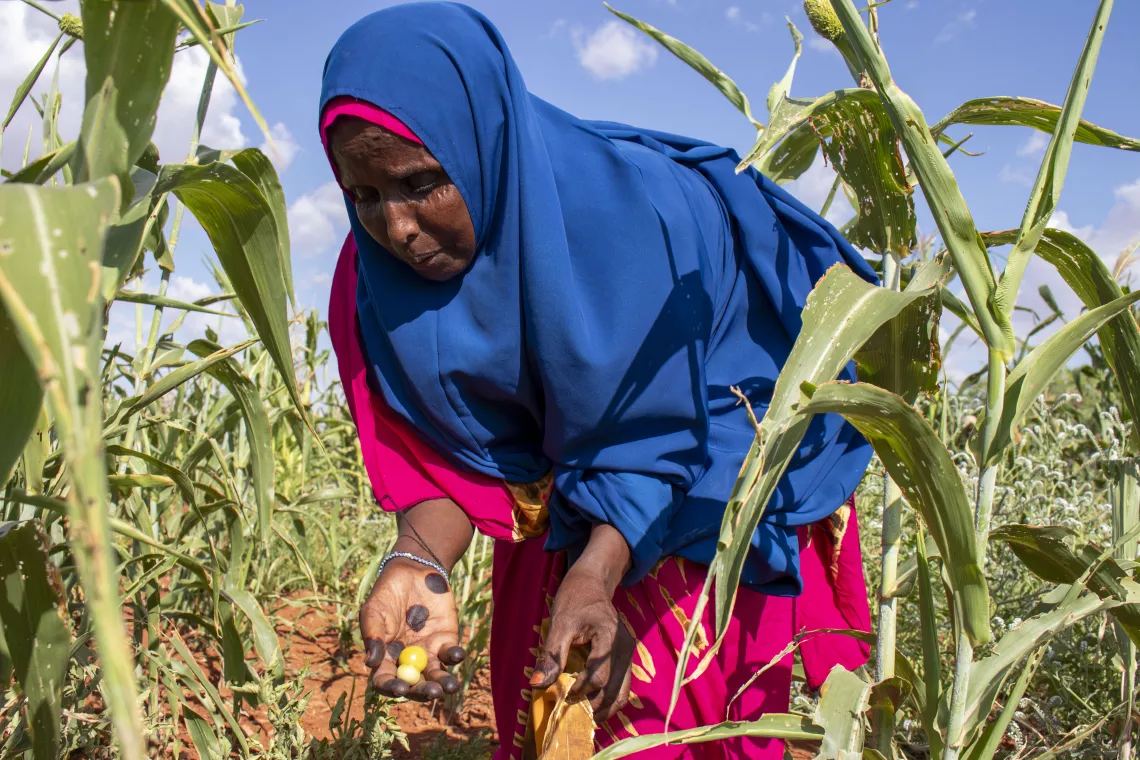
Fatuma Abdulahi Mohamed is also a land recipient of the FAO land programme. Back in 2022, Fatuma’s family had lost all of their livestock to the drought. She had to leave her home in Hudor, eventually reaching Kabasa IDP camp in Dollow.
“People along the way would tell me to head for Juba River to find help. It was ten days we walked with the donkeys. Two of my nine children went straight to the hospital, they were so weak,” says Fatuma. Her children were also treated for malnutrition by the Trocaire team in the Dollow Hospital where they received around-the-clock attention for two weeks.
She enjoys seeing the vegetables growing over time because it “brings hope.” “My children are healthy now. I work growing the crops and we can eat them. The children go to school. This was new for them, and they are happy,” says Fatuma.
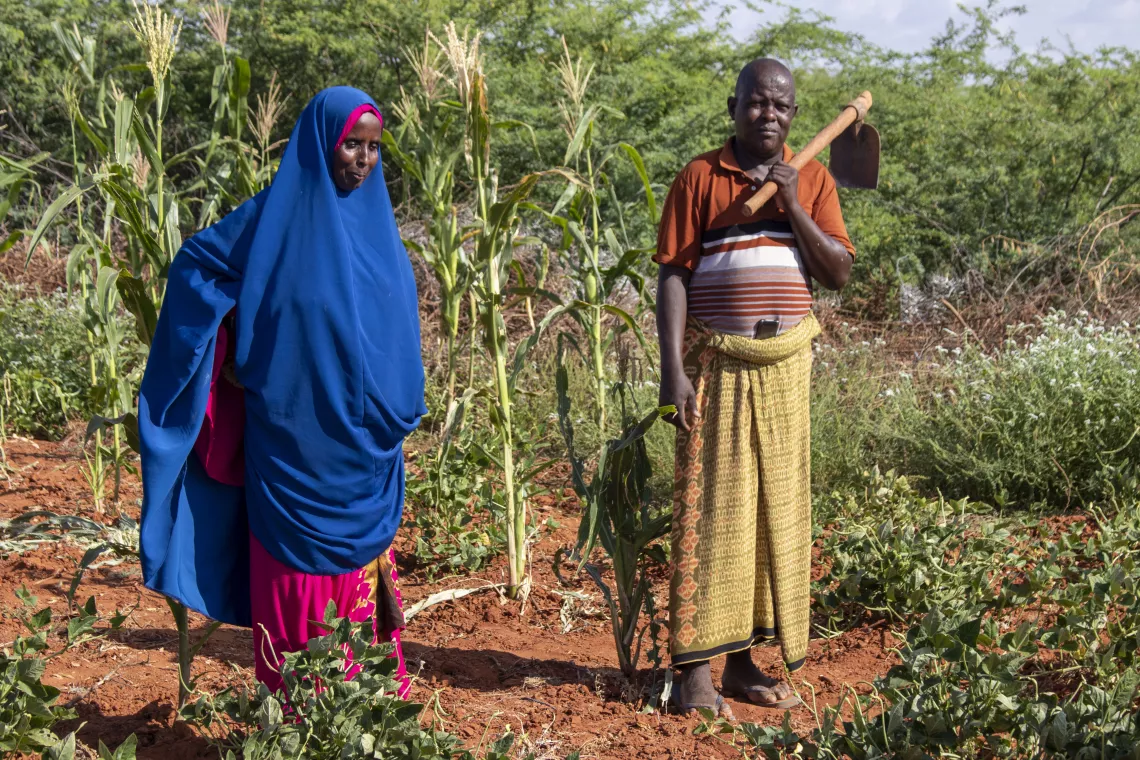
“I’m concerned about this so-called climate change. We planted our seeds, and there was a second drought. Then the floods came. The river came up to where we are standing, washing all the tomatoes away. We lost our harvest. In early December, the water went down, and we planted again. The crops are growing high. This is why I am happy today,” Ali says to Fatuma.
In 2024, the JRP was extended to Puntland. Together, the Government, UNICEF, WFP and FAO will continue to assist those in need and help build their resilience to climate disasters.