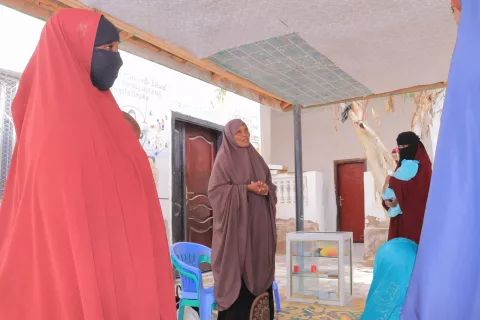
Bringing healthcare to every doorstep, Zamzam’s story in Deynile
Through daily household visits, Zamzam helps detect illness early, support pregnant women, and ensure children receive timely care.

Each morning in Deynile district of Mogadishu, Zamzam Abdullahi steps out with a clear purpose. There are families to visit, children to check on, and mothers who are counting on her. In a community where many families have been displaced and access to health services can be limited, Zamzam’s daily visits have become a lifeline.
A mother of five, Zamzam has worked as a Female Community Health Worker since 2021. Her role is simple in description, yet powerful in impact: ensuring that essential healthcare reaches families right at their doorstep.
“I visit at least seven households every day,” she explains. “I check on children, support pregnant mothers, and talk to families about their health.”

Her work begins with listening. Sitting with mothers, observing children, and asking careful questions, Zamzam builds trust through every interaction. With the training she has received, she is able to identify early signs of illness and take action before conditions become severe.
Through integrated community case management (ICCM), she provides life-saving care for common childhood illnesses such as diarrhea, pneumonia, and malaria. For many families, this care comes just in time. When cases are more serious, Zamzam does not hesitate. She supports families in seeking further treatment and ensures children and mothers are referred to health facilities quickly. “Sometimes you can see when something is not right,” she says. “That is when you have to act fast.”
Her role extends beyond treating illness. She also supports women during pregnancy and after childbirth, advising on nutrition, recognizing danger signs, and helping mothers make informed decisions about their health and their babies.

Over time, Zamzam has become a trusted presence in the community. Families know her, and she knows them. Mothers turn to her not only for medical support, but also for reassurance and guidance. For many households, she is the first and sometimes the only point of care.
At home, her responsibilities continue. As the main provider for her five children, Zamzam balances her demanding work with caring for her own family. Her day often stretches long beyond her final household visit.
The work, however, is not without challenges. Long distances, limited resources, and barriers to accessing health facilities can make her job difficult. “Sometimes ambulances are not available, and there are occasions when roads are closed,” she explains. “When a woman goes into labour, getting her to a health facility can be extremely difficult.”

Despite these obstacles, Zamzam remains committed. Day after day, she walks the same paths, knocks on the same doors, and continues to show up for her community.
Zamzam’s work shows that healthcare extends far beyond hospitals and clinics, it is built within communities, through trusted and trained individuals who reach families where they are, respond early to health needs, and ensure that no one is left behind.
With strong government leadership and sustained support from partners, including the World Bank and the Global Fund, community health workers like Zamzam are helping bring essential services closer to those who need them most.