Breaking the cycle: The fight against female genital mutilation
UNICEF partners with local civil society organizations to protect children and caregivers and provide essential child protection services.
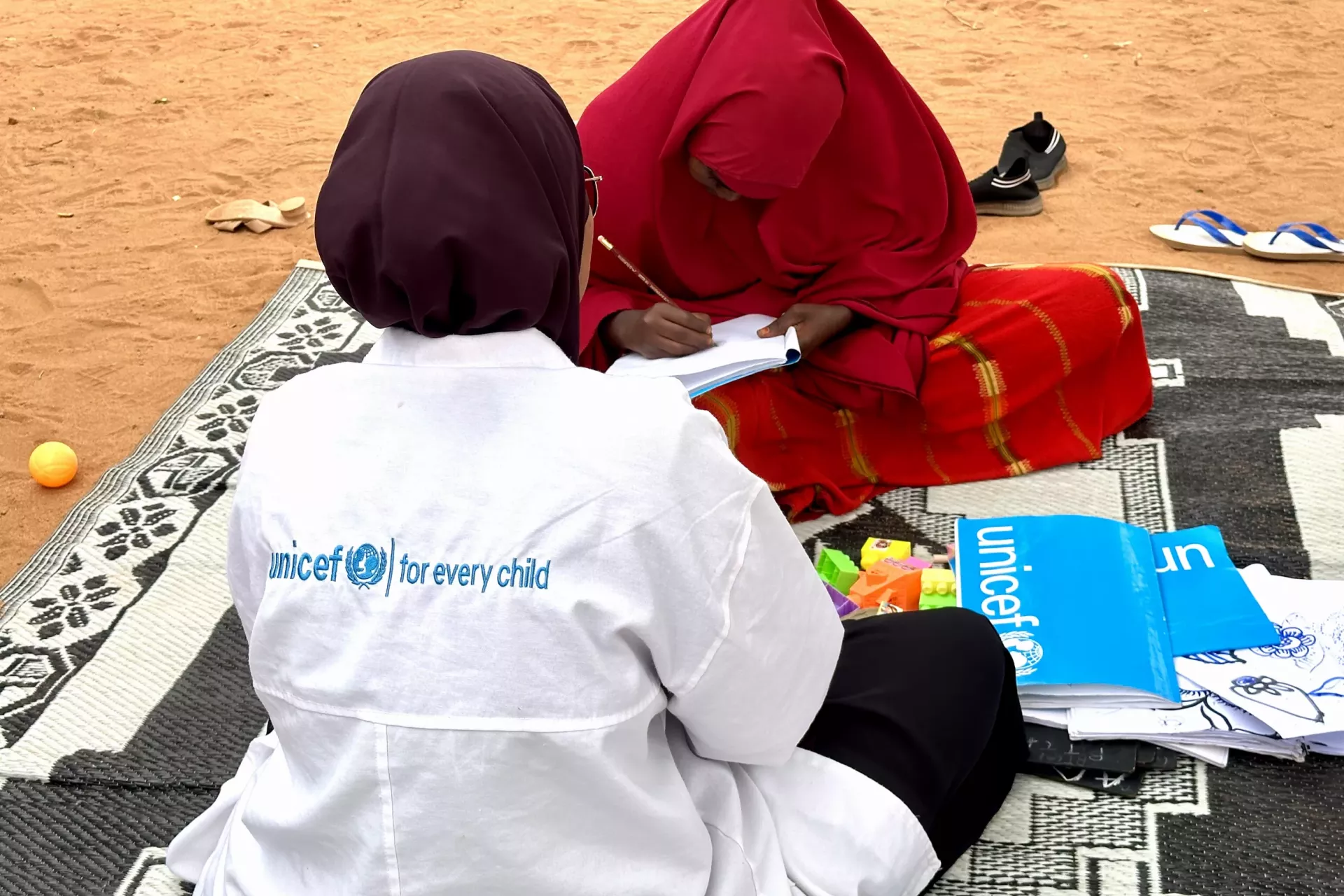
“My 6-year-old daughter has a problem when she urinates,” said Fadumo*, a young mother from the Iftin internally displaced camp in Bardheere.
Fadumo’s marriage was arranged on her 18th birthday. One year later, she was pregnant. “The news brought a lot of joy,” she told Northern Frontier Youth League (NoFYL), a UNICEF partner working in the area. “I was very excited to become a mother.”
Fadumo first learned about the practice of female genital mutilation (FGM) from her mother-in-law three months before delivering her baby. “My mother-in-law insisted that it would allow my child to lead a moral life,” recalled Fadumo. Instead, the painful procedure robbed her daughter of happiness. Three weeks after Fadumo gave birth, her mother-in-law visited with tools to perform FGM on the newborn. It haunts Fadumo to this day.
Fadumo is a survivor of FGM herself. She was seven years old when she was forced to undergo the procedure. The dangerous practice left her in agony for days, bleeding until she passed out. Later, she discovered her vaginal opening had been blocked and suspects her daughter is experiencing the same issue, as she has difficulty urinating. But Fadumo has had enough. When she became pregnant with another girl, she resolved to spare her second daughter from the harmful practice.
Fadumo’s story, and that of her daughter, is sadly common in Somalia, where FGM is nearly universal. Globally, the statistics are staggering: an estimated 230 million women and girls have been subjected to FGM, a human rights violation that involves the removal or injury of female genitalia for non-medical reasons. Somalia has the highest prevalence of FGM in the world, with 98 per cent of girls aged 5-11 undergoing Type III infibulation, the most severe form. The practice has devastating consequences, including chronic pain, infections, depression, birth complications, sexual health problems, infertility and even death.
Several factors perpetuate this harmful practice, including religious misconceptions, cultural norms, fear of ostracism, and limited awareness of its dangers. Many Somalis believe FGM is a religious requirement, despite overwhelming evidence to the contrary. Often, women who have undergone FGM advocate continuing the tradition.
“I blamed myself for not stopping my daughter from being cut because I knew the problems it would bring,” Fadumo admitted. During an awareness-raising session at her camp, she approached case workers to explain her daughter’s situation. She was immediately referred to the One-Stop Center for medical assistance.
“My daughter faced many challenges; she was bleeding and had difficulty urinating. At the One-Stop Center, she received medical assistance. The bleeding stopped, and she no longer feels pain when urinating,” said Fadumo, visibly relieved.
The information came too late for Fartun*, a 27-year-old mother of six daughters. She had already subjected her three eldest daughters to FGM. However, after attending awareness-raising sessions on the dangers of FGM, she was determined to protect her younger daughters. “We learned how harmful FGM is and were fully convinced it should not be practised. I discussed it with my husband, and he agreed it is harmful,” Fartun shared.
UNICEF works with local civil society organizations like NoFYL to protect and provide services for children and caregivers at risk of or experiencing child protection concerns, including GBV and harmful practices like FGM and child marriage. This work is made possible with support from donors such as the Government of Germany.
UNFPA and UNICEF have jointly led the largest global programme to accelerate the elimination of female genital mutilation (FGM) since 2008. In close collaboration with governments, grassroots community organizations and other key stakeholders, the joint programme harnesses the complementary expertise of both UNFPA and UNICEF to prevent female genital mutilation across the 17 countries where the programme operates.
*names changed
Story prepared by UNICEF's partner, Northern Frontier Youth League (NoFYL)