As World Breastfeeding Week kicks off in Somalia, there is a call for the government and communities to create systems for supporting families to successfully breastfeed their infants
While 6 in 10 babies in Somalia are breastfed within the first hour of birth, only 1 in 3 are exclusively breastfed in the first six months of life

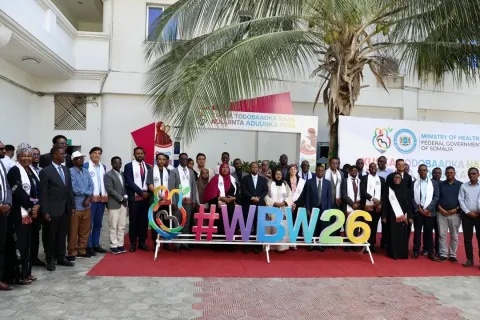
Mogadishu, 02 August 2025 - As Somalia joins the rest of the world in commemorating this year’s World Breastfeeding Week, the government, the health system, workplaces, and communities are being called upon to build systems that support mothers and their families to breastfeed their babies successfully.
This year’s theme - Create sustainable support systems - recognizes the barriers that breastfeeding families face due to inadequate support, misinformation, and systemic challenges. These include a lack of paid time off from work to breastfeed, inadequate parental leave after the baby is born, and insufficient protection from marketing of breastmilk substitutes like baby formula.
Speaking at a commemorative event in Mogadishu this morning, Health Minister Dr. Ali Haji Adam said breastfeeding was a critical foundation for a child’s health, development, and survival as it delivered lifelong benefits not just for children, but for mothers, families, and communities.
“The government is committed to creating sustainable support systems that protect, promote, and enable breastfeeding across the country,” he said. “We will continue to implement policies that strengthen maternal health services, train frontline workers, raise awareness, and ensure mothers have the support they need at home, in health facilities, and the workplace. As we mark World Breastfeeding Week, we reaffirm our promise to build an environment where every mother feels empowered to give her child the healthiest possible start in life.”
When integrated across policies, health systems, workplaces and communities, breastfeeding becomes more than a feeding choice; it is a pillar of sustainable development which should be prioritized everywhere.
A sustainable breastfeeding system is an all-of-society approach that ensures every mother has the support, environment, and resources to breastfeed successfully, from conception through the first two years of the child’s life and beyond.
“Breastfeeding is one of the most effective ways to give children a healthy start - improving cognitive development, strengthening immunity, and protecting both infants and mothers from chronic diseases,” said Dr. Kamil Mohamed, WHO Somalia Deputy Representative. “But mothers cannot do it alone. We must create sustainable support systems through quality health services, family-friendly workplace policies, and stronger legal protections against the unethical marketing of breastmilk substitutes”.
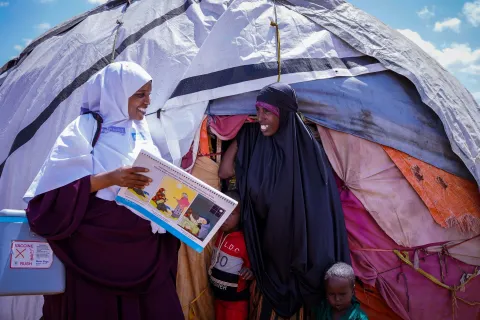
“We owe it to babies, the future generation of citizens, and to ourselves to ensure that they have the best start in life through exclusive breastfeeding for six months and continued breastfeeding for up to two years,” said UNICEF Representative Sandra Lattouf. “The benefits of breastfeeding outweigh any perceived negatives by a long mile. We need to ensure that every mother, her family, and the child are supported throughout their breastfeeding journey with the knowledge, resources, and encouragement they need. A healthy and thriving child is an asset for the family and nation.”
This year’s World Breastfeeding Week aims to inform Somali citizens about their role in creating supportive and sustainable environments for breastfeeding. Key objectives include promoting family-friendly workplace policies such as paid maternity leave and breastfeeding breaks, empowering communities through peer support networks and culturally sensitive education and advocating for policies that protect breastfeeding from commercial influence and misinformation.
In Somalia, 6 in 10 children are breastfed within an hour of birth, while 1 in 3 babies are exclusively breastfed for the first six months of life. Half of all babies are breastfed continuously for two years and beyond.
A major reason for the low rates of exclusive breastfeeding is the absence of legal measures against the unethical marketing of breastmilk substitutes, which are advertised and offered to mothers, wrongly, as an alternative to breastfeeding. Somalia has made minimal progress in adopting the Code of Marketing of Breast Milk Substitutes, which restricts the marketing of products intended to replace breastmilk and thereby protects mothers from commercial influence about their infant feeding choices.
This World Breastfeeding Week offers the government an opportunity to redouble its efforts to adopt the Code of Marketing of Breast Milk Substitutes and align Somalia with other countries that have a comprehensive and enforceable legal framework that protects babies and mothers from the marketing of breastmilk substitutes. Adoption of the Code of Marketing is part of the country’s obligations under the Convention on the Rights of the Child, which it ratified in 2015.
Media contacts
About UNICEF
UNICEF promotes the rights and wellbeing of every child, in everything we do. Together with our partners, we work in 190 countries and territories to translate that commitment into practical action, focusing special effort on reaching the most vulnerable and excluded children, to the benefit of all children, everywhere.
UNICEF has been working in Somalia since 1972 when its first office opened in Mogadishu. Today UNICEF has over 300 staff working in Mogadishu, Baidoa, Dollow, Garowe, Hargeisa and also Nairobi, Kenya. Together with 200 international and national NGOs and community-based organizations, UNICEF delivers services in Health, Nutrition, WASH, Education and Child Protection, and responds to emergencies and supports peace-building and development.