Newly released data shows Somalia is making notable progress in child immunization

Mogadishu, Somalia, 15 July 2025 - The annual World Health Organization (WHO) and United Nations Children’s Fund (UNICEF) Estimates of National Immunization Coverage (WUENIC) released today show that 70 per cent of children in Somalia are fully vaccinated, an increase of 28 per cent from 2012 to 2024, with steady improvements across all antigens since 2019. This report presents global immunization datasets on key infant and childhood vaccinations at the country level, including areas where progress has been made, opportunities that remain, and where immunization coverage has declined.
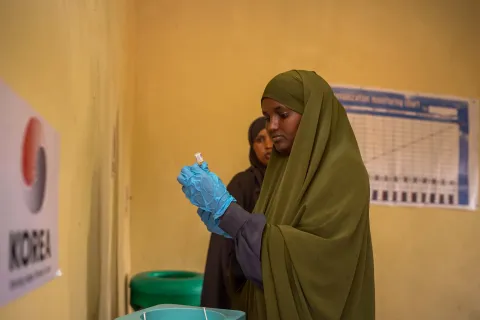
Somalia has made great investments to reach this level. In 2024, the accelerated “Big Catch-Up” initiative, spearheaded by the Federal Ministry of Health and Human Services in collaboration with UNICEF and WHO, targeted ‘zero-dose’ children (who had never received a single vaccine) and children with partial (incomplete) vaccination, which is critical for child survival. This year, multiple vaccination campaigns were held, and pneumococcal conjugate vaccine (PCV) and rotavirus vaccines were introduced to address childhood pneumonia and diarrhoea, the leading causes of death in children under five in Somalia.
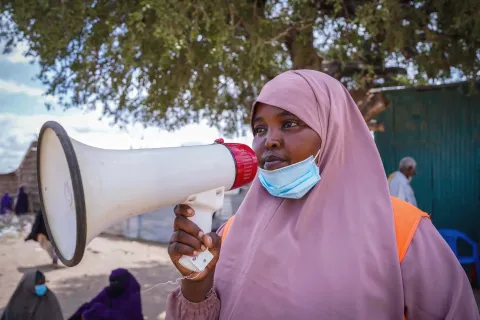
“Immunization is one of the most cost-effective public health interventions that prevents vaccine-preventable diseases,” said H.E. Dr. Ali Haji Adam, Minister of Health. “To continue strengthening the health system in Somalia, we must enhance the capabilities of our frontline health workers and increase efforts to create awareness in communities about life-saving vaccines. We all have more work to do.”
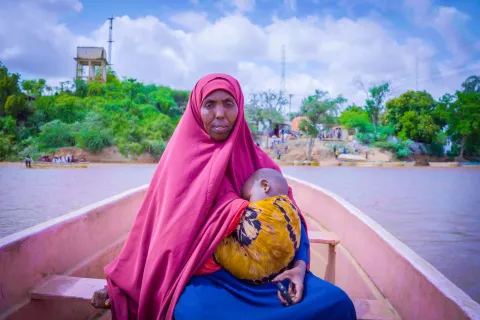
In Somalia, routine immunization coverage was below 50 per cent for decades, hindered by ongoing conflict, displacement, inaccessibility and limited health infrastructure. These challenges have contributed to approximately 1.5 million children under 5 currently being zero-dose.
“Somalia has made big strides in delivering critical vaccines to vulnerable children, no matter where they live. Through the ‘Big Catch-Up,’ nearly 700,000 zero-dose children received their first dose of pentavalent vaccine, which protects against killer diseases such as diphtheria and whooping cough. The country has also been conducting high-quality vaccination campaigns – including in coordination with neighbouring countries - in efforts to protect children from the ongoing polio outbreak, which started in 2017,” said Dr Renee Van de Weerdt, WHO Representative in Somalia.
Reliable data is a crucial pillar of the health system. To strengthen data quality, UNICEF, in collaboration with WHO, supported the Federal Ministry of Health in conducting a nationwide data quality improvement exercise across all districts and health facilities. This initiative, combined with investments in the overall immunization system and advocacy efforts, resulted in a significant improvement in data quality and vaccination rates.
“Investments and coordinated efforts to strengthen Somalia’s child immunisation programme are yielding high results,” said Nisar Syed, UNICEF acting Representative in Somalia. “With government leadership, UNICEF is advancing vaccine storage capacity and the ability to keep them at the right temperature. To date, 90 per cent of the health facilities providing vaccinations have been equipped with solar-powered refrigeration. Together with the Ministries of Health, our dedicated partners and resilient health workers, children are being reached with life-saving vaccines, even in some of the most difficult and hard-to-reach places.”
The 2024 WUENIC estimates that the number of zero-dose children decreased in countries, like Somalia, that are supported by Gavi, the Vaccine Alliance. This evidence underscores the importance of investing in immunization. Key partners, including the Global Polio Eradication Initiative, the UK’s Foreign, Commonwealth and Development Office, the World Bank, and the Gates Foundation, have been instrumental in improving child survival. Now is the time to build on these gains and sustain the momentum, as the world works toward the Immunization Agenda 2030, which aims to ensure that everyone, everywhere, at every age, fully benefits from vaccines to improve health and well-being.
#####
Notes to editors:
WHO dataset: Global dashboard, Country profiles, Additional resources
UNICEF dataset: Overview, Data visualisation, Regional data visualisation, Country profiles
Media contacts
About UNICEF
UNICEF promotes the rights and wellbeing of every child, in everything we do. Together with our partners, we work in 190 countries and territories to translate that commitment into practical action, focusing special effort on reaching the most vulnerable and excluded children, to the benefit of all children, everywhere.
UNICEF has been working in Somalia since 1972 when its first office opened in Mogadishu. Today UNICEF has over 300 staff working in Mogadishu, Baidoa, Dollow, Garowe, Hargeisa and also Nairobi, Kenya. Together with 200 international and national NGOs and community-based organizations, UNICEF delivers services in Health, Nutrition, WASH, Education and Child Protection, and responds to emergencies and supports peace-building and development.