Kangaroo Mother Care Saving Newborn Lives in Sierra Leone
Improved survival rates in Special Care Baby Units highlight the power of low-cost, life-saving interventions
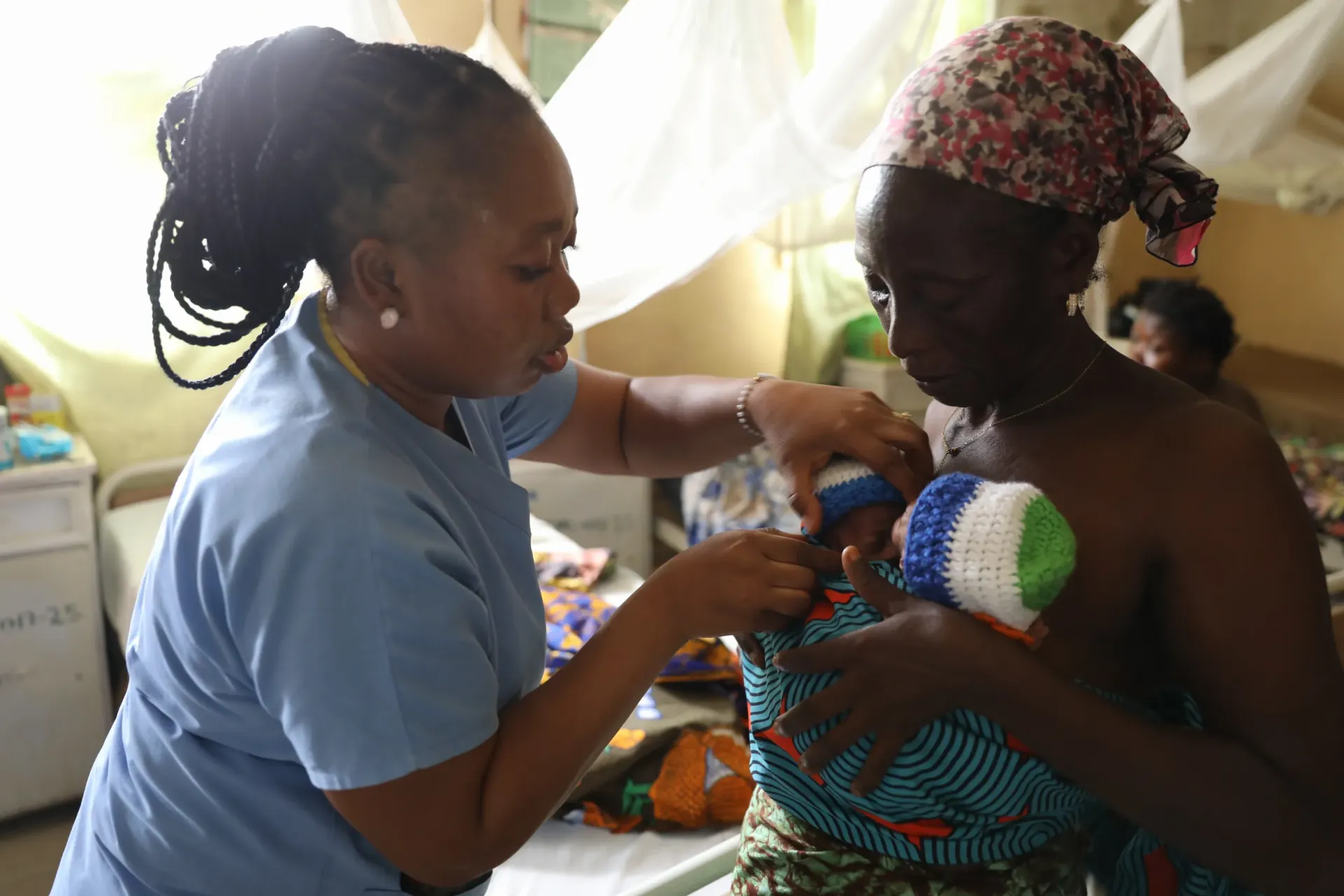
Bo, 23 April 2026 – As the clock struck two in the afternoon, they raised their little arms across their faces and opened their tiny mouths. It was feeding time for two tiny pre-term babies who had spent two weeks at the Special Care Baby Unit (SCBU) at the Bo Government Hospital.
The twins were born three weeks early and were very small. Their mother developed complications that precipitated the premature delivery and was evacuated to the capital city, Freetown, for advanced medical attention. Their grandmother stepped in.
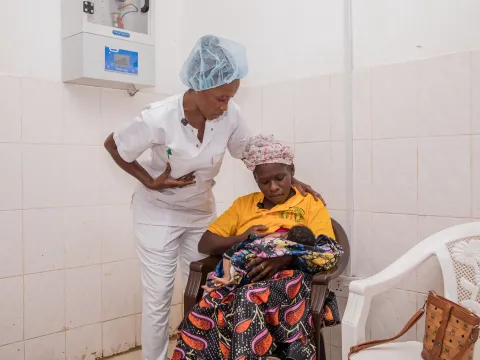
The babies had to be kept naturally warm and stable through prolonged skin-to-skin contact to aid their recovery and growth. This process is referred to as Kangaroo Mother Care (KMC). KMC also improves breathing and heart rate and supports breastfeeding.
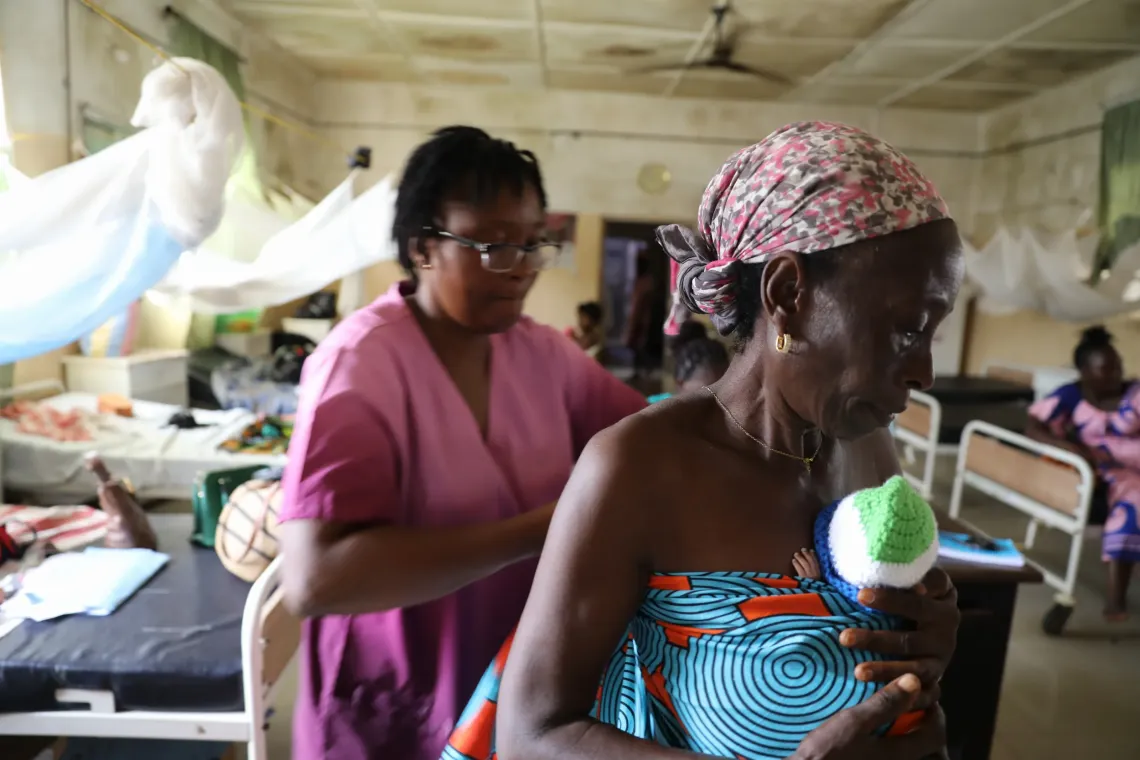
“Their situation is critical, so I have the family responsibility to quickly step in to provide them with KMC. I cannot provide them with breast milk, but I understand that KMC will prevent infections, promote their weight gain and improve their chances of survival,” said Hawa George, grandmother of the pre-term twins as an SCBU nurse strapped the twins to her chest.
UNICEF, in collaboration with the Ministry of Health and with support from the Government of the United Kingdom through the Foreign and Commonwealth Development Office (FCDO), initiated KMC in 2024 which is being practiced in all 17 SCBU’s across the country. Coupled with the training of 76 neonatal nurses, improvements in the maintenance of essential medical equipment, and provision of life-saving medicines, the survival rates at the SCBUs have increased to 90 per cent in 2025. Almost 10 years ago, only 70 per cent of pre-term babies survived.
KMC has contributed to this achievement and 1,150 low-birth weight and preterm babies having benefited from KMC in 2025.
“KMC has proven to be a very effective lifesaving approach in the treatment and care of babies at SCBUs as it provides natural warmth and bonding which these babies desperately need to survive,” said Dr. Lutomia Mangala, UNICEF Sierra Leone Health Specialist, “It is a low-cost and cost-effective intervention for low-birth weight and preterm babies but its impact on the survival rates is enormous.”
After three weeks in the hospital, grandmother Hawa agrees. “My grandchildren are gradually gaining weight with the help of the infant formula and they are getting better and stronger every day with my body warmth,” she said with a big smile, “I am counting the days to being discharged from the hospital so that we can go back home and reunite with their mother.”