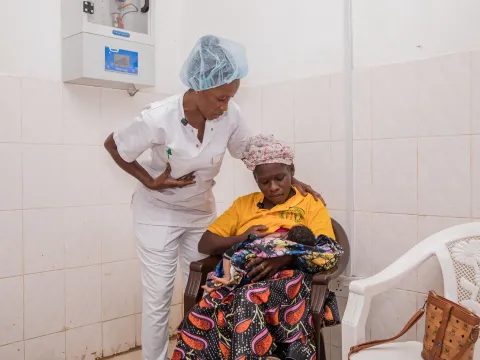
From advice to action, breastfeeding support is helping mothers give children the best start to life
With guidance from health workers and support from their families, mothers in Pujehun are doing things differently for their young children

Pujehun, Sierra Leone — The first 1,000 days of life provide a unique opportunity to lay the foundation for a child's survival, growth, learning, and future well-being. Investing in nutrition during this period yields benefits throughout the life course and across generations.
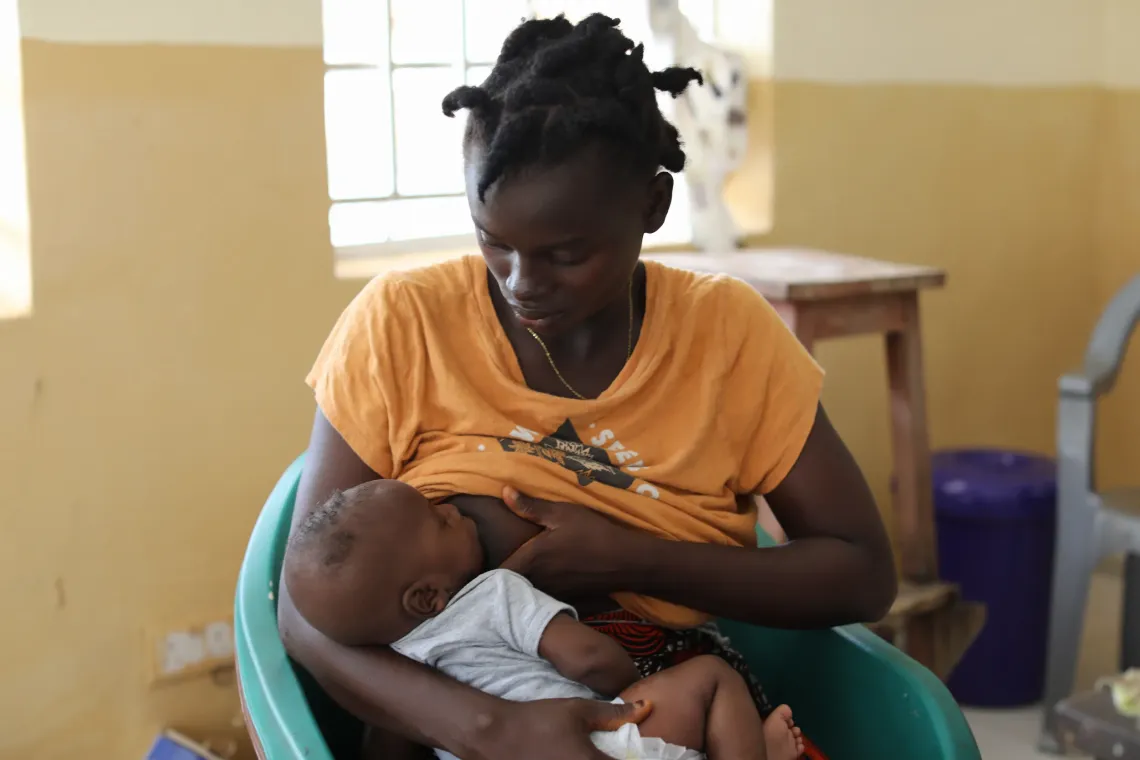
When Musu Kamara looks at her 14-month-old son Harrison, she sees the difference that information, support, and determination can make.
When her first two children were born, now aged 14 and 9, Musu did not know about the importance of exclusive breastfeeding. “I did not know about exclusive breastfeeding when I had my other children,” Musu says.
This time, things were different. After receiving guidance and counselling from health workers, she exclusively breastfed Harrison for his first six months and has continued breastfeeding him beyond six months, alongside complementary foods.
Today, Harrison weighs 9.8 kilogrammes, and is thriving. His visits to the health facility have mainly been for vaccinations, growth monitoring and promotion (GMP) and routine wellness checks, rather than the frequent treatment visits her older siblings experienced.
A difficult choice, made for Harrison
For Musu, knowing what to do was only the beginning. She also had to choose to do it.
She earns a living through petty trading, an important source of income for her family. But exclusively breastfeeding Harrison meant spending more time with him. To ensure she could breastfeed him as recommended, she had to stop her petty trading for a period.
“It was not easy because I had my petty trading,” she says. “But I wanted to make sure that I exclusively breastfed Harrison, so I had to stop the business and stay with him.”

Her husband and other relatives supported her throughout the breastfeeding journey, helping her manage the demands of caring for Harrison and encouraging her to remain committed to her decision.
For Musu, that support made it easier to put what she learned from health workers into practice.
“If I had known this when I had my other children, I would have done the same for them,” she says.
Her experience illustrates a challenge many mothers face: knowing what is recommended matters, but putting that knowledge into practice can be difficult when mothers are also managing livelihoods, household responsibilities, and the demands of caring for young children.
Through support from Latter-day Saints Charities through the Child Nutrition Fund, efforts to strengthen breastfeeding counselling and support are helping health workers and community-level workers provide mothers with information and guidance to make informed decisions for their children in eight districts of Sierra Leone.
At Pujehun Government Hospital, Nurse Elizabeth Koroma is among the health workers who provide mothers with counselling and guidance on Optimal Infant and Young Child Feeding. For mothers like Musu, that counselling can be the point at which information becomes a practical decision.
Supporting mothers beyond the health facility
But breastfeeding support does not end when a mother leaves the hospital.
At Futa Pejeh Community Health Centre which provides medical care to about 6,402, Nurse Mariama Jalloh works with community health workers to deliver essential health and nutrition messages to families at community and peripheral levels, helping to promote healthy practices and improve child and maternal well-being.
Mariama says that one of the most important parts of her work is helping mothers understand that breastfeeding challenges can be discussed and addressed.

“Some mothers come with concerns about whether they have enough breastmilk, whether the baby is getting enough, or how they can continue breastfeeding when they have other responsibilities,” she says. “We listen to them, explain what they need to know, and encourage them to continue.”
The challenges can be particularly difficult for mothers who need to work to support their families.
“For some mothers, breastfeeding can be difficult because they have to work or take care of many other responsibilities,” Mariama says. “We try to understand their situation and help them find ways to continue breastfeeding while managing those responsibilities.”
Supporting these efforts are community health workers (CHWs) like Ansumana Kallon, who help bridge the gap between health facilities and communities by delivering vital health and nutrition information directly to mothers and families. “The health workers cannot be everywhere at the same time,” Mariama explains. “The CHWs help us reach mothers in their communities, follow up with them and reinforce the messages they receive at the health facility.”
For Ansumana, being a community health worker means being a trusted link between families and the health system. When he visits mothers in some of the 58 households he covers, he asks about their children's health and how they are managing breastfeeding. He listens to their concerns, reinforces the information provided by health workers, and links mothers to the health facility when they need additional support.
“When we visit mothers, we ask them how breastfeeding is going and whether they are facing any problems,” Ansumana says. “Some mothers have questions or have heard information from other people that may not be correct. We talk with them, give them the information we have been taught, and encourage them to seek help from the health facility when necessary.”

Helping mothers overcome everyday challenges
Ansumana says balancing breastfeeding with work and household responsibilities is one of the challenges he encounters among mothers in the community.
“Some mothers have to go out to sell or do other work, and they may feel that it is difficult to breastfeed as recommended,” he says. “We encourage them and explain why breastfeeding is important for the child.”
For mothers who are struggling, follow-up can be just as important as the initial counselling.
“Giving the mother information once is sometimes not enough,” Ansumana explains. “When we return to check on her, we can see whether she is facing any difficulties and encourage her. If there is a problem we cannot handle, we link her with the health facility.”
This continued connection helps ensure that breastfeeding support is not limited to a single counselling session, but becomes part of an ongoing relationship between mothers, community health workers and the health system.
“I have learned that every mother has different challenges,” Ansumana says. “Some need information, some need encouragement, and some need help to access services. We have to listen to them first before we can know how best to support them.”
Turning knowledge into healthier choices
For Brenda Muwaga, UNICEF Nutrition Specialist, the experience of mothers like Musu demonstrates why breastfeeding support must go beyond simply providing information.
“Breastfeeding support is not simply about telling mothers what to do,” Brenda says. “It is about ensuring that mothers have the knowledge, confidence and practical support they need to breastfeed successfully, while also ensuring that health workers and community health workers have the capacity to support them.”
Every mother's circumstances are different, she explains. “A mother may know that exclusive breastfeeding is recommended, but she may also be facing economic pressures, work responsibilities or other challenges,” Brenda says. “By listening to mothers, understanding those challenges, and supporting them, we are helping to create an environment where children can survive, grow, and thrive.”
For Musu, that support helped her make a choice she had not been able to make with her older children.

A different experience for Harrison
Musu does not claim that breastfeeding alone explains why Harrison has needed fewer hospital visits than his older siblings. But the difference has been meaningful for her as a mother.
Musu's journey has required sacrifice. For her, the experience has changed what she would tell other mothers.
“I want other mothers to know what I have learnt,” she says. “It is important to breastfeed your baby and to listen to the advice from the health workers.”
For Musu, that information came after she had already experienced motherhood twice. But this time, she had the knowledge, family support and health-system support to make a different choice.
And for Harrison, that choice has helped give him a strong start.