Global Programme to End Child Marriage Steering Committee begins field visit to Sierra Leone

Freetown, Sierra Leone – 13 April 2026 – A high-level delegation from the Global Programme to End Child Marriage (GPECM) Steering Committee has commenced a joint field visit to Sierra Leone today, reaffirming global and national commitments to ending child marriage and advancing the rights and well-being of adolescent girls.
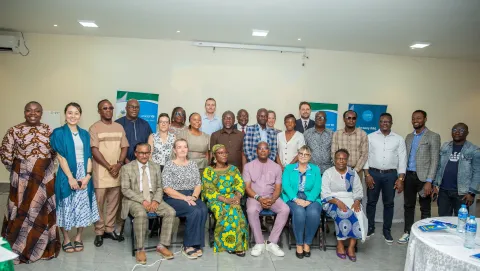
The visit, hosted by the Government of Sierra Leone in collaboration with UNICEF and UNFPA, will take place from 13 to 17 April 2026. It brings together global and national stakeholders to review progress, share experiences, and strengthen efforts to protect girls across the country.
In Sierra Leone, the programme has contributed to a reduction in child marriages and expanded opportunities for 164,613 adolescent girls since 2016, while strengthening national systems and encouraging communities to challenge harmful practices. According to the country’s National Demographic Health Survey (DHS) data, the proportion of women aged 20–24 who were married before the age of 18 declined from 48 per cent in 2008 to 39 per cent in 2013, falling further to 30 per cent in 2019. The proportion of women who were married before age 15 also fell from 19 per cent in 2008 to 13 per cent in 2013, and then to 9 per cent in 2019.
The mission begins in Freetown, where the delegation will engage senior government officials to discuss national priorities, achievements, and remaining challenges in addressing child marriage and teenage pregnancy. These engagements will include multi-sectoral dialogue bringing together ministries responsible for gender, education, health, justice, social welfare, and economic planning, underscoring the importance of a coordinated, whole-of-government response.
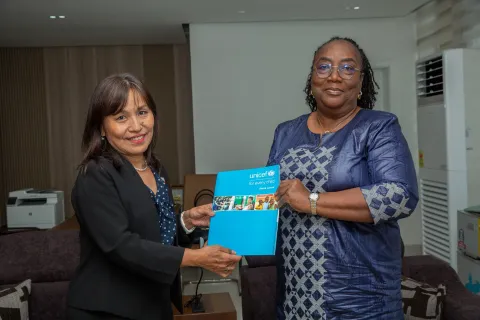
Throughout the week, the delegation will also meet with development partners and other key stakeholders to strengthen collaboration and align efforts. A courtesy engagement with the Office of the First Lady is expected to further highlight the high-level national commitment to promoting girls' rights and reducing child marriage and teenage pregnancies.
As part of the visit, the Steering Committee will travel beyond the capital to observe programme implementation at community level. These field visits will provide an opportunity to interact directly with adolescents, families, and community leaders, and to witness initiatives such as adolescent-friendly health services, safe spaces, school reintegration programmes, and community dialogue platforms designed to address the drivers of child marriage.
By engaging local councils, traditional authorities, and young people themselves, the delegation will gain deeper insight into the progress towards, and challenges of, ending child marriage and teenage pregnancy, particularly in rural and underserved communities.
“Ending child marriage and teenage pregnancy requires sustained collaboration across sectors and levels. This mission will help us deepen partnerships and accelerate results for girls in Sierra Leone,” says Rudolf Schwenk, UNICEF Representative.
“This mission is an important opportunity to strengthen collaboration to amplify the voices of communities and young people, and scale up evidence-based interventions that empower girls to make informed choices about their bodies and futures. Ending child marriage is imperative to ensuring every girl reaches her full potential,” says Kunle Adeniyi, UNFPA Representative.
Sierra Leone has made important strides in recent years through strengthened policies, expanded services, and sustained advocacy. However, child marriage, which limits the opportunities of girls, remains a challenge for many. This visit provides a timely opportunity to reaffirm commitments, elevate community voices, and mobilize ongoing action to ensure that every girl can grow, learn, and reach her full potential.
Media contacts
About the Global Programme to End Child Marriage
The Global Programme to End Child Marriage (GPECM) is a joint initiative of UNICEF and UNFPA, supporting countries with high prevalence of child marriage to implement evidence-based, girl-centered strategies. The programme focuses on empowering girls, engaging families and communities, strengthening systems, and improving data and evidence for policy and programming.
About UNICEF
UNICEF works in some of the world’s toughest places to reach the world’s most disadvantaged children. Across more than 190 countries and territories, we work for every child, everywhere, to build a better world for everyone.
For more information about UNICEF and its work for children in Sierra Leone, visit https://www.unicef.org/sierraleone
Follow UNICEF Sierra Leone on Twitter, Facebook, Instagram, and YouTube
About UNFPA
UNFPA, the United Nations sexual and reproductive health agency, works in over 150 countries and territories to deliver a world where every pregnancy is wanted, every childbirth is safe, and every young person’s potential is fulfilled.
For more information about UNFPA and its work for children in Sierra Leone, visit https://sierraleone.unfpa.org/en
Follow UNFPA Sierra Leone on X, Facebook, Instagram and Youtube
For further information, please contact:
UNICEF: Harriet Mason, UNICEF Sierra Leone, +232 78 597004, [email protected]
UNFPA: Ava Whyte, UNFPA Sierra Leone, +232 77 842129 [email protected]