Strengthening Support for Parents
New report highlights the importance of investing in early childhood parenting support through cross-sector collaboration and sustainable funding

- Srpski
- English
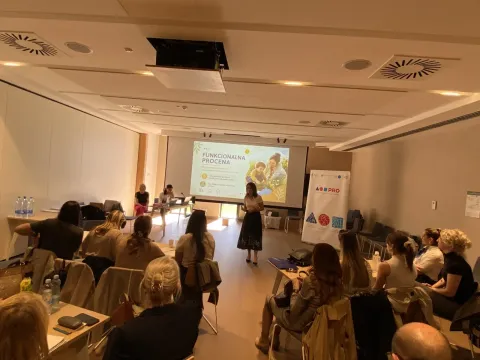
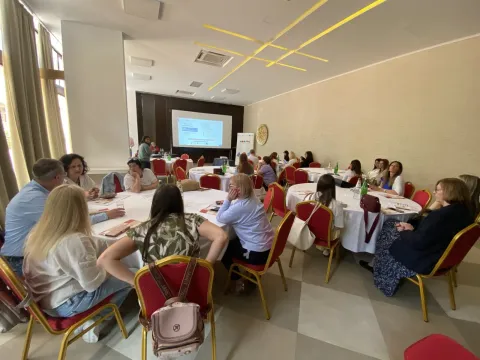
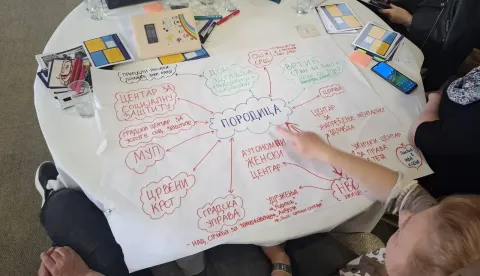
Belgrade, 20 June 2025 – As part of Parenting Month, a roundtable titled “Early Childhood Development and Parenting – Progress and Perspectives” brought together national and local stakeholders crucial for supporting parenting and early childhood development. The event served as a platform to assess achievements and collectively identify future priorities. The key findings and recommendations from the first comprehensive Report on the Development of Parenting Support Policies and Programmes in the Republic of Serbia were presented.
The report offers valuable insights into systemic support for parents and children, acknowledging progress while pointing to areas where greater investment and coordination are essential for further improvement.
Findings show that parenting is acknowledged in over 40 strategic documents and 20 programmes. However, there is still no unified national strategy that ensures consistent and comprehensive support for every parent across Serbia.
A particular challenge remains in reaching the most vulnerable families—who, as the analysis shows, often do not receive adequate assistance when they need it most.
“These programmes help parents strengthen their competencies, reduce feelings of isolation and stress, boost confidence, and foster positive outcomes for children. However, to ensure support reaches every family, additional investment is needed in human resources—such as home-visiting nurses, intersectoral early intervention teams, and digital solutions,” said Dr Jelena Zajeganović-Jakovljević, Health and Early Childhood Development Specialist at UNICEF Serbia.
The education system is uniquely positioned to reach nearly every family and plays a vital role in providing timely, inclusive, and empowering support to parents.
“The Ministry of Education remains committed to further advancing programmes that support parents from the earliest days of their child’s development—especially through the preschool system, but also through formal education. Our goal is for the education system to become a place where parents can access reliable information, counselling, emotional support and assistance with the everyday challenges of parenting. Through stronger intersectoral collaboration, joint training, enhanced professional capacity, and the expansion of credible digital platforms, we can ensure that every child and every parent receives systematic attention and support,” said Milan Pašić, Assistant Minister of Education.
The health system plays a key role in delivering first-line support to families with young children—especially in recognising and responding to developmental needs during early childhood.
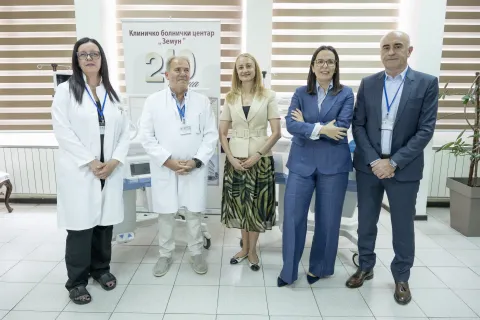
“Paediatricians, community nurses, and the network of child development counselling units are the main pillars of primary health care relied upon by parents in the early days and years of a child’s life. It is crucial to amend laws and regulations to enable every district centre in Serbia to establish a functional development counselling unit. At the same time, the registry for children with developmental difficulties must be further developed as a tool for timely identification and planning of support for children and their families,” said Dr Snežana Plavšić from the Milan Jovanović-Batut Institute of Public Health.
The report calls for the adoption of a unified national plan for parenting support that would align efforts across sectors and provide concrete, budgeted measures.
“It is important that Serbia develops a national policy for early childhood development and parenting that integrates health, education, social and child protection sectors, and ensures universal, progressive and more intensive support for the most vulnerable—throughout every stage of a child’s development,” emphasised Prof. Dr Mirjana Đorđević, inclusion expert and one of the report’s contributors.
In addition to national-level measures, it is crucial that local governments are equally engaged in designing and implementing parenting support programmes.
“Funding services through local budgets and cross-sector coordination in parenting and child development support are of vital importance to children, families and communities. Global research consistently shows that investing in quality parenting programmes significantly contributes to child health and development, improved educational outcomes, stronger and more secure peer relationships, and overall life satisfaction and success. Early childhood development and parenting programmes are among the most cost-effective strategies for community development,” said Sonja Vujin, Programme Manager for Parenting Support and Early Development at the Standing Conference of Towns and Municipalities.
The report’s recommendations aim to serve as a foundation for developing sustainable solutions that will ensure every family can access quality support—anytime, anywhere, and without stigma or barriers.
Media contacts
O UNICEF-u
Prisutni smo u više od 190 zemalja i teritorija, a kroz sve što radimo promovišemo prava i dobrobit dece, posebno one koja su najugroženija i isključena. U potpunosti se finansiramo od dobrovoljnih priloga pojedinaca, država i vlada, fondacija i kompanija.
Pratite UNICEF Srbija na: Facebook-u, Twitter-u, YouTube-u, Instagram-u i LinkedIn-u.