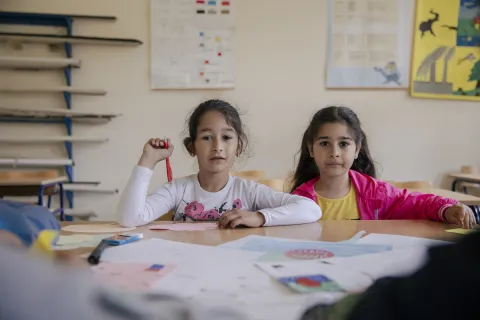
National Coalition for Ending Child Marriage Meeting
23 March, 2026
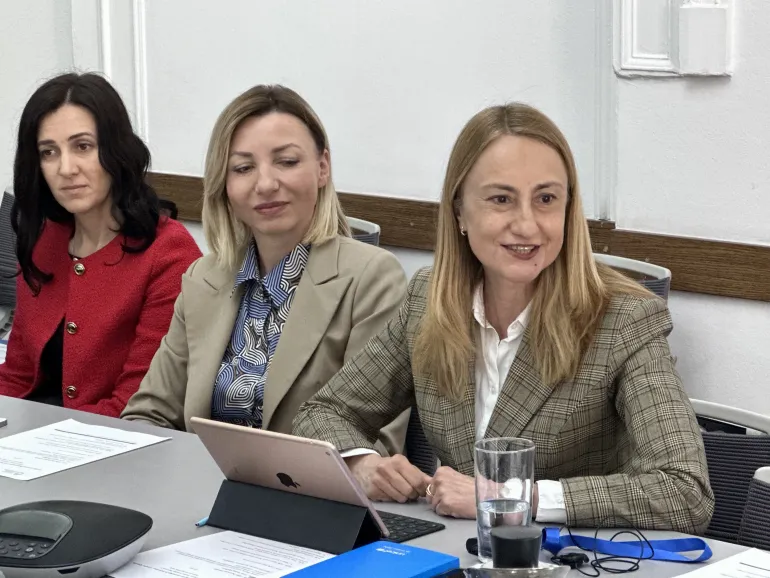
Your excellency Minister Macura, dear Commissioner Antonijevic, Ms. Nešić, dear colleagues,
Good afternoon, and a warm welcome to all of you. It is a pleasure to host you today at UNICEF. Thank you for being here and for your continued commitment to ending child marriage and protecting the rights of every child.
The Coalition has been active since 2019, ensuring continuity and bringing together a wide range of actors around a shared goal. Over the years, it has opened multiple areas of work where important progress has been made, but where further efforts are still needed.
One of these key areas is legislative reform. The Coalition has played an important role in advocating for stronger legal protection for children and survivors of violence. As you may recall, initial proposals for amendments to key laws were submitted back in 2021, and reiterated last year. These include important changes to the Criminal Code and the Law on the Prevention of Domestic Violence. We also welcome the Ministry for Family Care and Demography’s announcement to review the Family Law. UNICEF continues to provide technical support to the Coalition to ensure that these efforts remain evidence-based and aligned with international standards.
At the same time, since last year, we have placed a stronger focus on girls who are pregnant or adolescent mothers. This remains a highly vulnerable group, and we must not lose sight of their needs. We must approach this issue systemically and work towards translating existing research into concrete, operational solutions. This includes ensuring continued access to education, improving information on reproductive health, and strengthening the response of institutions, including consistent recognition and reporting of child marriage as a form of violence.
Data also remains a critical part of our work. While we have a solid evidence base, we must continue to use it more effectively for planning and advocacy. Findings from UNICEF’s MICS surveys show that progress is still slow and that child marriage rates remain high. Later this year, UNICEF, together with the National Statistical Office, will present new MICS data, which will allow us to better track trends, both in the general population and among Roma communities, and deepen our understanding of how this harmful practice is evolving in Serbia.
At the same time, data and experience from the field point to both progress and gaps. There are positive examples at the local level, where proactive measures such as awareness-raising, support to education, and strong intersectoral cooperation are making a real difference. However, there are also municipalities where coordination remains weak, measures are limited, and this issue is not yet sufficiently prioritized. Learning from both is essential if we are to strengthen our collective response.
Looking ahead, it is also important to reflect on sustainability. UNICEF remains committed to providing policy advice, but this is the momentum to consider how to ensure long-term continuity and stronger national ownership of the Coalition’s work, including the role of relevant institutions in leading these efforts.
Finally, I would like to highlight the importance of accountability. All of us here - Coalition members, institutions, and partners - have a role in ensuring that evidence and recommendations are translated into action, into concrete solutions and have real impact on the life of girls.
Thank you once again for your commitment. I look forward to a productive discussion and to hearing your ideas on how we can continue to move this important work forward together.
Media contacts
O UNICEF-u
Prisutni smo u više od 190 zemalja i teritorija, a kroz sve što radimo promovišemo prava i dobrobit dece, posebno one koja su najugroženija i isključena. U potpunosti se finansiramo od dobrovoljnih priloga pojedinaca, država i vlada, fondacija i kompanija.
Pratite UNICEF Srbija na: Facebook-u, Twitter-u, YouTube-u, Instagram-u i LinkedIn-u.