Nurturing Green Spaces and Minds in Schools
A primary school in Bugesera District gets ready to plant trees and train young environmental stewards

In Ngeruka Sector of Rwanda's Bugesera District, a transformation is taking root at Groupe Scolaire (GS) Rutonde Primary School. A barren backyard with barely any greenery will soon buzz with life and promise. This change is part of an innovative school-greening project supported by IHS Towers, Rwanda through UNICEF Rwanda and implemented by World Vision, which aims to plant 10,000 trees, nurturing the environment and young learners' minds.
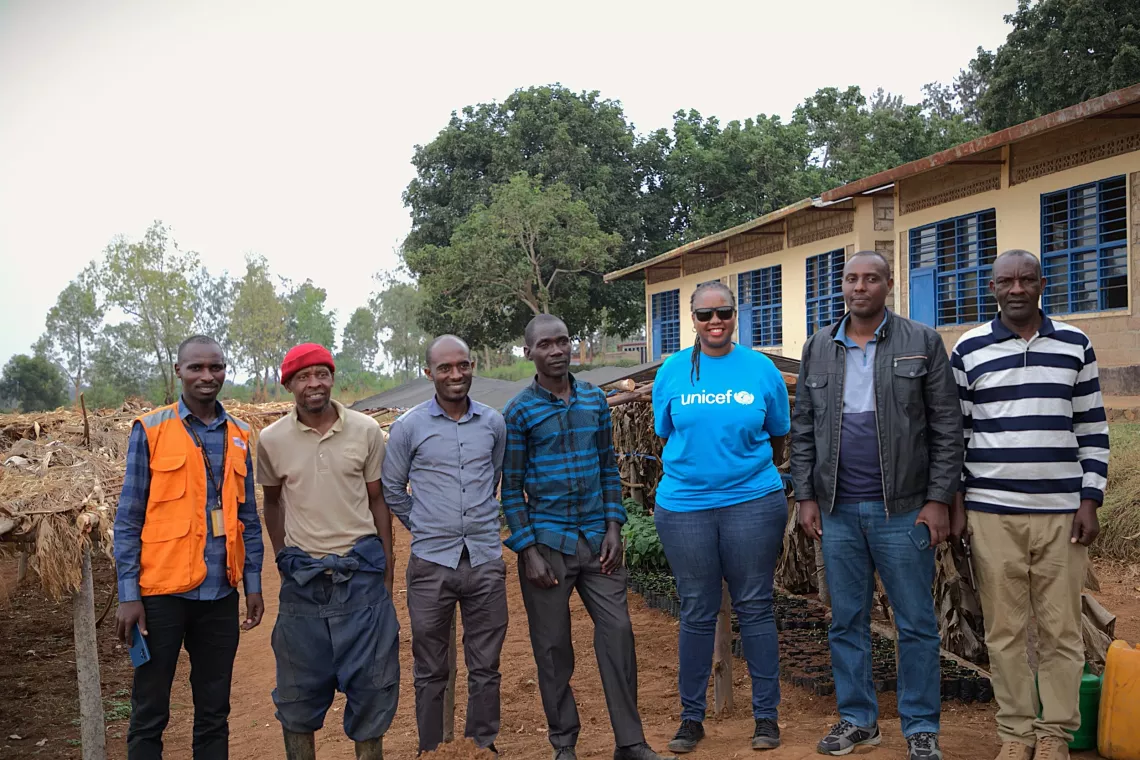
On a quiet day in mid-August, with students away on their holidays, the UNICEF Rwanda team visited GS Rutonde to witness the early stages of this green revolution. The contrast between the bare, exposed land and the newly established tree nursery was striking. Row upon row of carefully tended seedlings stood ready to breathe new life into the school grounds.

Mr. Semana François Xavier, a teacher at GS Rutonde, shared his excitement about the project. "The environmental training we received has been eye-opening," he said, his eyes bright with enthusiasm. "I can't wait to share this knowledge with our students. We'll not only be planting trees but also cultivating a better understanding of our ecosystem, how we benefit from it, and our role in protecting it."
The project's reach extends beyond GS Rutonde. Operating in four other districts across the Eastern Province, namely Ngoma, Kirehe, Rwamagana, and Nyagatare, this initiative is being piloted in two schools per district. Teachers from each school, including Mr. Hakizimana, underwent specialized environmental training, equipping them to become green ambassadors in their respective institutions.

As we walked through the nursery, we met Mr. Habyarimana Ildephonse, the school's gardener. With gentle hands, he tended to the young saplings, a mix of shade trees and fruit-bearing species. "Every day, I water and prune these seedlings," Mr. Niyonkuru explained. "It's a labor of love. I can already imagine how these trees will transform our school, providing shade for the children and fruits for their nourishment."
The variety of trees in the nursery is impressive, each chosen for its ecological and nutritional benefits. Mango, Avocado, and Citrus trees promise future harvests that will supplement the students' diets, while indigenous species will provide much-needed shade and help restore the local ecosystem.

Mr. Ndatimana Ephraim, the Ngeruka Sector agronomist representing the local authorities, highlighted the broader impact of the initiative. "This project aligns perfectly with our ongoing efforts to encourage balanced diets by ensuring that every family has at least three edible trees," he stated. "We've been working tirelessly to transform our semi-arid landscape into a lush, vibrant environment. The involvement of schools in this process is crucial – it ensures that the next generation understands the importance of environmental stewardship."
Ephraim went on to explain how the government's own annual seedling distribution program has already made significant strides. "We've seen positive changes in people’s attitudes towards afforestation," he said. "Not only is our district gradually becoming greener, but the fruit trees we've planted are also improving nutrition in our communities. With each effort, communities are more and more aware of the benefits of planting and caring for all kinds of trees. This school project will amplify these efforts."
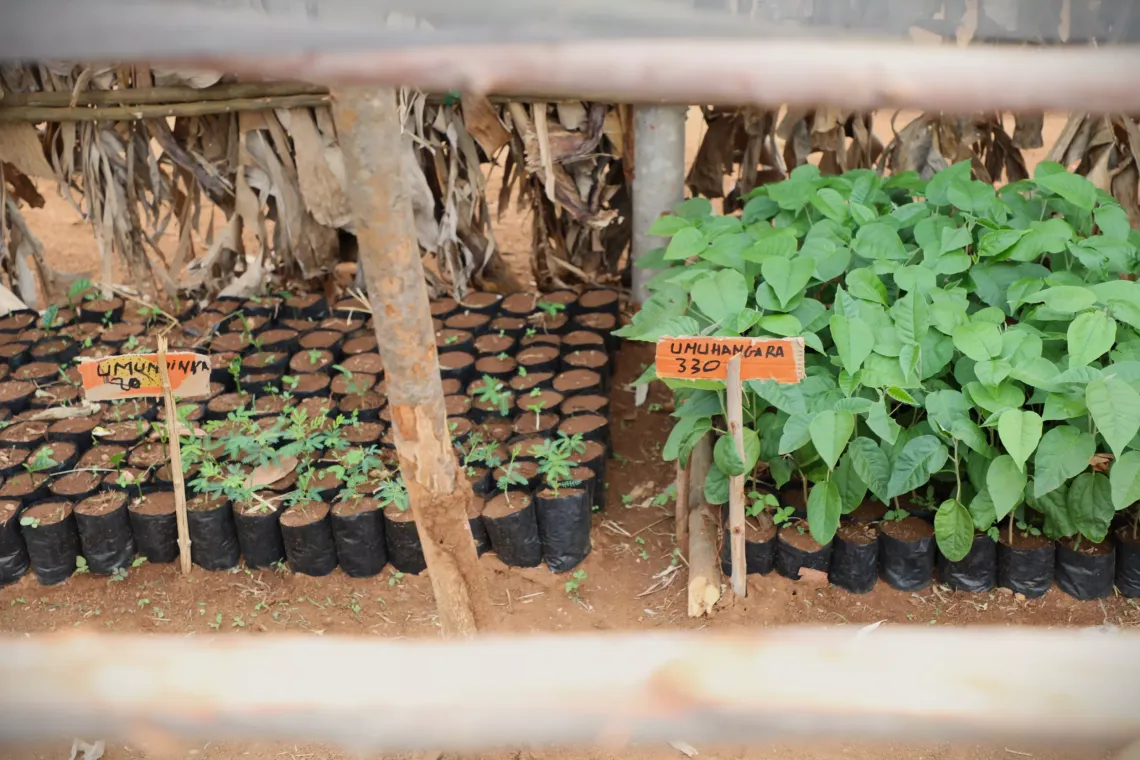
September brings the promise of rain that will tame and soften the land for transplanting the seedlings from the nursery to the school grounds and the surrounding community. Soon, the once-bare backyard will be a tapestry of green, a living classroom where students can learn about biodiversity, climate change, and the intricate balance of nature. Of the 1,000 mixed-variety trees allocated to GS Rutonde and the other pilot schools, 30 per cent are fruit-bearing, while the rest are non-fruit-bearing. About half will be planted at the school and the rest in the neighboring communities.
This school-greening project is more than just an environmental initiative; it's an investment in the future. About 44.5 per cent of Rwanda’s population of 13 million is children under 18 years, but they are not sufficiently engaged in programmes to counteract climate change. Planting trees in schools helps combat climate change through the absorption of carbon dioxide and protection against land erosion, flooding, wind, and dust. As these trees grow, so will the children's understanding of their environment. They will learn hands-on lessons about photosynthesis, the water cycle, and the importance of sustainable practices. The fruit trees will provide nutritional benefits to children and their surrounding communities and practical lessons in agriculture and food security.
In the shade of these newly planted trees, a new generation of environmental stewards will blossom, ready to face the challenges of a changing world with knowledge, compassion, and green thumbs.
This initiative was made possible by IHS Towers, whose innovative support will pave the way for other environmentally transformative and sustainable initiatives by more private sector partners.