

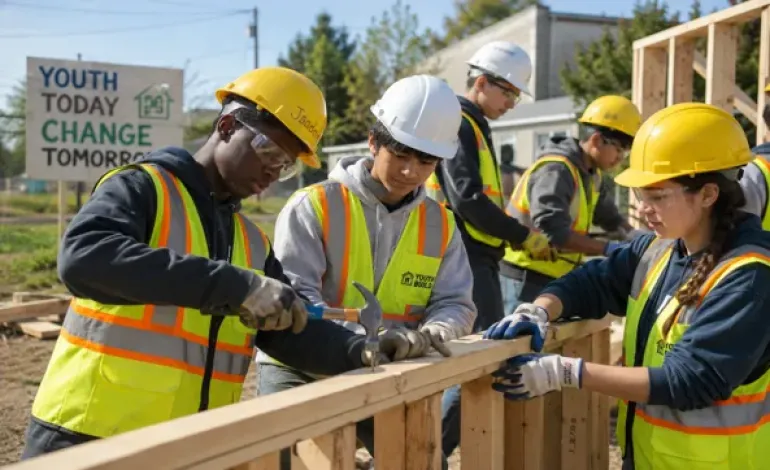

Nelson Mandela has famously said that ‘The youth of today are the leaders of tomorrow”. But across the world, they are already leading the world today. Through acts of service, innovative ideas, entrepreneurship, or advocacy, young people are tackling challenges in their communities and are constantly inspiring others to follow their lead. According to the United Nations (UN), there are ~1.8 billion people between the ages of 10 and 24. This is the largest youth generation in history, with young people making up nearly a quarter of the world’s population. And to add to this, half the world’s population is under the age of 30. Growing up in the age of rapid technology development, they are deeply connected to the world and have uniquely positioned themselves to understand the issues that affect their peers. When young people are given the opportunity, they don’t just participate, but they lead and they innovate, with the ultimate goal of creating change.
This demographic shift has important economic implications. The term demographic dividend is used by economists to describe the economic potential that a young, working-age population presents. A young working population can drive a country’s economic growth by increasing productivity and average income if that population is healthy and educated.
However, transforming a large young population into an economic growth machine is not simple. According to the World Bank, for this to be the case, governments of such countries have to make strategic, large-scale investments in, for example, improving the country’s healthcare and education systems, as well as the country’s infrastructure. Further, investments need to be made in other areas that help improve the business and economic climate of the country.
Unfortunately, for a number of young people around the world, the above-mentioned investments have yet to be made. The International Labour Organization reports that in 2025, the global population between the ages of 15 and 24, was 67 million and unemployed. Additionally, 257 million young people were neither employed nor in school and/or training.
More often than not, large youth populations are viewed as being positive for a country. While a country may benefit from large youth populations, if the right investments and policies are not in place to guide a country’s growth, young people will be trained, employed and resourced to drive that growth, and instead become a drain on the economy and society.
Young people do not just imagine a better future. They have begun building it. From climate action groups to mental health initiatives, from coding clubs to community clean ups. They are using technology to solve problems and raise their voices for justice. In doing so, they are supporting one another in powerful ways. Their energy and creativity are not just shaping their own lives, but also the lives of other young people around.
Education: Youth led tutoring programs and peer mentoring initiatives are helping students excel in school and build confidence. Education also has an important economic role because it develops human capital - the knowledge and skills that allow people to become more productive. When young people gain skills in areas such as technology, math, communication, and entrepreneurship, they are more ready to contribute to their communities and economies. For example, the majority of tutors at Mathnasium (tutoring platform) are current high school students who have shown proficiency in their subject. Investment in youth education is not just an investment in individuals; it is an investment in society’s future.
Innovation: Young entrepreneurs and technologists are building applications and platforms that solve actual-world problems ranging from mental health to financial education. I am a secondary student who is presently developing the Elite Footy mobile application, which will offer tutorials and information about football for younger and upcoming players. These are some examples of the impact of technology in allowing young people to go from problem identification to solutions through innovation. But innovation also requires access to opportunities. A good idea might never see the light of day without the right opportunities due to lack of technology, mentorship, finance, and networks needed to actualize them. Access to these resources might enable youth entrepreneurship to not just create success for individuals, but also for jobs and economic growth.
Community: Across the world, young people are volunteering, fundraising, and organizing local projects that provide resources and support to those who need it most. The American Red Cross has numerous high school clubs across the United States where members participate in weekly community service activities. A great example of this is when my peers and I were involved in teaching community CPR, a potential likesaving skill.
Advocacy: Young voices are driving conversation on climate change, gender equality, and human rights, to push for a more inclusive world. Model United Nations is a platform where students are able to practice, research, and debate on prevalent world topics, preparing them for real world conversations, whilst advocating within the youth population.
A Personal Perspective
For the last 5 years, I have refereed youth soccer matches in the U.S. It has taught me discipline, communication, and the importance of fairness. Moreover, it showed me that any opportunity, big or small, can become powerful when used to assist others. And I wanted exactly that: a chance to assist and contribute in any capacity that I could.
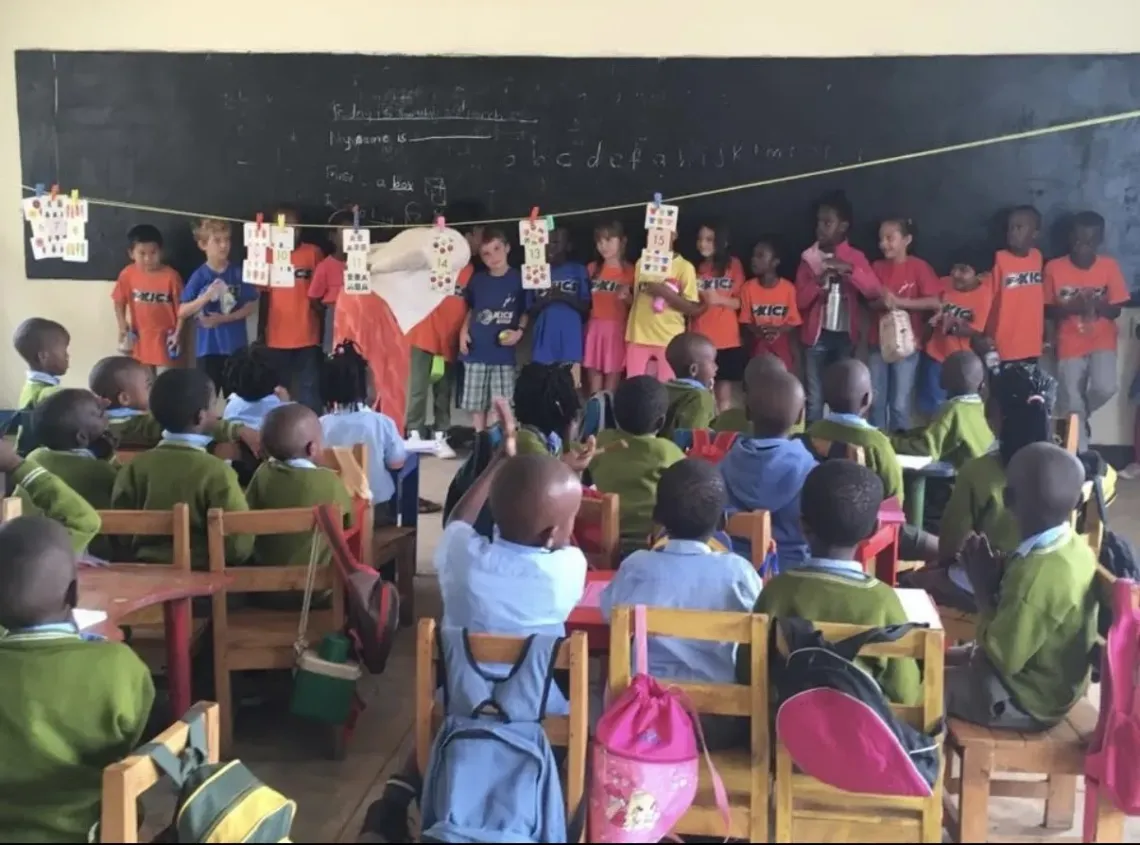
The money I earn through soccer refereeing has been passed on to support SOS Rwanda's mission of providing clothing, toys, and other essentials to youth in Africa. What initially started as a personal goal became something bigger than that: it became a way to support people I may never meet.
My experience has also made me think differently about the relationship between opportunity and change. I am very lucky to have access to be close to the game I love. But millions of young people around the world do not have the same access to education, employment, technology, or resources. Their lack of access does not mean a lack of potential.
A young person's ability to create change depends not only on their willingness to act, but also on whether they have the tools and opportunities to do so. If societies invest in their young people, the benefits can go beyond the individual. Education can build human capital. Employment can increase productivity and household income. Entrepreneurship can create new businesses and jobs. Community involvement can strengthen social connections. And advocacy can bring attention to problems that might otherwise remain overlooked.
Young people are not simply the leaders of tomorrow. They are students, entrepreneurs, volunteers, developers, athletes, advocates, and community leaders today. The question is not whether young people have the potential to create change. The question is whether societies will provide them with the opportunities to use that potential.
Change does not always require something extraordinary. Sometimes, it begins with a student tutoring a classmate, a young entrepreneur developing an idea, a volunteer giving their time, or a referee deciding to give back.
The difference is important because the capacity for change by a young person not only lies in their willingness to do something but also in their having the necessary skills and opportunity to do so. If societies invest in their young people, the results can be much more profound than merely personal. Education produces human capital. Work creates additional productivity and additional income. Entrepreneurship generates new businesses and jobs. Community activities strengthen social ties. Advocacy highlights previously overlooked problems.
The issue here is not whether young people are able to make a change; the question is rather whether societies are ready to provide them with such opportunities. Young people are not only future leaders but also today’s students, entrepreneurs, volunteers, developers, sportsmen, advocates, and community activists.
Making a change does not necessarily require doing something extraordinary. It may just start from tutoring a fellow student, developing an entrepreneurial idea, volunteering, or being a referee who decides to return something to society.
