Weathering the storm
How communities in Papua New Guinea are standing up to climate change
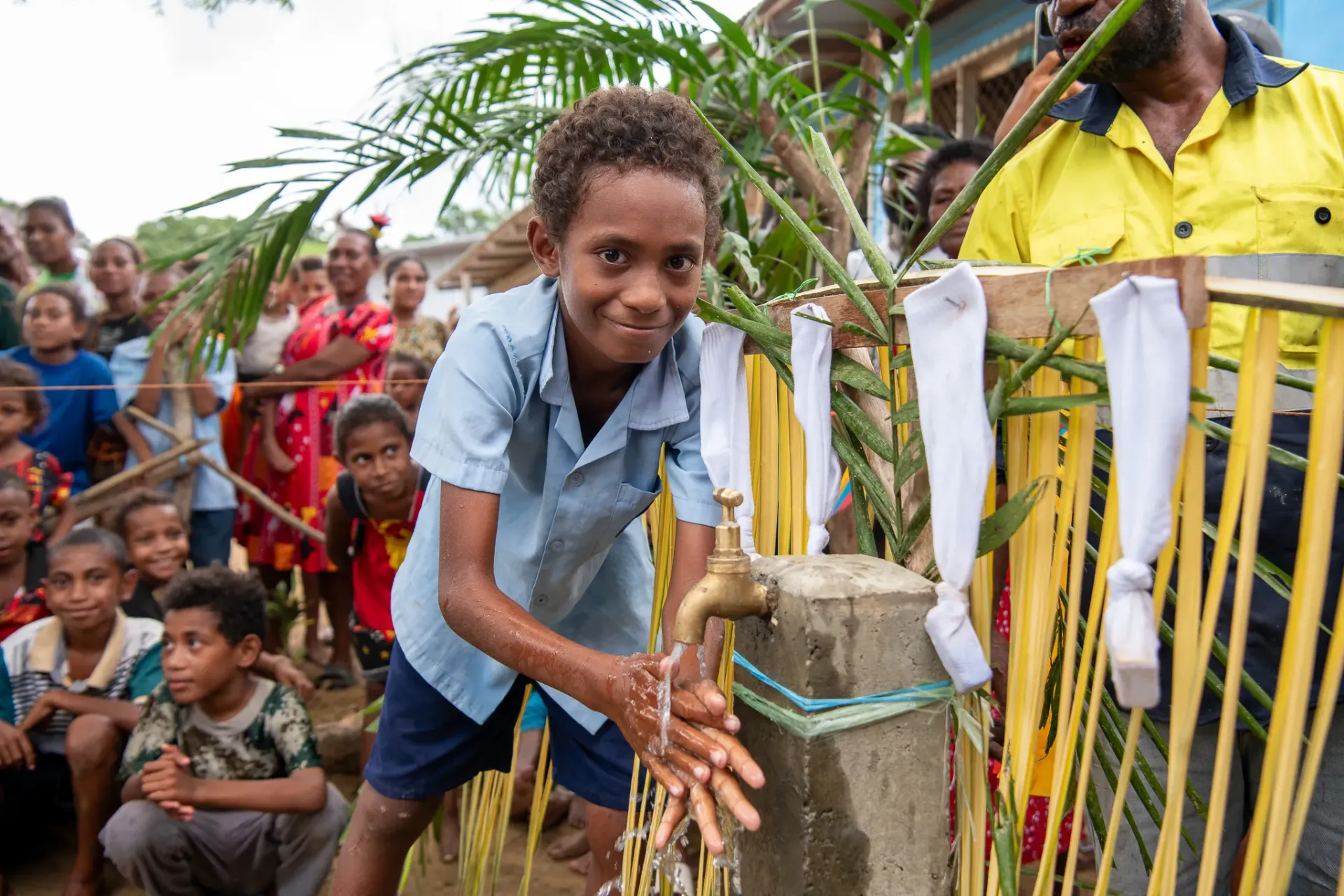
Many families across Papua New Guinea are facing the growing realities of climate change. From droughts that dry up water sources and floods that wash away food gardens, to rising sea levels that displace communities, and put children’s health, learning, safety and future opportunities under threat.
But amid these rising climate threats, communities are stepping up to protect their children, strengthened by the support of external partners. Through generous funding support from KOICA and ROK, UNICEF is implementing programs which are helping communities to build resilience and adapt to a changing climate by ensuring families have clean water and safe toilets, access to better health and nutrition services, and safer environments for their children to grow up in.
When June Kunugi, UNICEF Regional Director for East Asia and the Pacific visited Papua New Guinea in October, she visited several communities in Morobe and Central Provinces to see firsthand, how local action is making a difference through these programs.
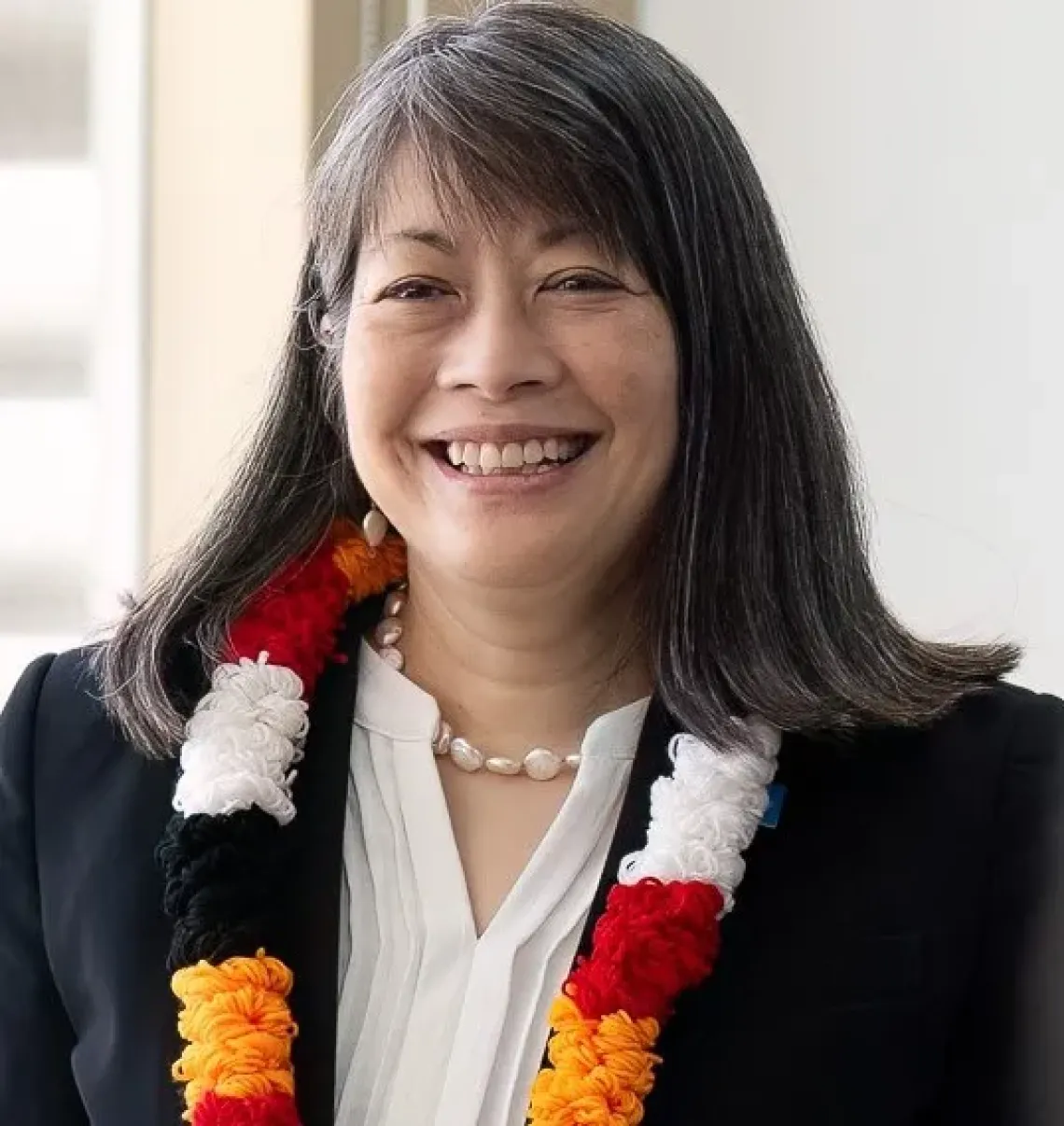
“The negative impacts of climate change are real and PNG ranks high on the climate risk index. All the foresight and analysis indicate that the frequency and intensity of climate related shocks - cyclones, floods – will only get worse. That is why this support is so important."
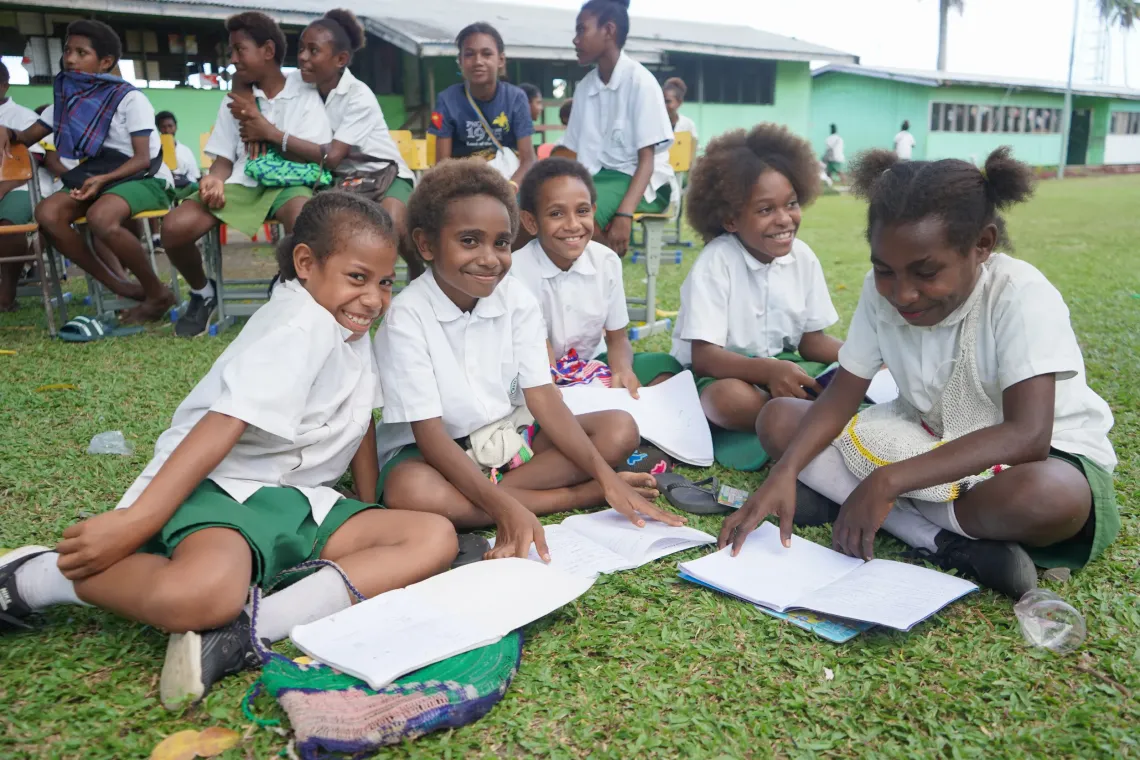
At Muya Primary School in Morobe Province, students and community members now have access to clean water and safer toilets in both the school and nearby health facility, ensuring children can learn in a clean, safe and healthy environment.
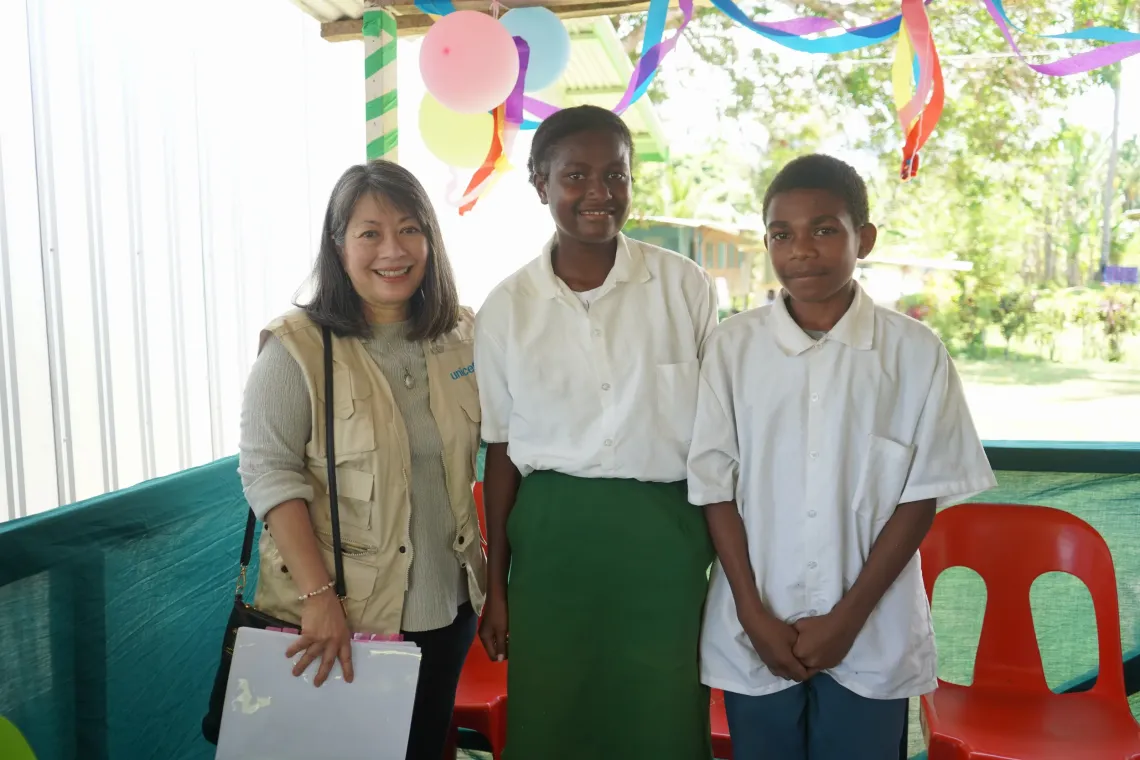
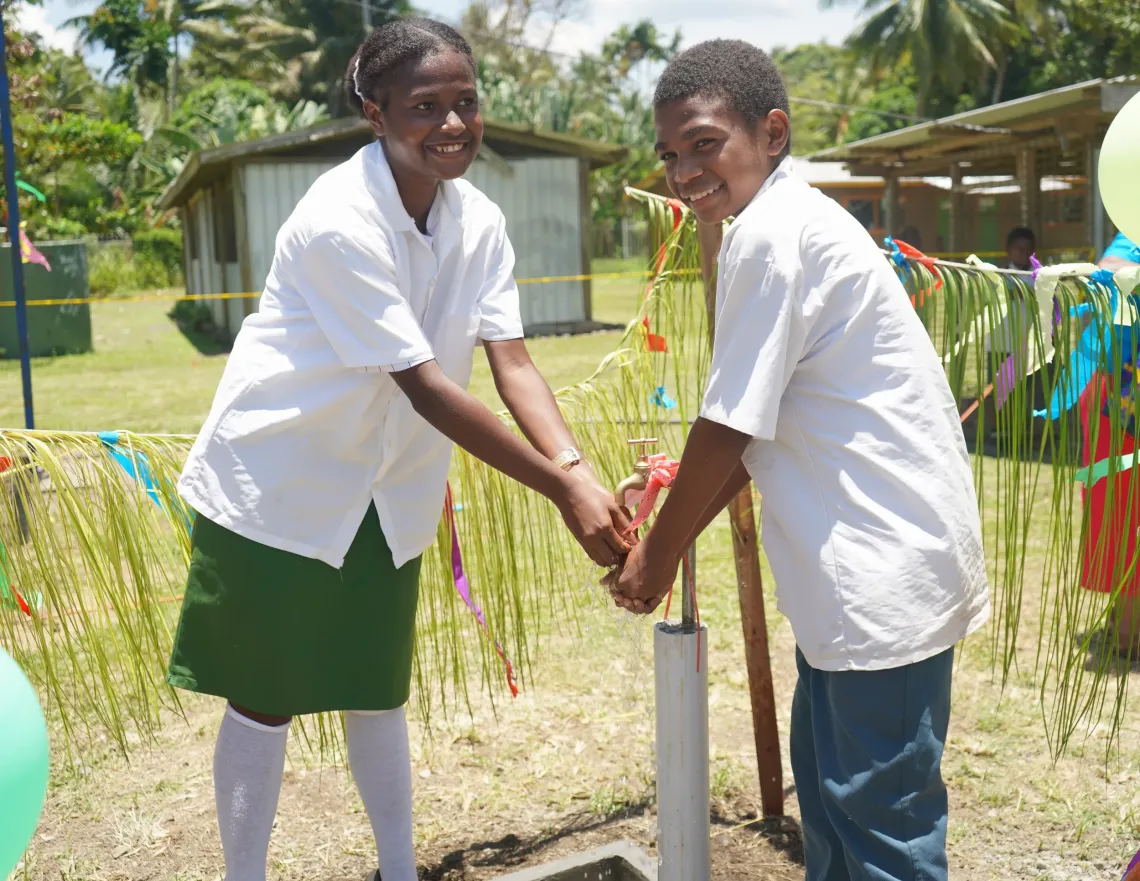
“Access to clean water has always been a big problem, especially for us girls. As a female student representing the female population of the school, we appreciate the upgraded water system because now we can remain in school and our learning won’t be disrupted,” says Gwendelene Boting, 15, a student leader at the school.
In Nasuampum community in Morobe Province, positive change is visible in every home. All 36 households in this community have a safe toilet, ending decades of open defecation and marking a major step towards becoming an Open Defecation Free (ODF) Community.
For community motivator, Kossy Baput, 27, who led the ODF effort in Nasuapum, the transformation is a personal achievement.
"My role is to help families build toilets for their homes. Before, we used our backyards, gardens and river as toilets without realizing we were making ourselves sick. Now with the awareness and knowledge provided by Care International (UNICEF's implementing partner in this program) and UNICEF, every household now has a toilet, and we are proud of this simple change that’s making a big difference in our lives.”
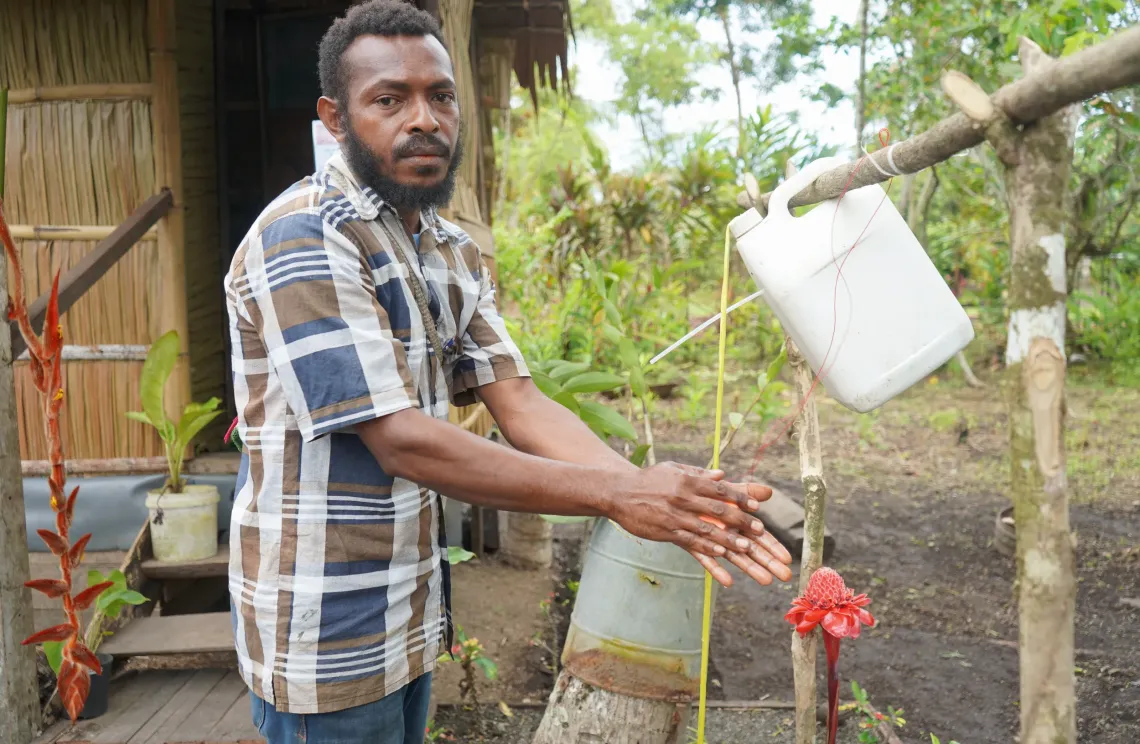
Using his own savings, Gideon Okam, 31, a father of five in Nasuapum turned what he learned from Care International into action, building two toilets for his family and relatives, complete with solar lighting for safe access at night.
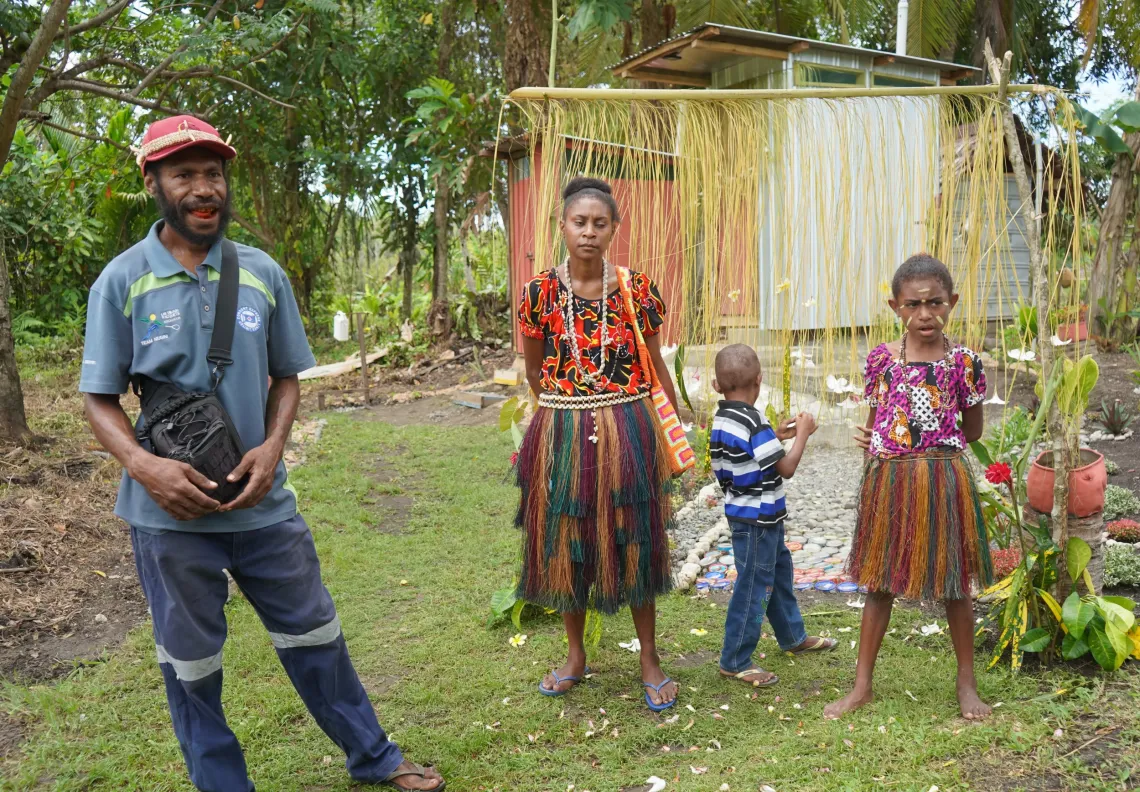
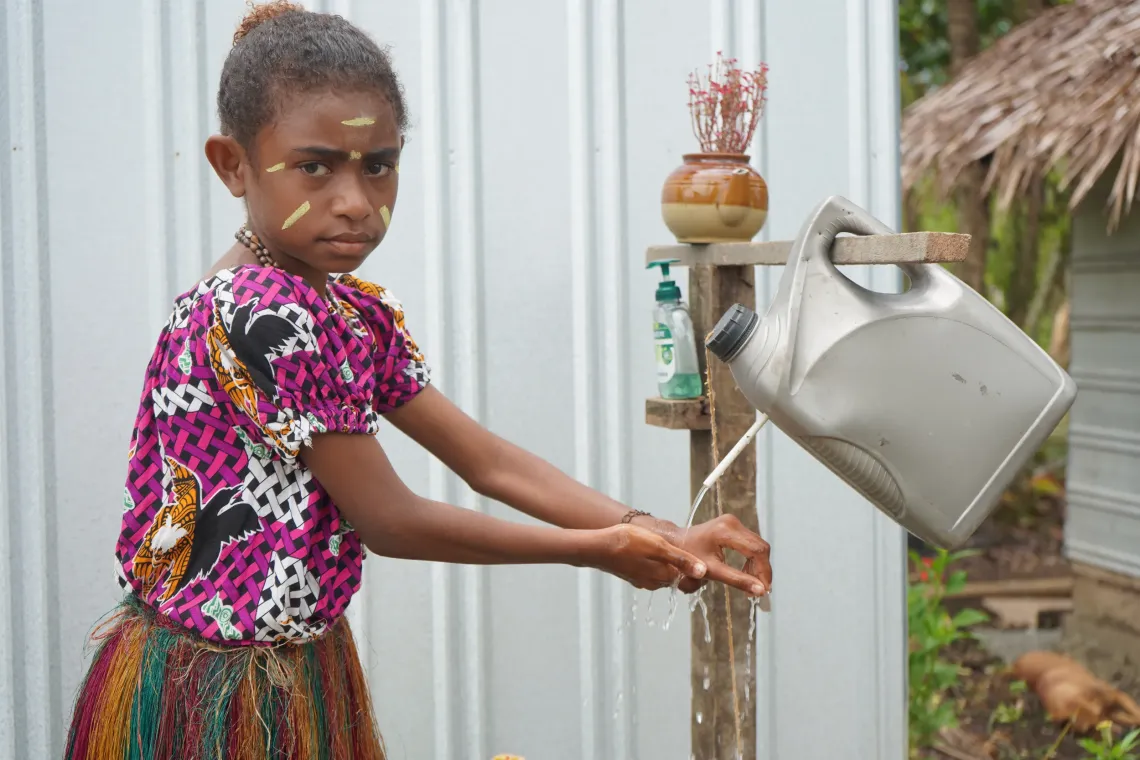
“We didn’t have proper toilets before. Through this program, I built proper toilets for my children. I want them to know the importance of safe toilets and embrace this behaviour change. A positive change we can already see is that the children don’t get sick as often as before,” Gideon said.
The desire for change also extends to how parents care for their children. In Bampurompom community, Benjamin Jim, a widowed father is learning positive childcare practices through UNICEF’s Parenting for Child Development Program (P4CD) to care for his two-year old son, Shalem, after losing his wife during childbirth.
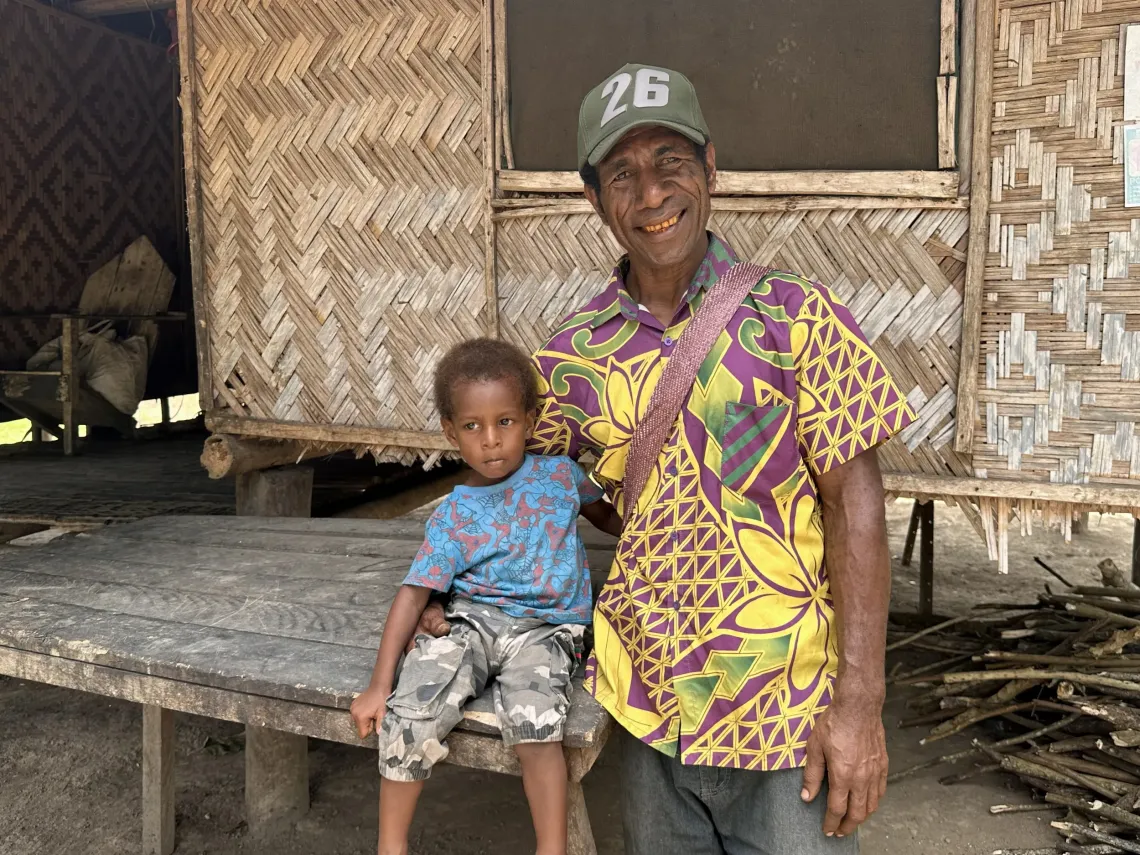
“I’m all my son has, I’m his mother and father, and I want him to grow up to be a good man. Through this program, I’m learning how to raise him with love and it’s giving me confidence as a parent and hope for his future.”
Families in Boregaina, Central Province, face frequent droughts and floods which disrupt water access, schooling, food security, health, and infrastructure. Through the KOICA funded integrated program there, children now attend school with safe and sustainable water, sanitation and hygiene (WASH) facilities, learning under the new 1-6-6 education structure that promotes inclusive learning environments, and benefit from nutrition services and health messages delivered directly to their homes by Village Health Assistants (VHAs).
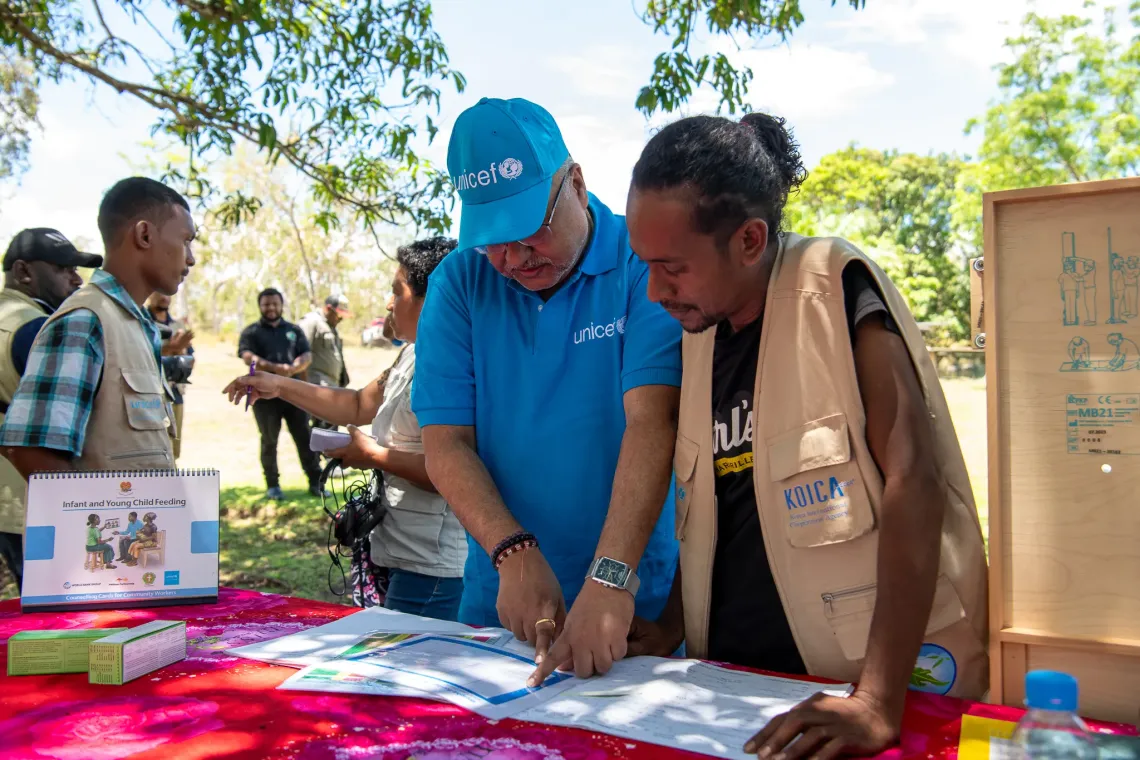
Rabone Abe, a trained Village Health Assistant, provides nutrition services and health messages to the Boregaina Community.
“Since I started working as a VHA after my training in September , I’ve identified one child suffering from severe acute malnutrition and six others who have moderate acute malnutrition. With support from health care workers, I provide therapeutic food for malnourished children who do not have any other health problems. I also monitor their growth and work with parents to support recovery. Seeing them get healthier is the best part of my job,” said Rabone.
Boregaina is one of five target communities across Rigo District of Central Province who are now receiving clean water, sanitation, education, health, nutrition and child protection services – reaching nearly 12,000 children.
“I have witnessed immense resilience and determination from communities – but they need strong backing from government and partners to sustain these efforts,” Ms Kunugi said. “As the country celebrates its golden jubilee, now is the time to act – put children at the centre of national development.”