Kemabolo’s new dawn: water, leadership and global support
A solar-powered water supply system transforms life into a climate-vulnerable PNG village

The rhythmic beats of kundu drums filled the air in the quiet coastal community of Kemabolo in Rigo District as women and young girls in traditional attire swayed in their grass skirts to the rhythm of the drums, offering a warm welcome to a visiting delegation.
It’s not often that an ambassador makes the journey to this remote village but today, His Excellency Jong Ho Choi, Ambassador of the Republic of Korea to Papua New Guinea, arrives to witness and commission the first milestone of a solar powered water supply system. His delegation includes Michael Kumung, Deputy Secretary for the Department of National Planning and Monitoring , UNICEF Representative, Dr Veera Mendonca, and Murray Konido, Rigo District Administrator.

This project, generously funded by the Government of Korea, is part of a broader KOICA-supported initiative facilitated by UNICEF in partnership with the Central Provincial Government, Rigo District Administration, Climate Change and Development Authority (CCDA), and the Department of National Planning and Monitoring, to deliver clean water, strengthen health and education services, and protect children from the growing impacts of climate change.
As Ambassador H.E Choi opens the newly installed tap and the first gush of clean water flows on this memorable Wednesday in August, a cheer rises from the crowd.


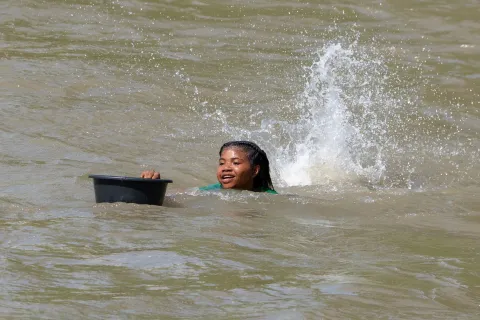
“For many years, water was not simply a resource. It was a daily struggle and something the women of Kemabolo carried on their backs, walking long distances under the scorching sun," says Joan Gwaibo, the Women’s Group Leader in Kemabolo.
“We prayed and climbed mountains searching for water. We cried silent tears during the drought, when the land was cracked and gardens withered. Here we are now, witnessing a miracle and a prayer that God has answered,” a jubilant Joan adds.


A recent Climate Risk and Vulnerability Assessment revealed the intense challenges faced by Kemabolo - frequent droughts and floods, poor water access, poor school attendance, food security issues, inadequate sanitation, and minimal access to livelihood opportunities and climate information.
Up to 30,000 people including 12,000 children in Rigo District will directly benefit from climate resilient water sources and sanitation facilities, enhanced health facilities and services, safer schools and protection from climate induced displacement and exploitation.
Beyond the village, another 450,000 people across the country will indirectly benefit from stronger child protection laws in climate-vulnerable areas and increased climate funding to ensure these safeguards last well into the future.
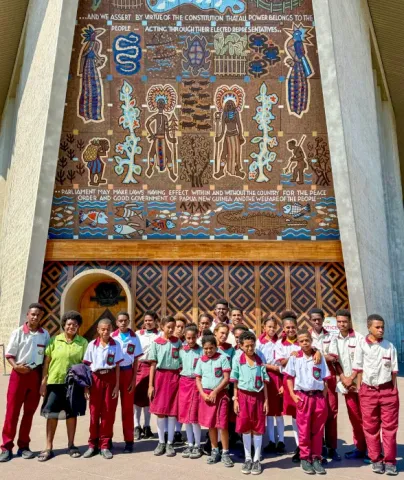
For Mackllah Gulu, head girl at Kemabolo Day School and her peers, this moment means a brighter future
“Clean water is not just a basic need in life, it’s a right,” she says confidently.

“When proper water is supplied to a school, it helps students to stay in school, to stay healthy, to stay hydrated and to achieve their dreams, especially the girls. Without water, students face many problems like poor hygiene and absenteeism. Our school is fortunate to have clean water and we thank you.
Local leadership is a driving force behind this project. Kemabolo residents have formed a Water User Committee that includes youth, women, education, health, and faith representatives to oversee the operation and maintenance of the system, supported by a small monthly household contribution to ensure its long-term sustainability.


Visibly impressed by the community’s determination to change things for the better, Dr Veera Mendonca, UNICEF Representative, says Papua New Guinea needs people who will stand up for children and lead the way into the future.
“Kemabolo community leaders, students, women, young people – all of you are champions."
“If we are to reset Papua New Guinea, it starts here — with clean water, with safe schools, with empowered communities.This is how we build the next 50 years and we are helped with the right partners who see the need and the Government acknowledges this.

In addition to the water supply system, Kemabolo will benefit from:
- Solarisation of the school, transforming it into an information hub;
- Rehabilitation of the health care post, restoring essential health care;
- Training and support for community-led management of resources.