UNICEF calls for continued investment in Papua New Guinea’s children as El Niño deepens hardship
Following his first visit to the country, Global Programme Director George Laryea-Adjei urges the Government and partners to sustain services that keep children healthy, learning and safe.
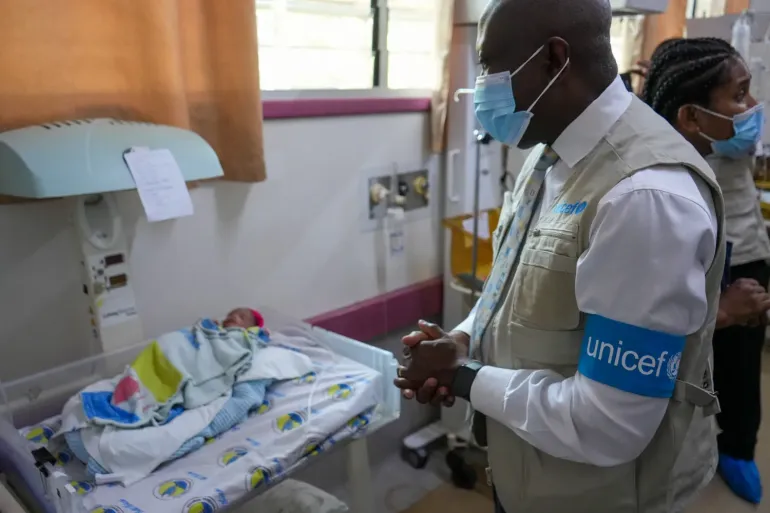
PORT MORESBY, 12 November 2026 – UNICEF Global Programme Director Mr George Laryea-Adjei has called on the Government and partners to continue investing in children and the essential services they need, following a three-day visit to Papua New Guinea. El Niño is deepening hardship for families, threatening food supplies, disrupting services and worsening water shortages.
Children in Papua New Guinea face major gaps in essential services. The country’s mountains, islands and dispersed communities make it difficult to reach children with essential and lifesaving services. Climate change and El Niño add pressure on food supplies, water and services, requiring more innovative ways to support families where they live.
The country has one of the highest rates of child stunting in East Asia and the Pacific, with nearly half of children under five affected. Only 53 per cent of people have access to at least basic drinking water services, and fewer than one in four have access to basic sanitation. An estimated three in four children experience some form of violence during childhood. The 2016–18 Demographic and Health Survey found that only 13 per cent of children under five had their births registered.
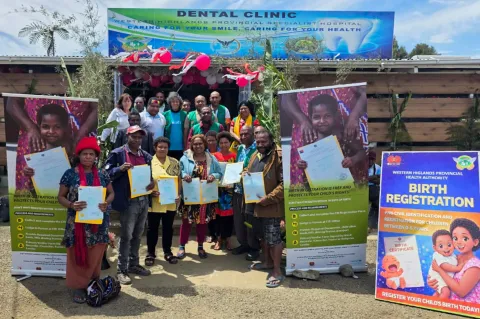
During his visit, Mr Laryea-Adjei met health workers caring for newborns and children with severe acute malnutrition at Port Moresby General Hospital. UNICEF supports hospital teams with newborn care equipment, clinical mentoring, technical assistance and training, and helps procure therapeutic food and plan its delivery. He also saw how birth registration is being integrated into health services by equipping facilities and training staff to register children and provide parents with official proof of their child’s legal identity.
“At the hospital, I met Lillie and her twins, Madline and Maua, who had travelled from Goilala for malnutrition treatment,” said Mr Laryea-Adjei. “Lillie was happy to see them recovering, but worried they could fall ill again at home, where nutritious food is scarce and increasingly expensive. Families need care and support they can count on, close to home.”
In discussions with Secretary for Health Mr Pascoe Kase, Mr Laryea-Adjei welcomed the Government’s increased financing for nutrition supplies and its funding of all routine vaccines. He also welcomed the recent introduction of the human papillomavirus (HPV) vaccine for girls. Their discussions focused on bringing care closer to communities.
In Boregaina, Rigo District, Mr Laryea-Adjei met parents and community members who described how water shortages were forcing schools to close early and putting health services under pressure. Families depend on the Kemp Welch River and other distant sources, with women and girls bearing most of the burden of collecting water. Failing gardens threaten children’s nutrition, while scarce water for cooking and handwashing increases the risk of illness.
With funding from the Korea International Cooperation Agency (KOICA), UNICEF and partners are working with Boregaina’s Ward Development Committee to strengthen water and other essential services through the Climate Action for the Last Mile programme. UNICEF is supporting emergency measures while the new water system is completed.
At Nine Mile in Port Moresby, Mr Laryea-Adjei met caregivers and facilitators from Links of Hope’s UNICEF-supported Parenting for Child Development programme, which has reached more than 14,000 parents. The Government’s framework for integrating the programme into public services offers a way to help more children grow up in safe, nurturing homes, free from violence.
At Gordon’s Market, he visited a UNICEF-supported child-friendly space where children can play safely, receive psychosocial support and be referred to protection services when at risk. Both visits highlighted the need to sustain community-based services that support caregivers and protect children from violence and exploitation.
He also met representatives of Australia’s Department of Foreign Affairs and Trade and thanked Australia, UNICEF’s largest bilateral partner in Papua New Guinea, for its continued support. The partnership supports education, health and child protection, including the Smarter Safer Schools programme, access to justice and birth registration.
The visit comes as UNICEF marks 40 years of partnership with the Government of Papua New Guinea. Mr Laryea-Adjei thanked government counterparts, UNICEF colleagues, health workers, communities and longstanding donors for their work to improve children’s lives.
“I urge Government and partners to continue investing in children and the services they need most,” he said. “Every child needs a legal identity from birth and the chance to stay healthy, finish school and grow up free from violence. The progress I saw shows what we can achieve together. We must sustain it and bring services, including birth registration, closer to families still missing out. We cannot fail them.”
UNICEF is calling for sustained investment across health, nutrition, education, child protection, water, sanitation and hygiene. This means supporting frontline workers, expanding birth registration through health facilities and community outreach, keeping schools and health facilities functioning during crises, and strengthening community protection services. It also means ensuring public resources reach provincial and district services on time.
Media contacts
About UNICEF
UNICEF promotes the rights and wellbeing of every child, in everything we do. Together with our partners, we work across Papua New Guinea to translate that commitment into practical action, focusing special effort on reaching the most vulnerable and excluded children, to the benefit of all children, everywhere.
For more information about UNICEF and its work for children in Papua New Guinea, visit https://www.unicef.org/png/
Follow UNICEF Papua New Guinea on LinkedIn, Twitter, Facebook and YouTube