Make progress reach every child in Papua New Guinea
Statement by Dr Veera Mendonca, UNICEF Country Representative in Papua New Guinea, on World Children’s Day
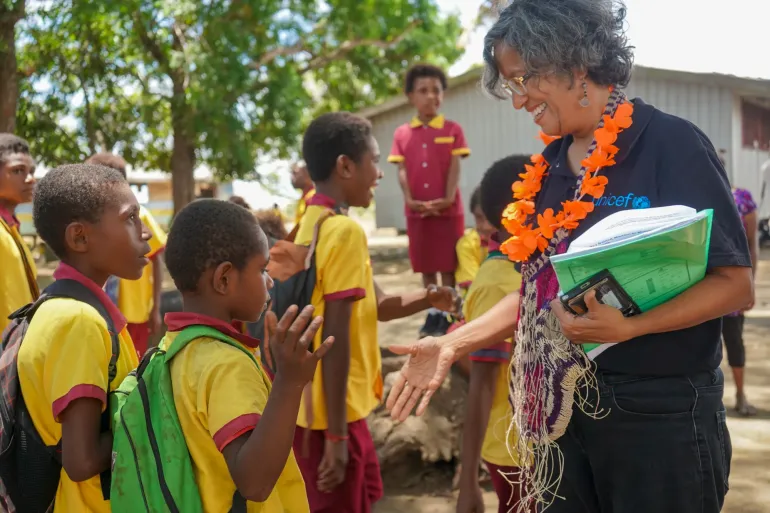
PORT MORESBY, 20 November 2026 - “Every child in Papua New Guinea has the right to survive and thrive, to learn, to be protected and to be heard. On World Children’s Day, we mark the adoption of the Convention on the Rights of the Child and renew our shared commitment to make those rights real. This year’s theme is My Day. My Rights. My Future. Children are speaking up. Our duty is to listen and to show them how their voices shape the decisions we make.
“Remax Daniel, a Grade 4 student, put it best: ‘We may be small today but our dreams are big. We ask you to walk with us, listen to us and invest in our future. If you build the foundation now, we will build the nation tomorrow.’ Remax dreams of good teachers and safe classrooms, clinics with medicines, clean water in every community, healthy food for every child, and homes where girls and boys can grow up without fear. Every child has a right to these things. It is our job to help deliver them.
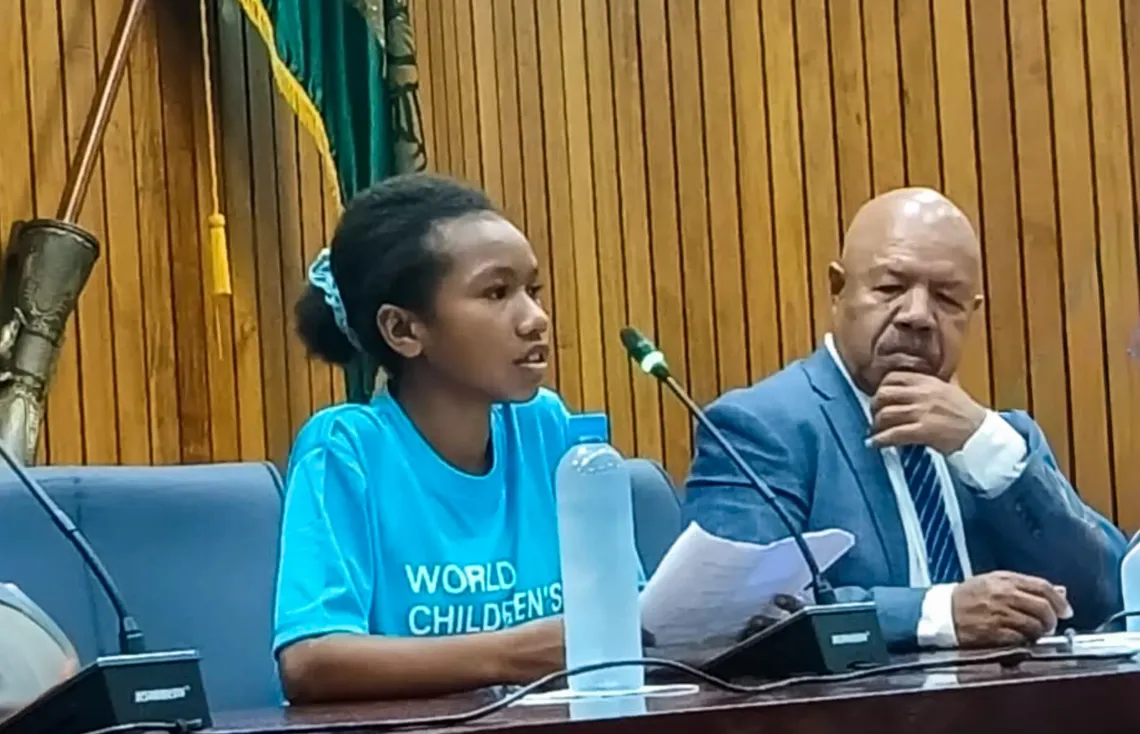
“This year, UNICEF and the Government of Papua New Guinea mark 40 years of partnership. Together, we have made measurable progress for children. Under-five mortality has more than halved, from about 85 deaths per 1,000 live births in 1990 to 39 in 2024. General education enrolment rose from just over half a million in 1993 to around 2.8 million in 2023. The Government now funds most of the country’s routine vaccines and has committed K26 million in 2026. It has also introduced the HPV vaccine to protect girls from cervical cancer. Together, we contained a polio outbreak, with no new cases reported since October 2025.
"This year, the National Parliament made its Committee on Children and Youth permanent and unanimously adopted the committee’s report and recommendations. I commend the Government and Parliament for this leadership, and I salute the health workers, teachers, social workers, child protection officers and village health assistants who bring essential services closer to families, often in the most remote places.
“Here at home, some of our strongest allies are the ones closest to families. Churches run many of the country's health facilities and schools and reach communities where few others can. Church leaders, civil society and young people are helping communities stand up against violence and keep children safe at home, at school and in the village. They are also building trust in vaccines, including the new HPV vaccine. They are our core partners, and I thank them for their tireless service to every child.
“None of this happens alone. I thank the governments of Australia, the Republic of Korea, Japan, the United States and New Zealand, United Kingdom, Cyprus, the European Union, the World Bank, the Global Partnership for Education, Gavi, the Vaccine Alliance, UNICEF Australia, and our sister United Nations agencies for standing with the children of Papua New Guinea. I also thank the Member States whose contributions to UNICEF’s core resources and flexible humanitarian funding allow us to act quickly and reach children where needs are greatest. This year, that flexible funding helped UNICEF move early, alongside the Government, as El Niño began to strain water, food and health services. Flexible funding saves time, and for children in a crisis, time saves lives.
“But progress has not yet reached every child. Where a child is born still shapes her chances of surviving, learning and growing up safe. Every child’s story should begin with a safe birth and a name on the official record. Yet fewer than half of babies are born without a skilled health worker present, and only 13 per cent of children under five have had their births registered.
“Too many children still miss out on the care, education and protection they need. In 2025, less than half of infants received all three doses of the vaccine against diphtheria, tetanus and whooping cough and around 130,000 children have never received a single vaccine dose. Nearly half of children under five are stunted, with potentially lifelong consequences for their growth and learning. 72 per cent of 10-year-olds cannot read and understand an age-appropriate text. And too many children experience violence at home, at school and in their communities, often with no one to turn to. Behind each of these numbers is a child whose future is being decided now.
“El Niño is now testing these fragile systems. One in three children is exposed to at least two overlapping climate hazards, and dry conditions are already putting pressure on food and water supplies. I urge the Government and partners to act early: keep safe water flowing in schools and clinics, and give frontline workers what they need to bring vaccination, nutrition support and birth registration closer to the families most at risk.
“Ahead of the 2027 national election, I call on all political parties and leaders to put children and young people at the heart of their policies and programmes. Tell families which services you will improve and how you will fund them. Show young people how you will help them gain skills and find decent work. Children like Remax are asking for ‘leaders who listen to children, make good decisions and help our country grow.’ Children cannot vote, but every vote cast in 2027 will shape their future.
“More than half of Papua New Guineans are under 25. Investing in their health, learning and skills is not a cost; it is the surest path to the more prosperous Papua New Guinea envisaged in the country’s Development Strategic Plan 2010–2030 and Vision 2050. Children need that investment now. Their health, learning and safety depend on it.
“To Remax and to every child and young person in Papua New Guinea: we hear you, and we stand with you. UNICEF will keep working alongside the Government, Parliament, churches, civil society, communities and partners for every child. For me, progress is what children can count on in their daily lives: a school that stays open through a dry spell, a mother who gives birth safely close to home, a baby who is vaccinated and registered, and a young person who can point to a decision that changed because adults listened.
"Yumi wok bung wantaim long olgeta pikinini – together, we work for every child.”
Media contacts
About UNICEF
UNICEF promotes the rights and wellbeing of every child, in everything we do. Together with our partners, we work across Papua New Guinea to translate that commitment into practical action, focusing special effort on reaching the most vulnerable and excluded children, to the benefit of all children, everywhere.
For more information about UNICEF and its work for children in Papua New Guinea, visit https://www.unicef.org/png/
Follow UNICEF Papua New Guinea on Twitter, Facebook and YouTube