Multigrade teachers deliver quality education through UNICEF’s School-in-a-Bag
Ensuring the continuity of learning for students in remote areas
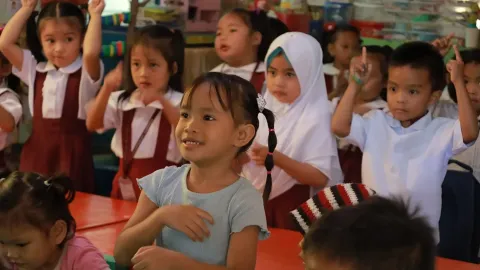
Even before the COVID-19 pandemic, multigrade learners struggled to learn in their unique setup given their remote location, the lack of standard school facilities, and the limited availability of learning materials.
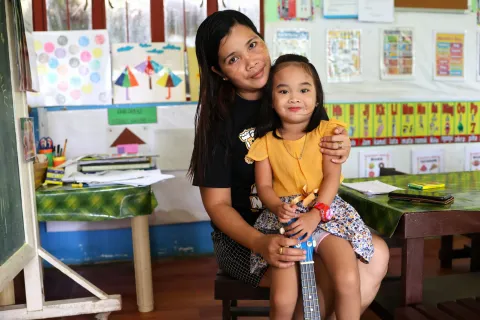
Redem del Corro, 32, teacher-in-charge of Cagmanaba Elementary School in Northern Samar, was concerned that the learners’ interest had been heavily affected by the abrupt closure of schools and the shift to home learning.
Cagmanaba is a small community located in the middle of the mountains. To get there, one has to trek and walk long distances and cross 21 rivers. Because it is far from the main road, the community has no access to electricity and communication, including the internet.
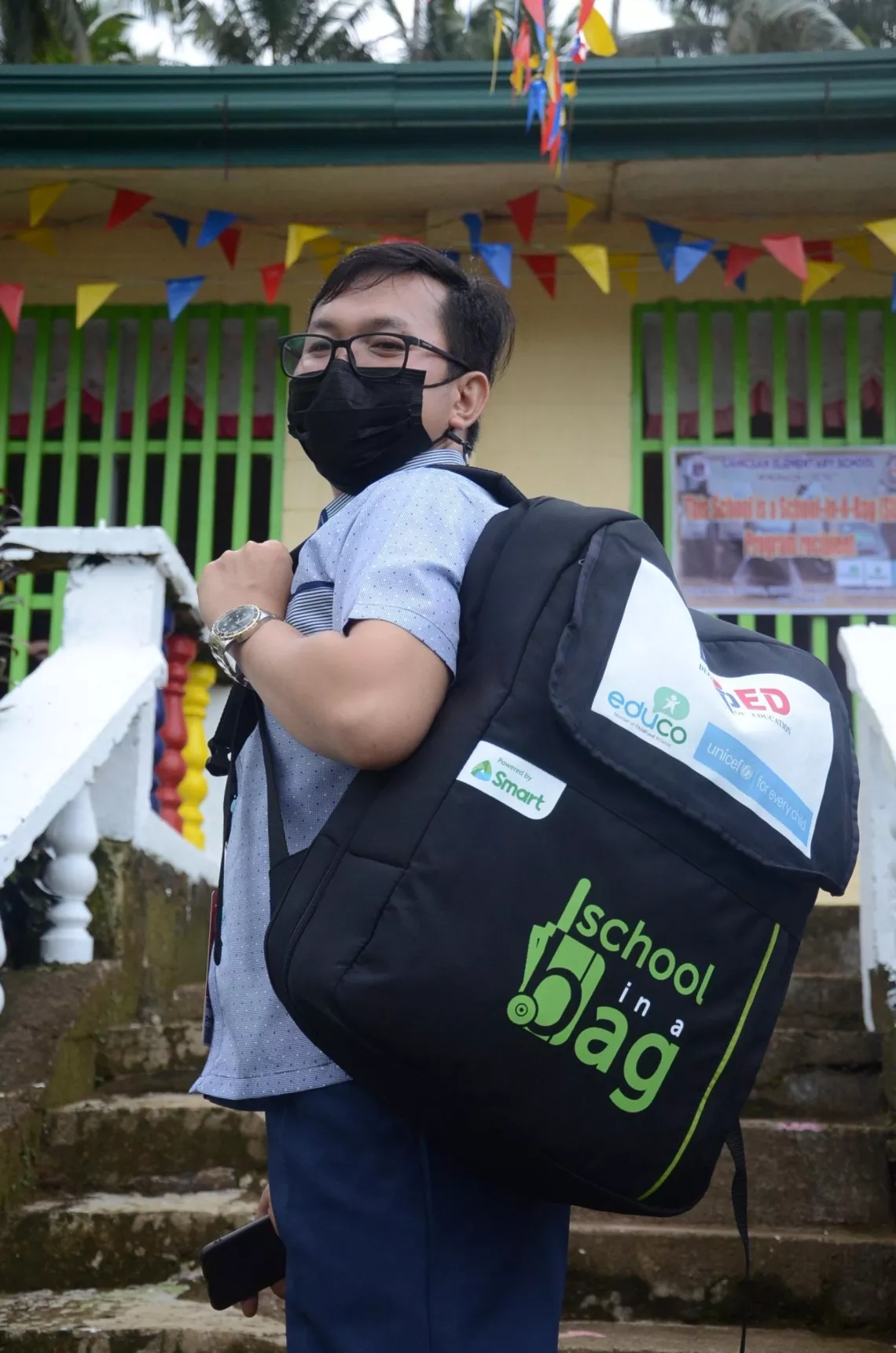
To ensure the success of home learning, Redem emphasized that the assistance of parents is vital. However, most of the parents in Cagmanaba grew up working instead of studying, resulting in poor skills in reading, writing, and numbers. Thus, helping their children with module-based learning is difficult. Learning is also challenging for some learners who have to help their parents in farming, leading to a lack of interest in completing their learning modules.
“The shift from face-to-face to printed modular learning is very challenging for us. And despite our efforts, we cannot monitor the learners on our own as we did in the past,“ Redem said. “It is very risky and challenging because we have to cross 21 rivers before reaching the school with the children's modules.”
Given the situation, the teachers had to come up with ways to reach the students. One way was to train some members of the community who have basic skills in reading and writing to help in module-based learning. The trainers also reminded the parents about the schedule of the collection and submission of the modules, home visitation and monitoring of teachers.
But more than a year into this setup, learners are struggling to meet the required competencies and they have not progressed as expected. This is where the School-in-a-Bag (SIAB) has been helping a lot.
“The learners now have access to interactive learning. They are also motivated by the stories uploaded on the tablets with vivid pictures and characters,” he said with much enthusiasm.
“It’s much easier for them to understand what they are reading.”
A joint project between UNICEF Philippines and Smart Communication, the School-in-a-Bag aims to ensure the continuity of learning for students in difficult areas. It contains one projector, one laptop for the teacher, five tablets pre-loaded with interactive learning materials for learners, a DVD player, USB memory drive and a pocket Wi-Fi. The tablets are also pre-loaded with learning materials developed by Smart and SEAMEO INNOTECH. Also included in the tablets are two mother tongue-based literacy apps developed specifically for Kaaram and Katao, a project promoting mother-tongue instruction.
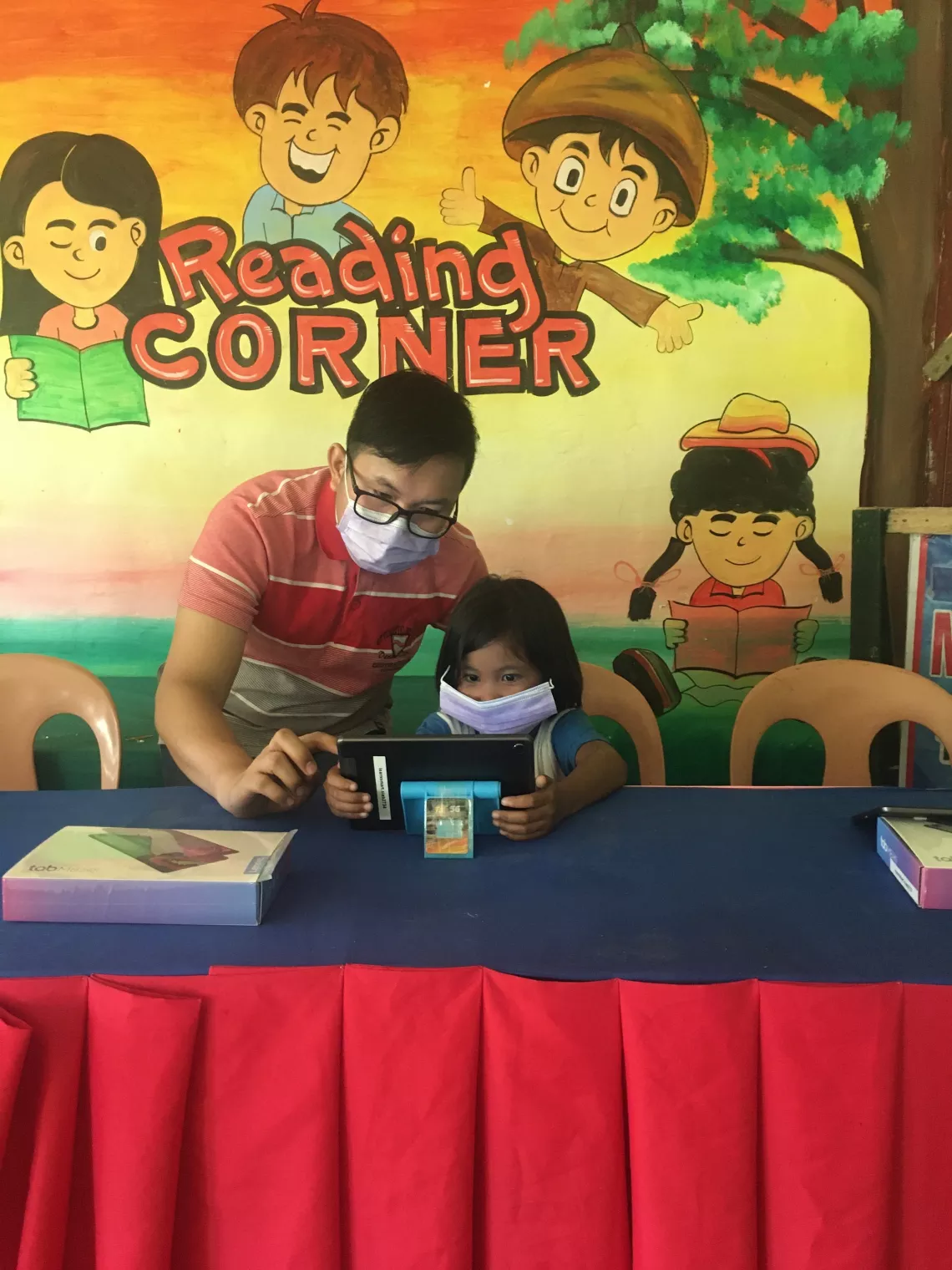
Redem brings the tablets during his monitoring and home visits. “They were happy and excited when they first saw the tablets. They were a bit hesitant to hold the tablet, afraid that they might break it,” he shared. But it did not take long for the learners to adapt to the new technology. They are now more motivated to learn and listen during home visitations. “They can now even use the tablets on their own,” Redem beamed.
Redem is very happy to see the improvement in the learners’ reading comprehension with help from the learning materials on the tablets. In the previous school year, the school identified eight learners to be slow readers. But after the intervention by the teachers using the School-in-a-Bag, five of the eight learners are now on the independent level while the other three are on the instructional level.
He believes that SIAB will help the learners in their studies and address the illiteracy and innumeracy in their small community. Redem also highlighted that digital awareness and competency are vital to ensure that disadvantaged children from isolated and remote communities like Cagmanaba won’t be left behind.
“If this is for the good of our multigrade learners, no matter how hard it is, we need to continue doing it. We need to traverse land, water, and mountains – near or far. We need to deliver quality education to the children.”