Field diary: the aftermath of Super Typhoon Rolly/Goni
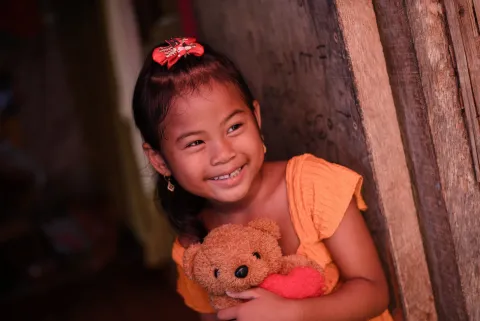
A UNICEF humanitarian worker surveys the damage and impact of the typhoon in Catanduanes
At 5am of 1 November 2020, Super Typhoon Rolly/Goni made landfall in Bato, Catanduanes, with catastrophic winds and intense to torrential rainfall.
After the weather cleared, UNICEF Water, Sanitation & Hygiene (WASH) Officer Geo Lapina joined the assessment mission to survey the damage and effect on communities.
This is his diary.
4 November 2020
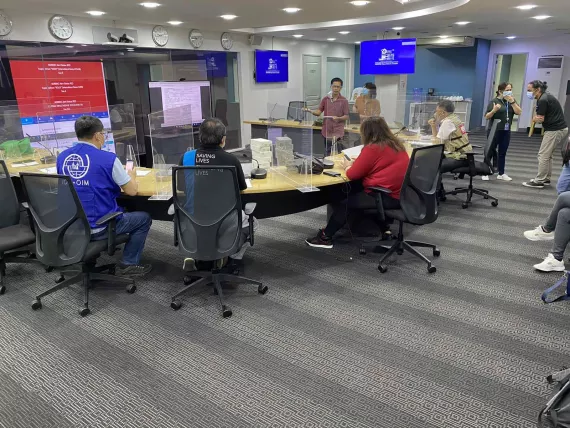
I was notified by my supervisor that I was to join the assessment mission of the Government and the UN to Catanduanes. Together with colleagues from OCD, DSWD, OCHA, WFP, FAO and IOM, we had a preliminary meeting at the Command Center of the Office of Civil Defense in Manila.

5 November 2020, 11 am
We went to the Philippine Coast Guard Hangar at the NAIA domestic airport to board a small plane. I was with two pilots, a colleague from FAO, a colleague from PCOO, colleagues from PDRF, and the airplane’s mechanic. Another team went by helicopter.

It was quite a scary ride because of the turbulence. All we could see were white clouds. It took us about 1 hour and 30 minutes to get to Virac.
1:30 pm
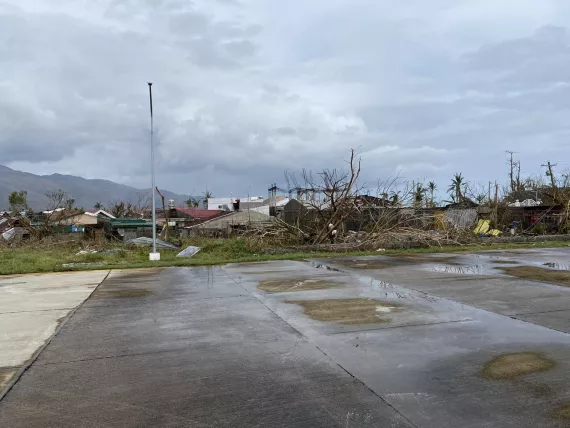
We landed in Virac safe and sound. The sky was overcast and you could already see the destructive force the typhoon brought to Catanduanes. The airport had internet and phone signal because of the facility brought in by the Department of Information and Communication Technology. We waited for the second team as their helicopter needed to refuel in Legazpi.
4:30 pm
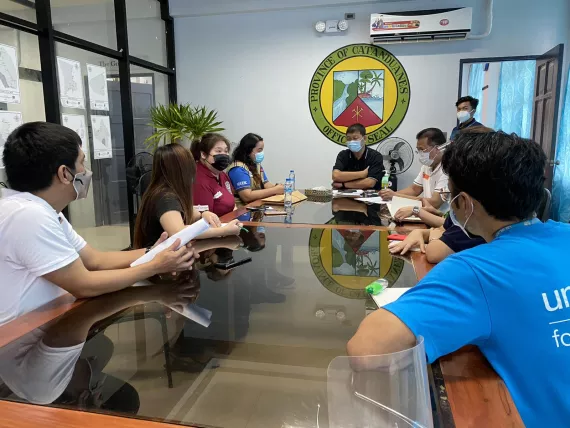
We met Governor Cua to discuss the objective and mission of our visit. We joined a daily briefing of clearing operations to determine passable areas. The Provincial Disaster Risk Reduction Office recommended six municipalities for us to assess: Baras, Bato, San Andres, San Miguel, Virac and Gigmoto. Thankfully only one road had debris, we were able to move around.
7 pm
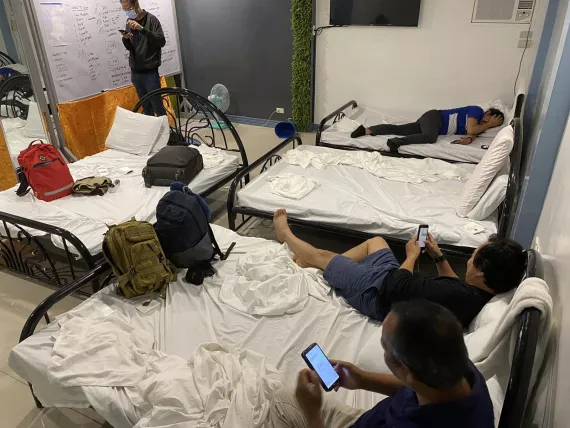
We went to our accommodation. It was a function hall with eight beds with only a divider to separate the beds of the males and female members of the assessment team, including separate male and female toilets.
At around 7 pm we had dinner. We planned with OCD and OCHA on areas to cover, and discussed the best strategy to do the assessment, including how to divide the teams. We decided to add two more municipalities to the six because they were on the way to our destinations. We finished at around 9:30 pm, while other teams discussed in detail their roles and expectation in the assessment until around 11:30 pm.
6 November 2020, 7 am
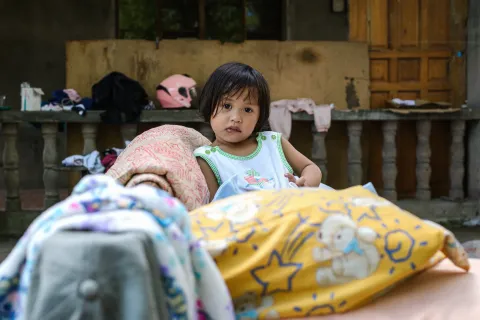
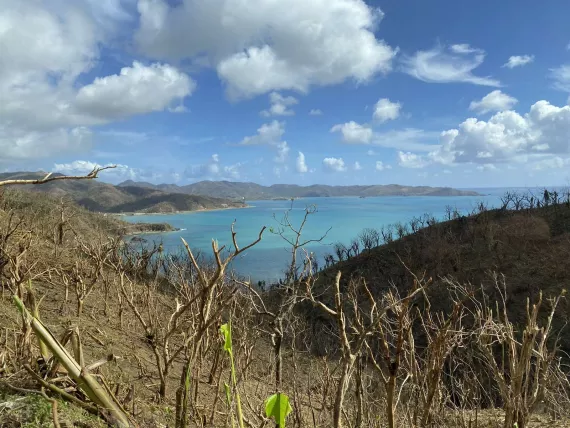
At 7 am at least two organizations had contacted me on how they can help in the assessment, and they were assigned to the other teams. Teams started as early as 7 am to survey the damaged areas. I was assigned to Team 2 to go to Baras and Bato municipalities. It took us an hour and 15 minutes to get from Virac to Baras. There were debris on the road, houses destroyed, and widespread destruction of the main livelihood in the area which is the abaca crop. There is no safe water to drink and there are already cases of diarrhea. Immunization is on hold. Food packs are only good for a week.
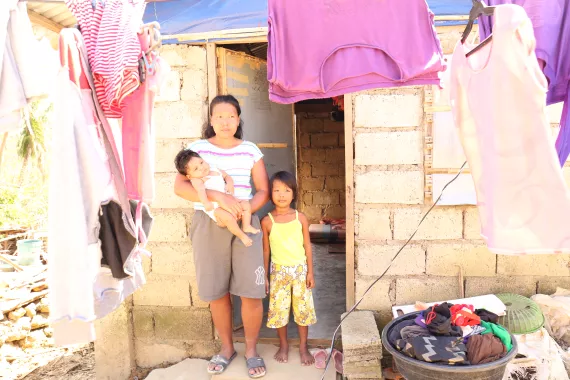
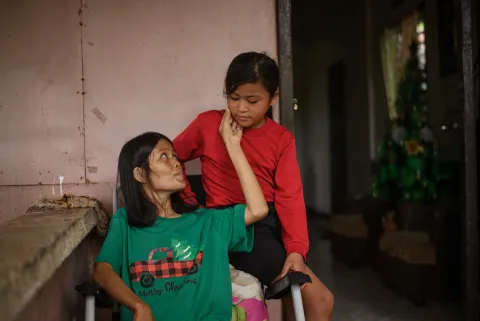
We went around two villages in Baras. I met this mother and child who were taking care of their neighbor’s baby. The mother shared that a typhoon back in 2016 also destroyed their house. Her daughter has now stopped schooling because her modules were destroyed. “I took good care of the house that the government gave us after Typhoon Nina [Typhoon Nock-ten in 2016], but now it is destroyed again,” she says.
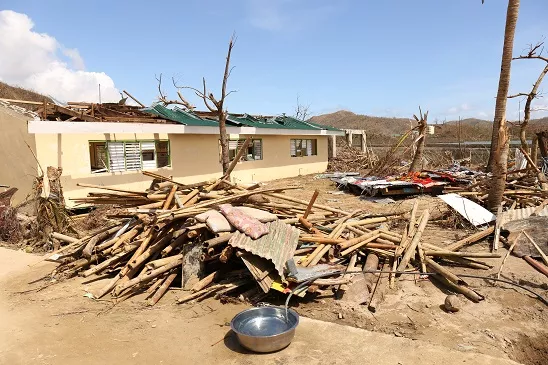
What is left of a school in Baras municipality. All of the modules, books and school supplies are gone. People are collecting water from the broken water pipes.
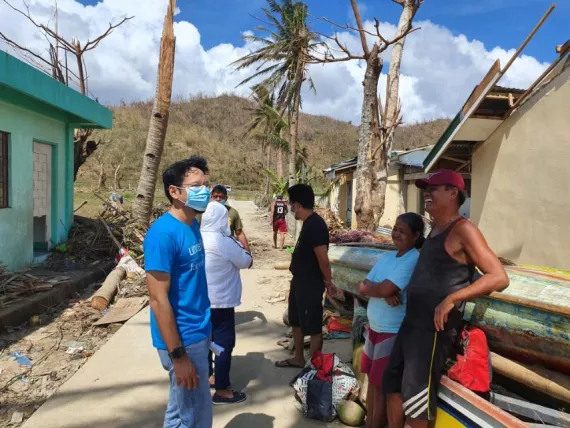
I talked to fishermen Raul and Jocie Camacho in Barangay Muning, Baras municipality. Their house was completely destroyed so they are living in a day care center for the moment, together with four other families. He said he doesn’t know where to get food as his boat was destroyed and his diving mask was swept away. “It will be hard for us to start again because everything was destroyed,” Jocie says.

1 pm
After lunch we went to Bato municipality, the ground zero. Their covered court in front of the municipal hall was destroyed. Food is only good for one week. The water from the water source is murky and they do not have water quality testing equipment. They need medicines for dengue and tetanus. We continued our assessment and got back at 3:30 pm.
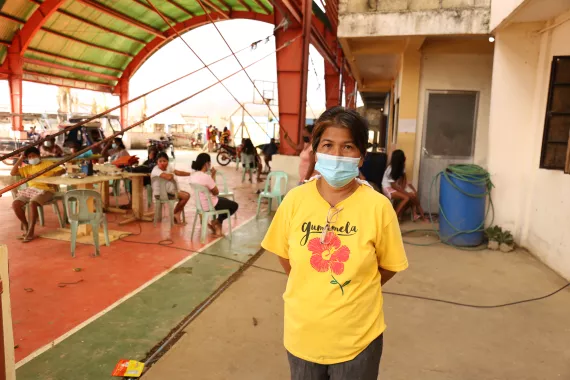
I met Barangay Captain Zenaida Timbao of San Roque, Bato Municipality. She says what they need most are shelter, clean water, power and livelihood. “Around 122 houses here are totally damaged. We also need materials for shelter. We need antibiotics for those who have wounds. We were able to restore the water source temporarily. We really need supplies like batteries, canned goods and soap. We need jobs. We really need your help at this time,” she says.
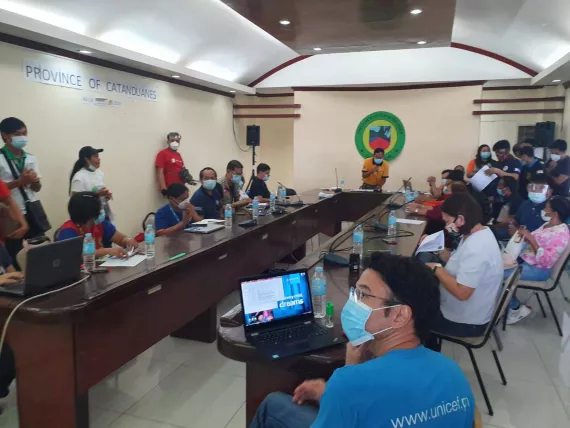
At the end of our assessment, we met at the hotel until 7.30 pm and prepared our reports. The next day, we had a meeting with the six most affected local governments to validate our report and to verify findings for other sectors. We then presented it to Governor Cua and told him we would bring our findings to the national government and UN officials.
8 November 2020
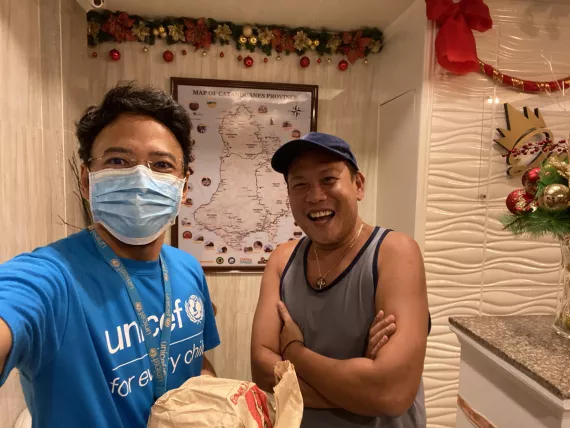
In the morning, we were supposed to return to Manila via the plane we took going to Virac but it was cancelled due to bad weather in Manila and postponed to the following day. Instead, I visited my UNICEF colleague Pete in San Andres. Pete works in the Programme Operations Support Hub of UNICEF Philippines. He has been working remotely from his hometown in Catanduanes since the COVID-19 pandemic started. We went around his village to see the damage. We tried looking for fresh fish to cook but the fishermen’s boats were all destroyed. Pete said they hid in the cabinet during the typhoon.
9 November 2020
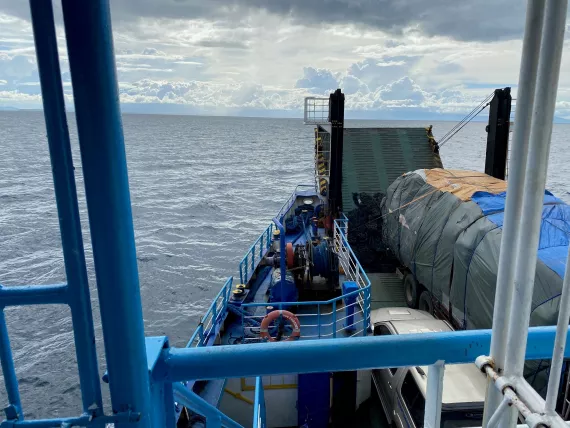
Our flight was cancelled again due cloudy weather in the Bicol Region. The rest of the assessment team decided to travel back to Manila by land. At 1 pm, we boarded a ferry going to Tabaco Port, arriving at 4:30 pm. We headed to Legazpi City, arriving at 6:30 pm, to spend the night before our 12-hour journey back to Manila.
10 November 2020
We left Legaspi City at 4:30 am and safely reached Manila at 4:15 pm.
Donate now to UNICEF to help children and families affected by emergencies. Your support enables UNICEF to provide ongoing assistance to the most vulnerable families affected by typhoons, earthquakes and the ongoing COVID-19 pandemic.