Emergency Health Kits Help Cebu Recover After Twin Disasters

UNICEF and health workers ensure continuous care as Cebu rebuilds after back‑to‑back emergencies
Larry Monserate Piojo
Erika
UNICEF Philippines/2025/Larry Monserate Piojo
30 January 2026

After the devastating 6.9-magnitude earthquake in northern Cebu and nearby provinces on 30 September 2025, children and their families faced widespread damage, displacement, and uncertainty. Just over a month later, on 4 November, Typhoon Tino (international name: Kalmaegi) compounded the crisis, flooding areas where families were still recovering from the quake.

While access to shelter and food was critical, the need for sustained health care quickly emerged as urgent. Amid their own losses, damaged homes, and disrupted routines, health workers continued to show up for communities to provide care, reassurance, and stability in compounded emergencies.
UNICEF and Jean
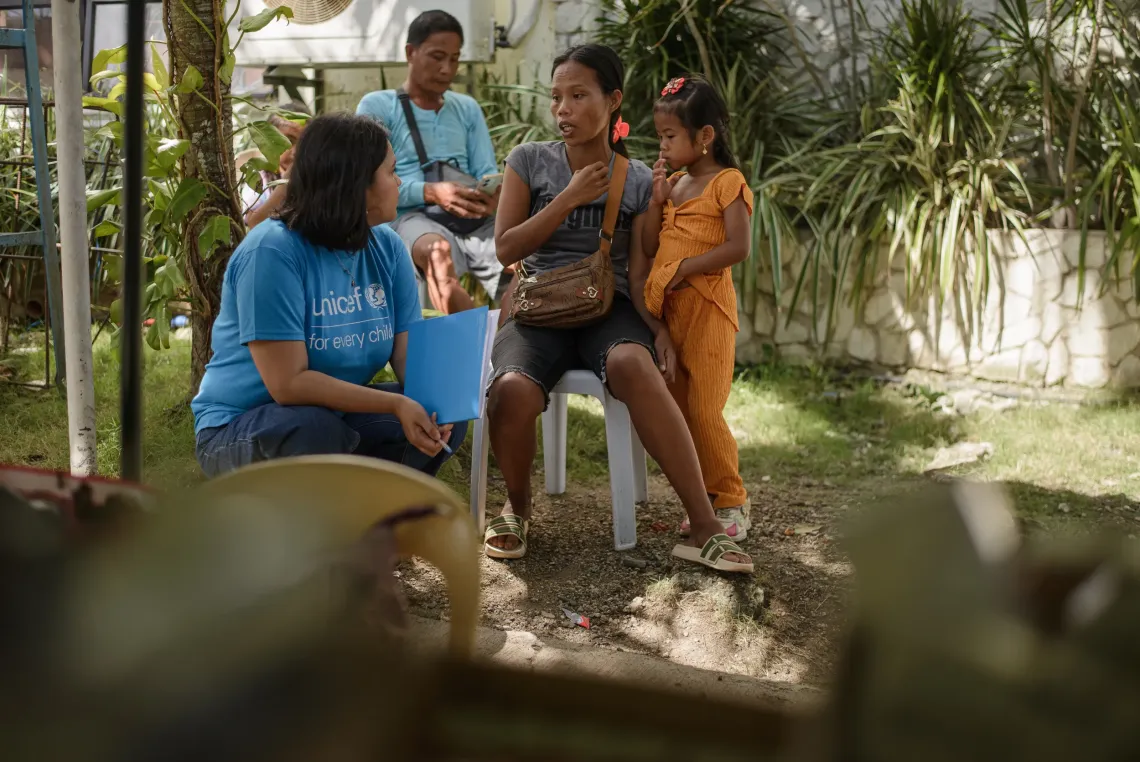
Gillian Salvador, UNICEF Philippines Advocacy and Communications officer, speaks with Mary Jean, a mother of two and resident of Bogo City during a medical consultation at the Health Office on 11 December 2025. UNICEF Philippines donated basic and supplementary emergency health kits to Bogo and nearby villages to support affected communities. The kits contain essential medicines, medical supplies, and equipment to help health workers deliver urgent, life-saving care to children and families.
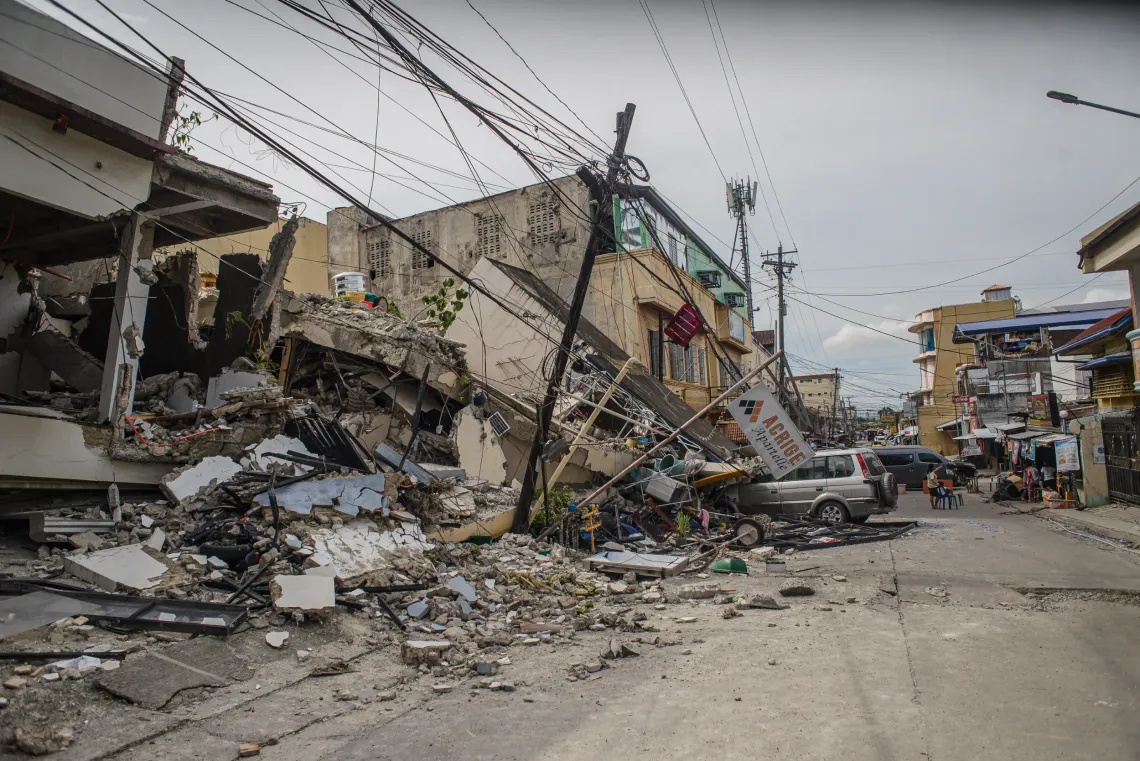
A collapsed building in Bogo City,
A collapsed building in Bogo City, Cebu. Damage from the earthquake rendered homes and public spaces unsafe, forcing families to remain outdoors or seek temporary shelter.
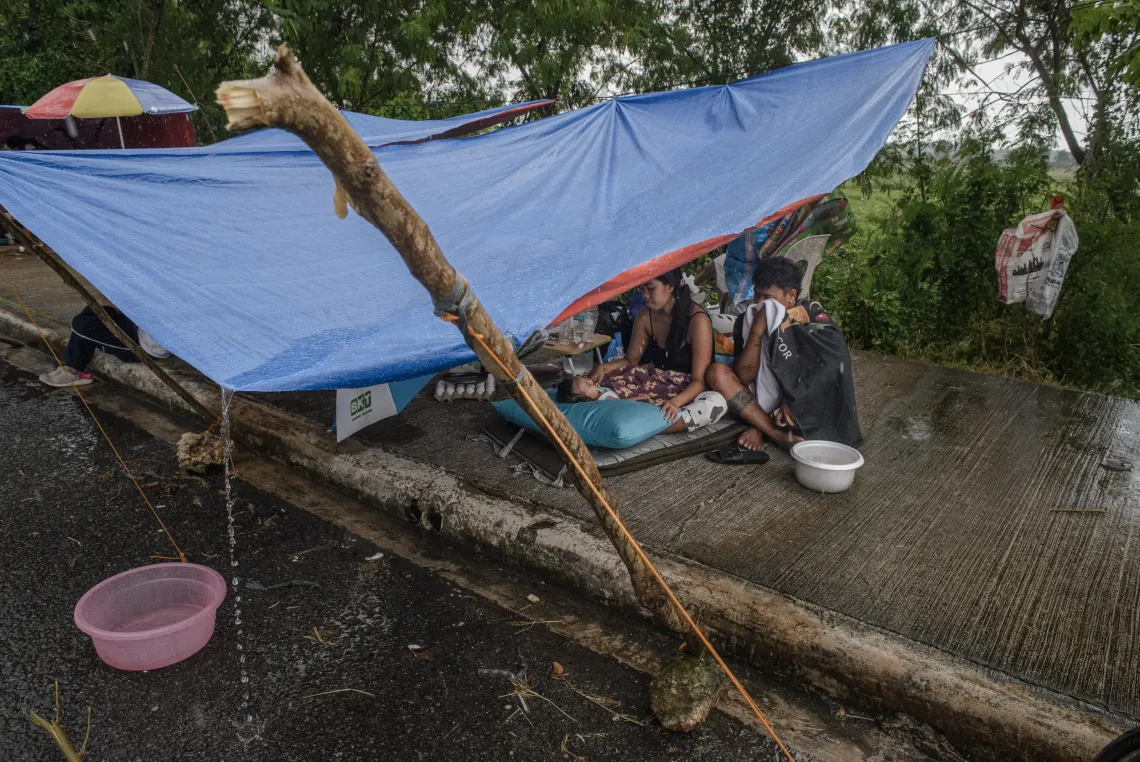
makeshift tent
A family seeks shelter in a makeshift tent away from their damaged home in Bogo City. Many families were forced to live outdoors as they fear aftershocks and unsafe structures, enduring extreme heat and heavy downpours.
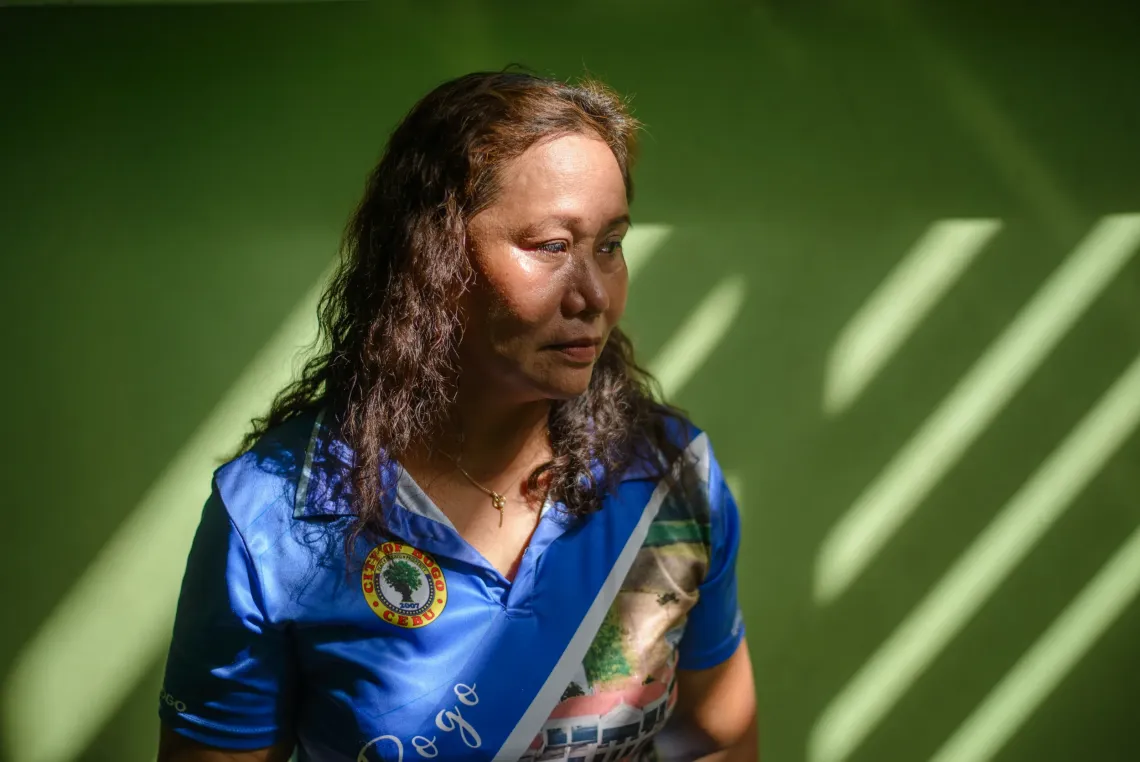
Aileen, a pharmacist in Bogo City
Aileen, a pharmacist in Bogo City Health Office since 2022, helps families during a consultation at a rural health unit. She says the common health issues among displaced families include maintenance medications for the elderly and frequent childhood illnesses like fever, cough, pneumonia, asthma, viral infections, and chickenpox. There were also cases of psychological trauma in the aftermath of the twin disasters.
Aileen
After the earthquake, Aileen sought refuge in a tent but was forced to return to her damaged house because of Typhoon Tino. “When the earthquake hit, I was back at work the very next day. Even if you want to catch your breath, you can’t—you must be on duty right away. I have to prepare and provide the medicines, because there were so many injuries,” she shared.
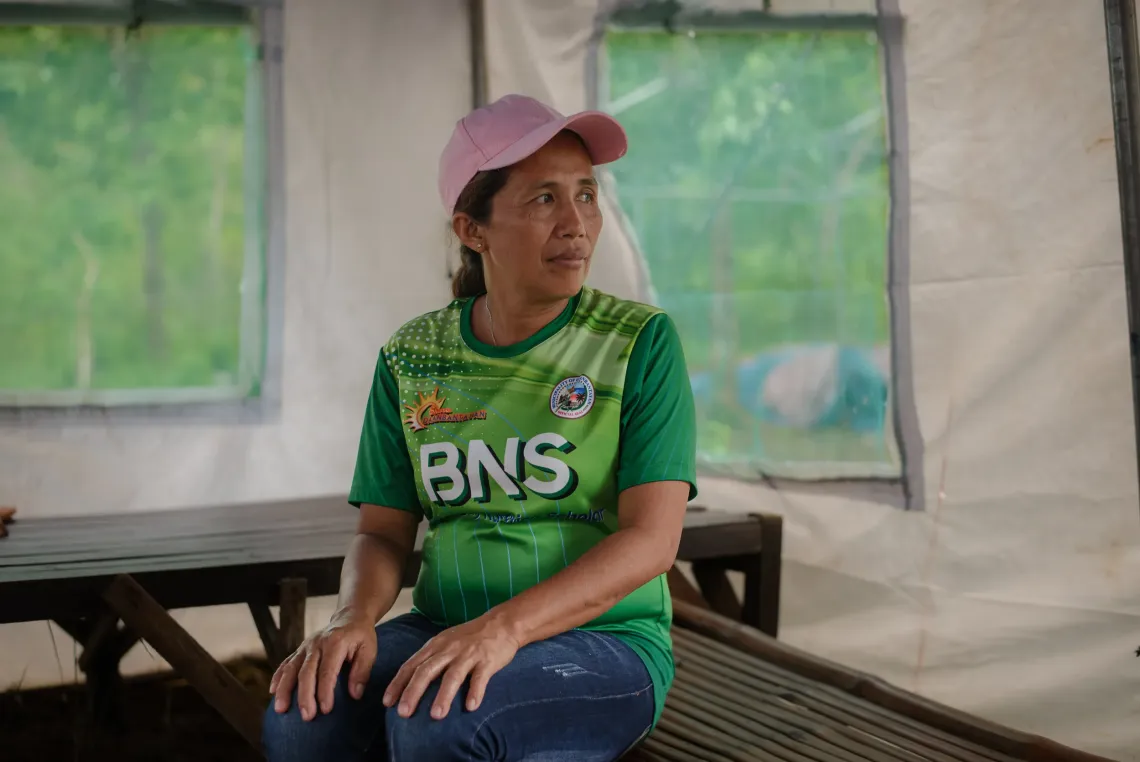
Barangay Nutrition Scholar
Cristina, 48, is a Barangay Nutrition Scholar in Barangay Paypay, Daanbantayan. She participates in medical missions in villages hit by earthquakes and typhoons, offers nutrition advice and regularly donates blood.
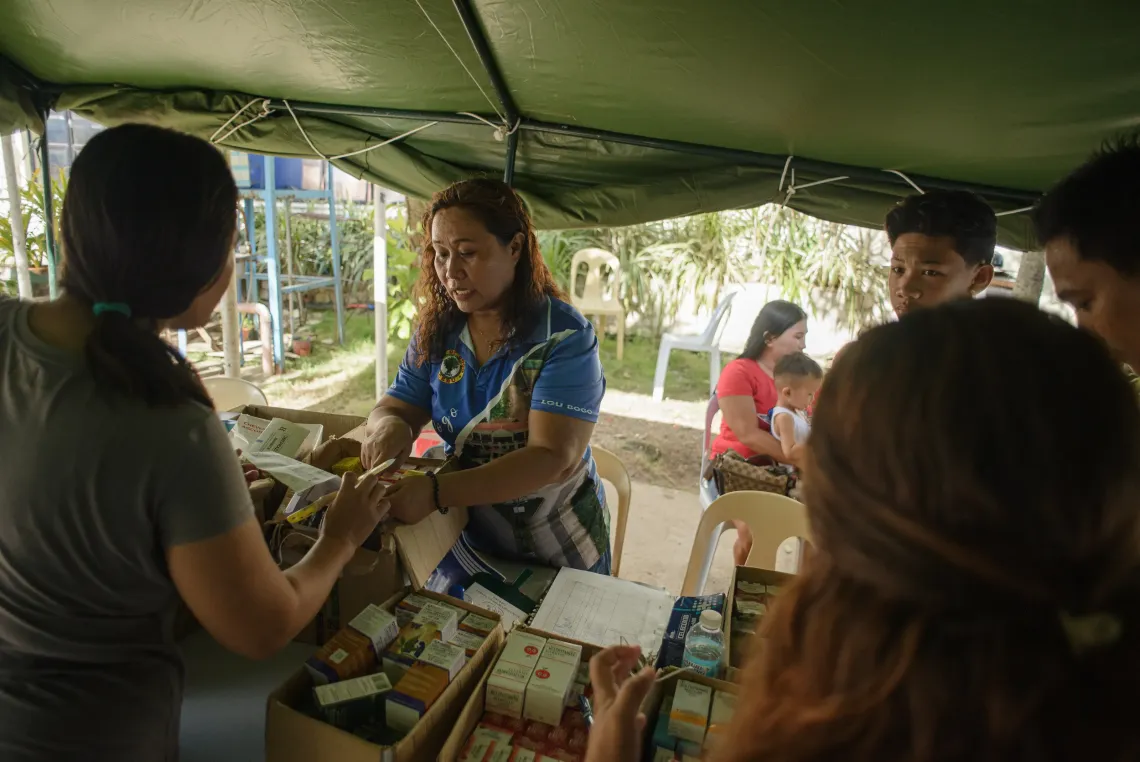
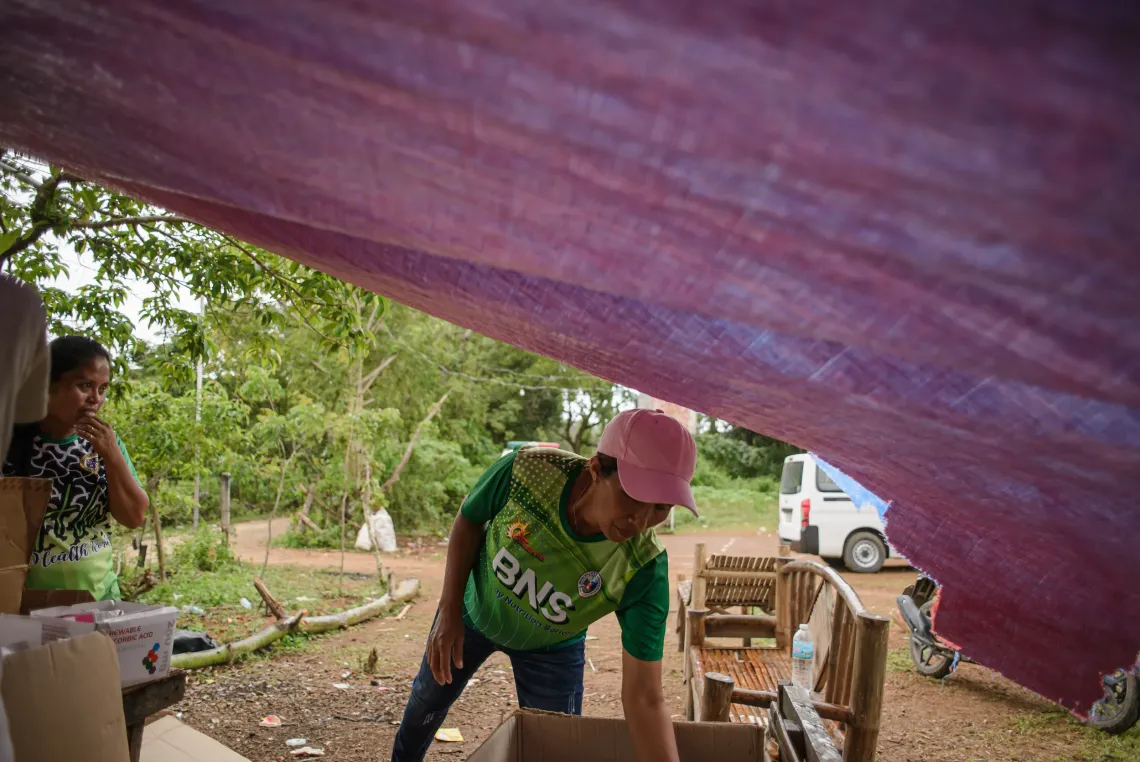
Christina, BNS
Christina prepares medicines during a medical mission in Barangay Paypay, Daanbantayan. Despite her own home being damaged during the earthquake, Cristina returned to work the very next day. “As health workers, we report back to work even during typhoons or the earthquake,” she said. “I am always ready to help, to provide my service to save lives,” she added.
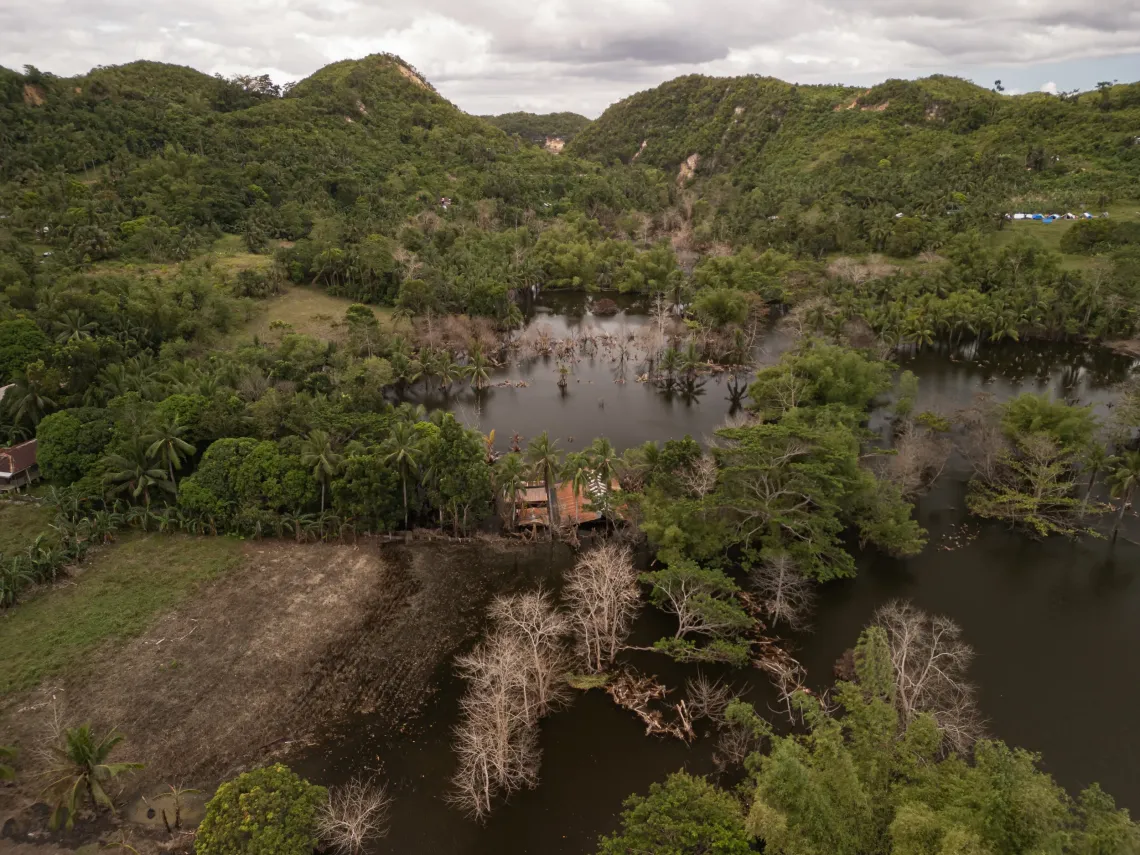
Barangay Gawaygaway
An area in Barangay Gawaygaway, Municipality of San Remegio. It remains submerged in flood waters following the devastation caused by Typhoon Tino, forcing residents to evacuate and seek refuge in tents that had served as temporary shelters after the earthquake.
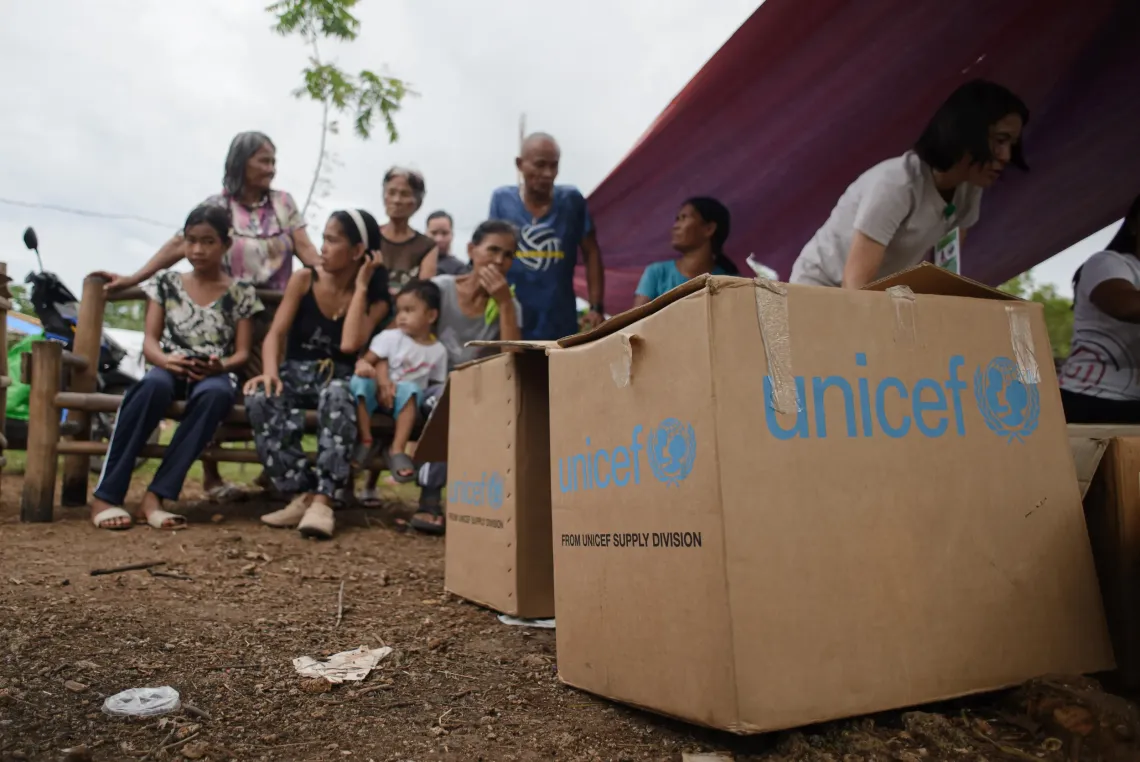
UNICEF emergency health kits
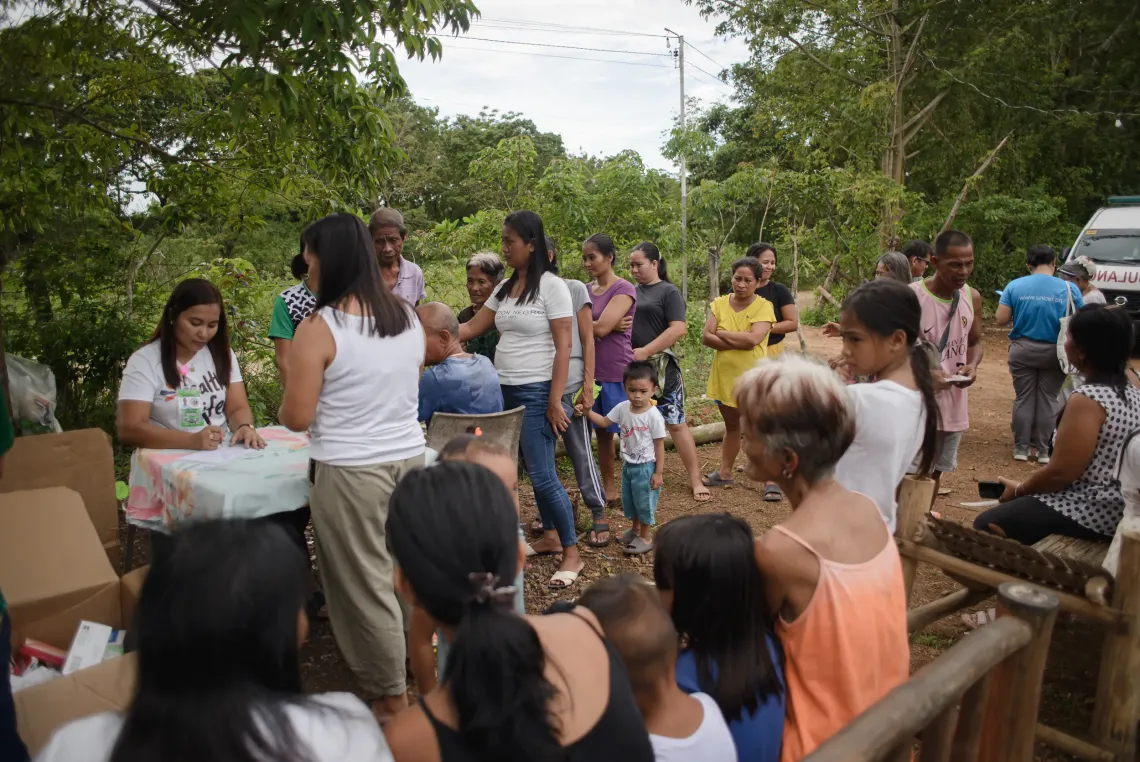
UNICEF emergency health kits brought by health workers during a medical mission in Barangay Paypay, Daanbantayan, support the health and nutrition needs of displaced families.
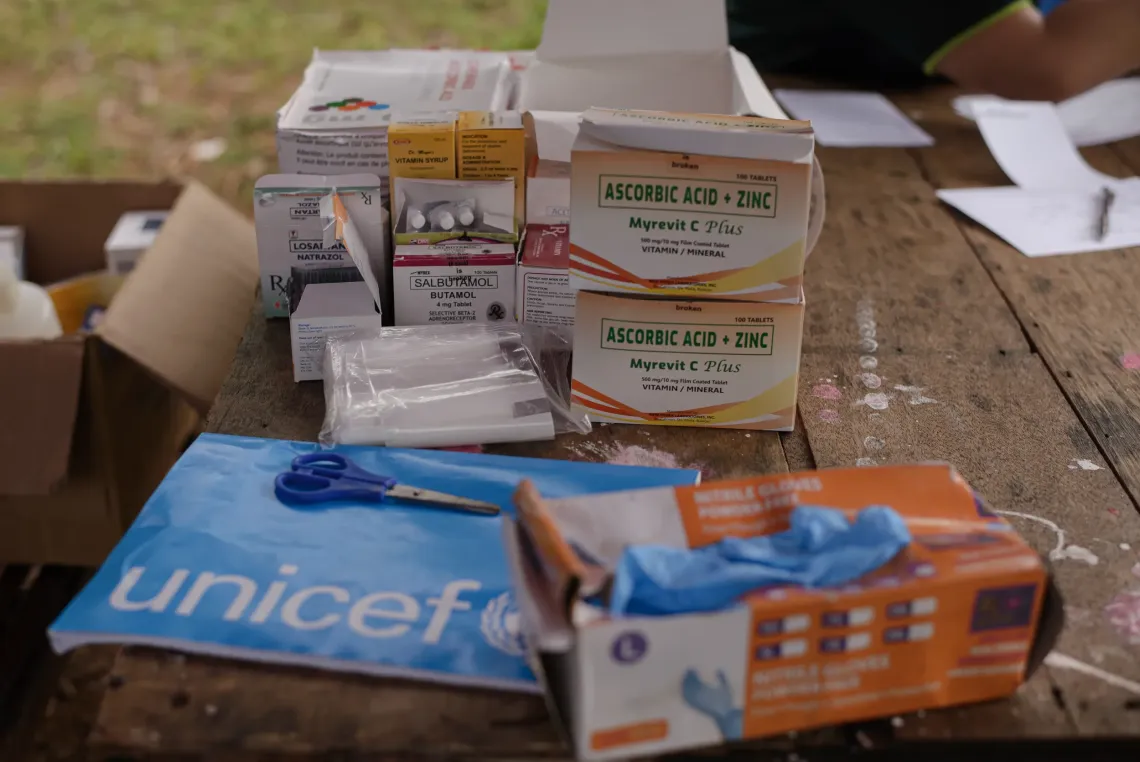
Medicines and supplies from the UNICEF emergency health kits
Medicines and supplies from the UNICEF emergency health kits include antibiotics, vitamins and oral rehydration salts, among others. These were given to patients in evacuation sites and earthquake-affected communities.
Children and families receive medical assistance
Children and families receive medical assistance and medicines from UNICEF emergency health kits, during a medical consultation in Barangay Paypay, Daanbantayan.
Dr. Mariel Malaga,
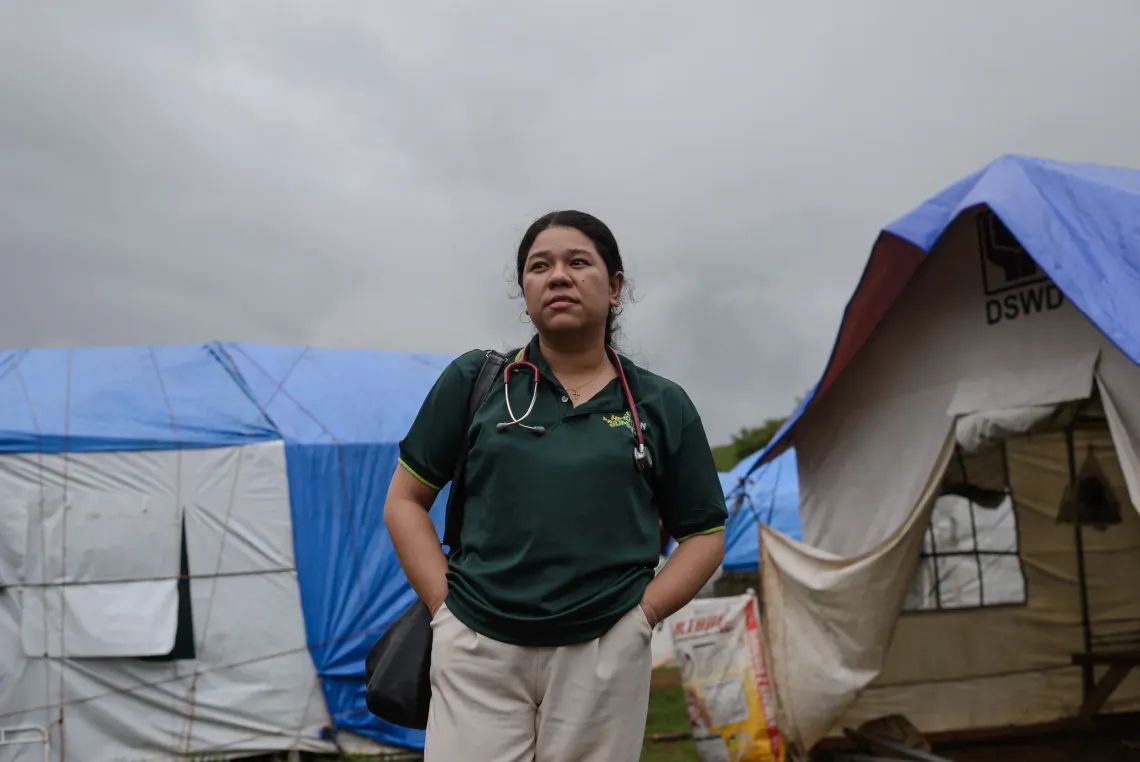
Dr. Mariel Malaga, Municipal Health Officer in Daanbantayan, conducts consultations during a medical mission in a tent city. According to her, prolonged displacement after the earthquake has led to increased health concerns, including loss of appetite among children and a growing demand for vitamins and antibiotics as families remain exposed to the elements. “Whenever we go to tent cities for medical missions, many ask for vitamins and others are grateful to receive them even when they are not sick,” Dr. Malaga shared.
Matiya
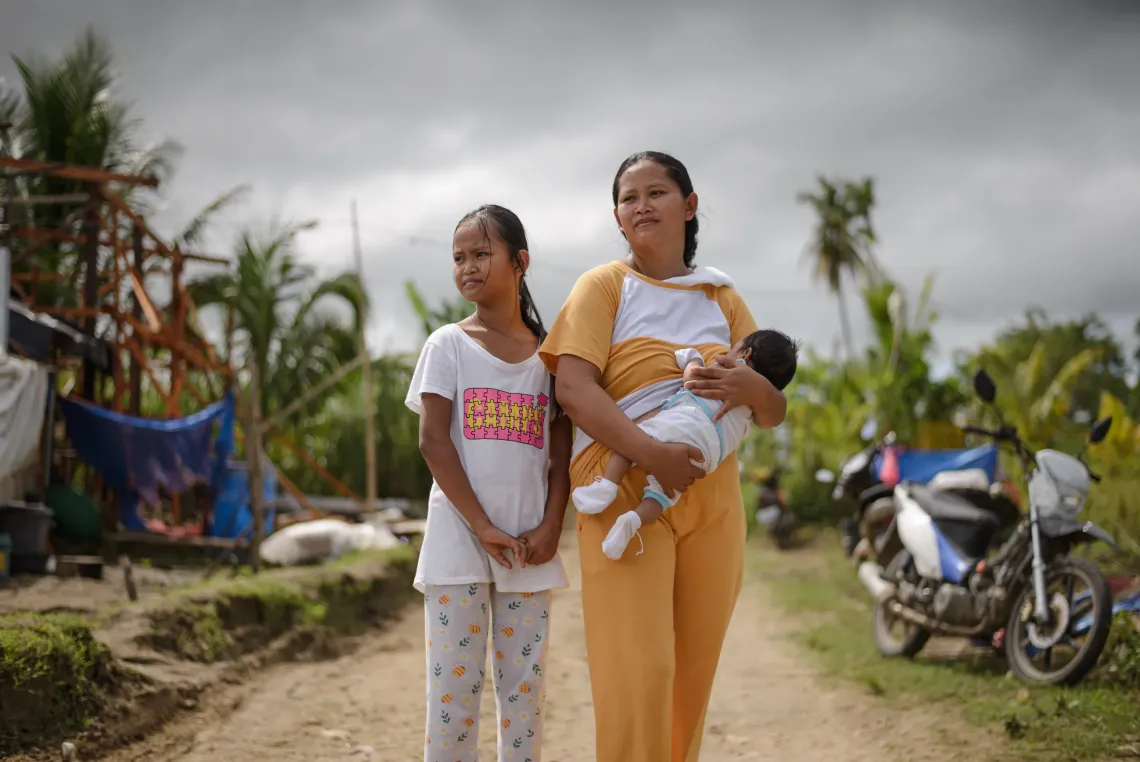
Matiya, 35, is a mother of two living in Barangay Gawaygaway, San Remigio. Her family is still unable to return home because their house remains in disrepair. She frequently attends medical missions for regular consultations, particularly for her one-month-old baby, whom she breastfeeds.
Mary Jean
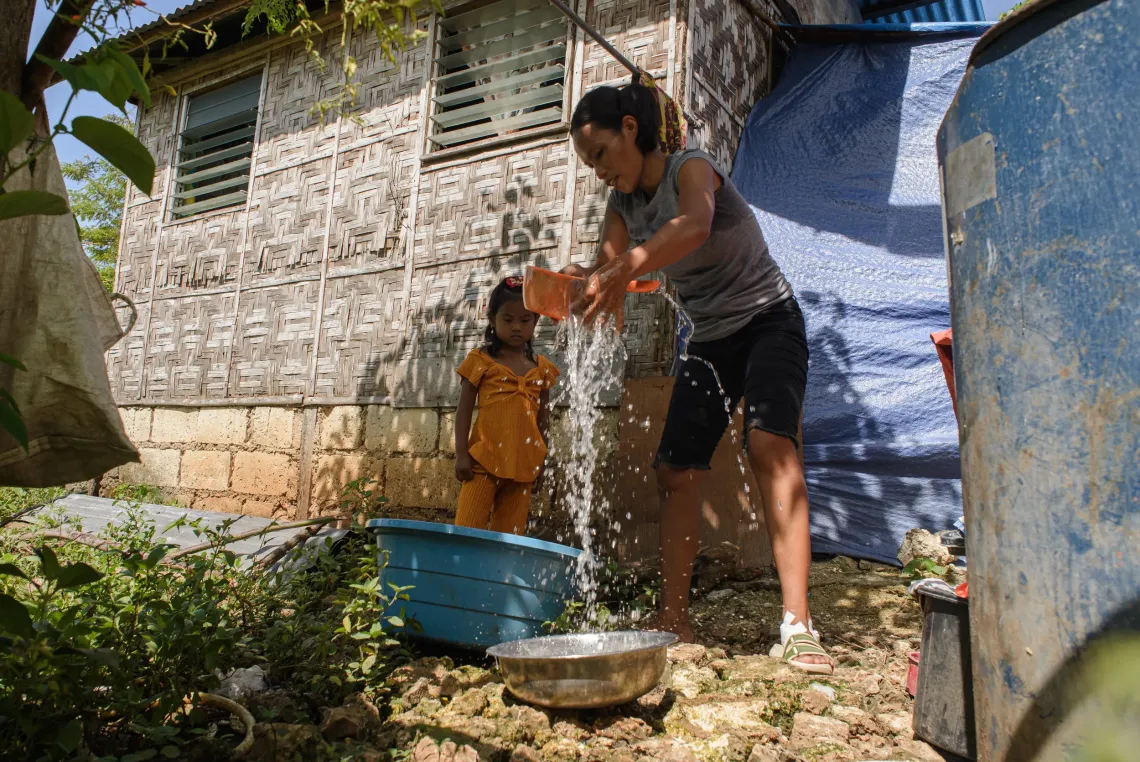
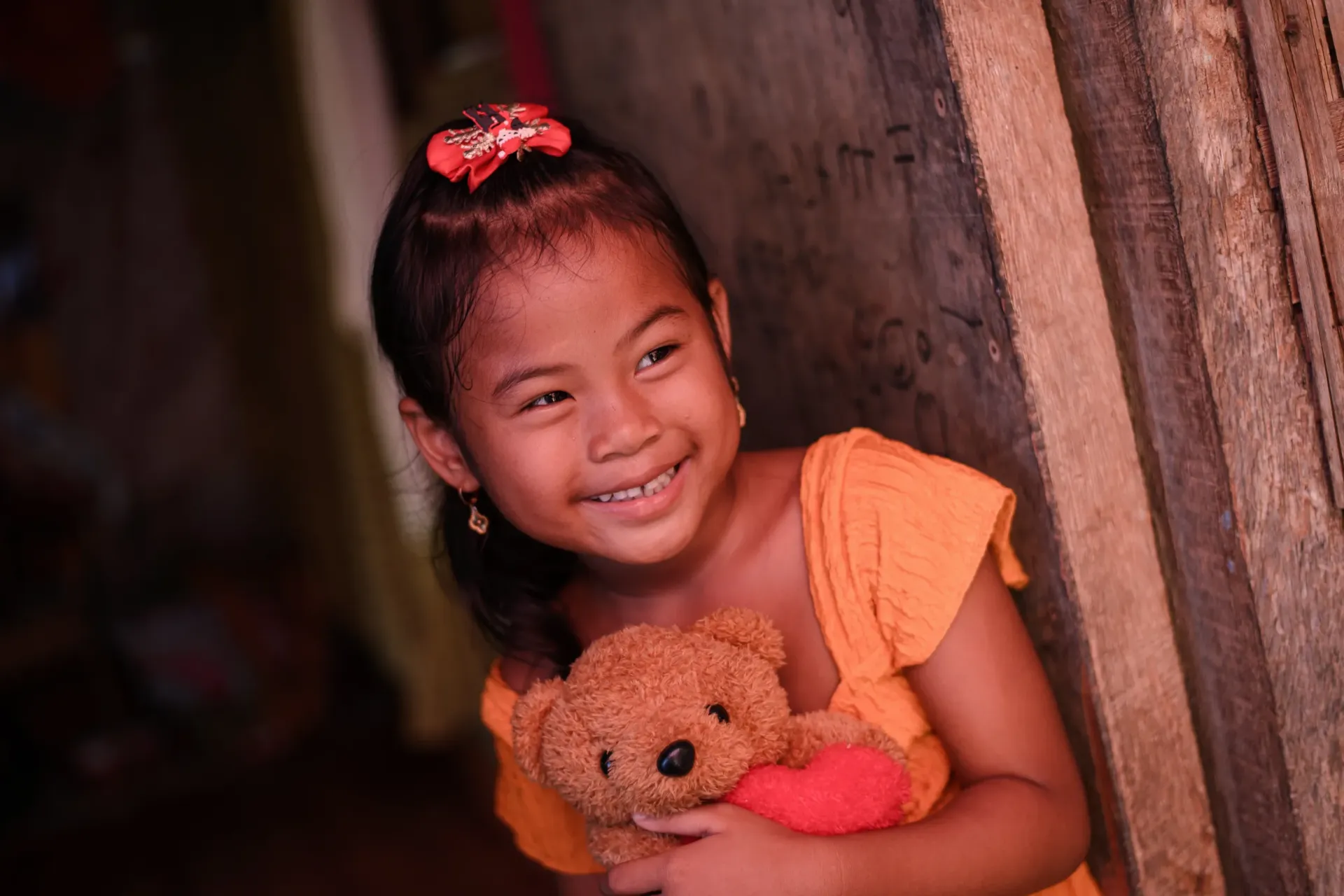
Mary Jean washes dishes outside their home in Bogo City while her five-year-old daughter, Erica, looks on. After the earthquake and typhoon, Erica began showing signs of fear and distress, highlighting the lasting psychological impact of the disasters on children. “Until now she is still scared. She’d cry whenever there’s an aftershock, and would run outside. Even when going to the toilet, she wants someone to accompany her. She doesn’t want to be alone,” Mary Jean shared.
Erika
Mary Jean is hoping to have Erica seen by a specialist, recognizing that the effects of the calamities extend beyond physical injuries. Erika’s fear, anxiety during aftershocks, and reluctance to be alone highlight the urgent need for psychological support for children affected by the disasters.

Despite the compounded disruption caused by both the earthquake and the typhoon, the delivery of care never ceased. UNICEF donated emergency health kits at the request of the health authorities in Cebu, enabling them to address supply shortages following the back-to-back emergencies. These kits were from supplies prepositioned by UNICEF to rapidly address emerging or urgent gaps in assistance in disaster-affected communities. Through the continued efforts of health workers and the support of UNICEF Philippines’ emergency health kits, the healing process began even before physical rebuilding could start.

How You Can Help

Thanks to the generous contributions of individual donors like you, UNICEF and their partners have been able to work with the Government and other stakeholders to ensure that every child receives life-saving support before, during and after emergencies . 

Please consider donating to UNICEF at https://donate.unicef.ph/campaign/champions. We very much appreciate your contribution.