Philippines records highest number of child displacements as climate crisis uproots 43.1 million children worldwide - UNICEF
More children set to flee homes as climate change worsens storms and floods
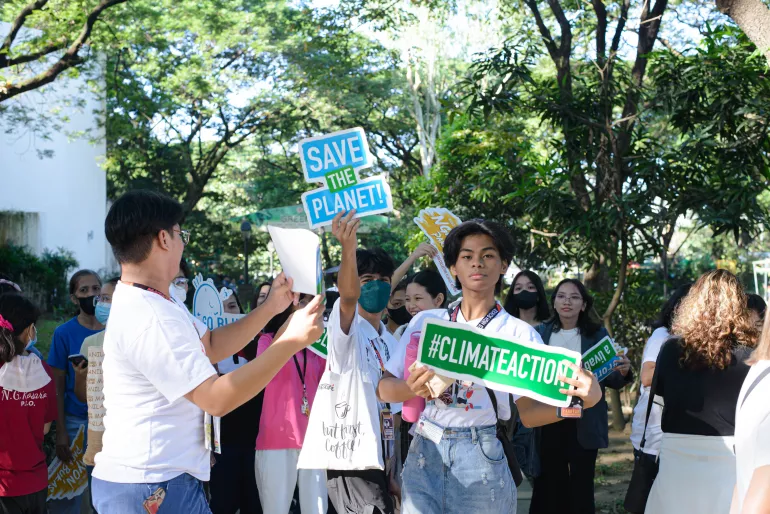
MANILA, 6 October 2023 – Weather-related disasters caused 43.1 million internal displacements of children in 44 countries over a six-year period—or approximately 20,000 child displacements a day—according to a new UNICEF analysis released today.
Children Displaced in a Changing Climate is the first global analysis of the number of children driven from their homes between 2016 and 2021 due to floods, storms, droughts, and wildfires, and looks at projections for the next 30 years.
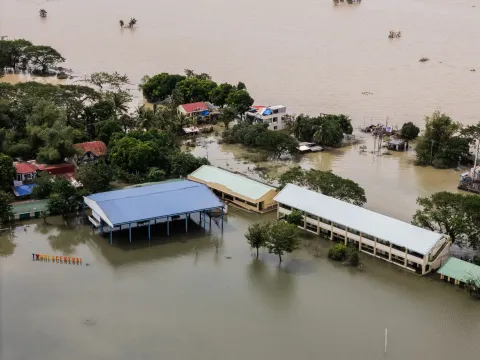
The Philippines is at the epicentre of this crisis, bearing the highest absolute number of child displacements at 9.7 million. India and China closely follow with 6.7 million and 6.4 million displaced children, respectively. In terms of hazard, the Philippines ranks first for storms and third for floods in absolute numbers of children displaced.
“Children are among those who suffer the most when they are displaced in times of disasters. They experience stress, lose days in school, get sick, and become more prone to exploitation and abuse. We need to strengthen efforts to protect children at risk and support those already displaced,” said Oyunsaikhan Dendevnorov, UNICEF Representative to the Philippines.
Floods and storms together accounted for 95 percent, or 40.9 million, of recorded total child displacements between 2016 and 2021. Droughts triggered more than 1.3 million internal displacements of children, with Somalia, Ethiopia, and Afghanistan most affected. Wildfires caused 810,000 child displacements, with more than a third occurring in 2020 alone, heavily affecting Canada, Israel, and the United States.
Relative to the size of the child population, children living in small island states, such as Dominica and Vanuatu, were most affected by storms, while children in Somalia and South Sudan were most affected by floods.
Using a disaster displacement risk model developed by Internal Displacement Monitoring Centre, a non-profit organization focused on providing data and analyses on internally displaced people, the report projects riverine floods could displace almost 96 million children over the next 30 years, based on current climate data, while cyclonic winds and storm surges have the potential to displace 10.3 million and 7.2 million children, respectively, over the same period.* As extreme weather events become more frequent and severe due to changing climate, the actual numbers will almost certainly be higher.
It is estimated that approximately 2.5 million children across the Philippines are at risk of being displaced by storm surges over the next 30 years. This risk is exacerbated by the fact that the country's coastlines are highly susceptible to storm surges, and it can impact even densely populated cities such as Manila, Cebu, and Davao.
Decisions to move may be forced and abrupt in the face of disaster, or they may involve pre-emptive evacuation, which saves lives but can still cause children to face the dangers and challenges that come with being uprooted from their homes, often for extended periods.
Children are especially at risk of displacement in countries already grappling with overlapping crises such as conflict and poverty, where local capacities to cope with additional displacements are strained.
According to the report, the Philippines has a robust system in place to both prevent and respond to disasters, including monitoring systems, early warnings, evacuation protocols and available shelters. The DSWD’s Disaster Response Operations Monitoring and Information Center (DROMIC) is cited as a best practice, collecting data on the number of people evacuated and the number staying in shelters or with relatives over time and disaggregates this information by age, sex, and location. Although preparedness measures and innovations exist in the country, the report mentions that the sheer number of children who could be potentially displaced by a single disaster event in the Philippines raises important questions about the absorptive capacity of host communities, shelters, and schools.
As leaders prepare to meet at the COP28 Climate Change Summit in Dubai in November, UNICEF urges governments, donors, development partners and the private sector to take the following actions to protect children and young people at risk of future displacement and prepare them and their communities:
- PROTECT children and young people from the impacts of climate change-exacerbated disasters and displacement by ensuring that child-critical services—education, health, nutrition, social protection, and child protection services—are shock-responsive, portable, and inclusive, including for those already uprooted from their homes.
- PREPARE children and young people to live in a climate-changed world by improving their adaptive capacity and resilience and enabling their participation in finding inclusive solutions.
- PRIORITIZE children and young people, including those already uprooted from their homes, in disaster and climate action and finance, humanitarian and development policy and preparatory investments.
UNICEF works with governments in countries most vulnerable to climate change—including the Philippines—to build resilience, develop child-sensitive strategies and deliver services to protect children’s welfare. The insights from the Children Displaced in a Changing Climate report can aid and empower all stakeholders to determine those at risk, focus resources effectively and minimize both the likelihood and impact of displacement on children.
#####
Notes to Editors:
- Read and download the report here.
- Photos, b-roll and other multimedia assets, including stories from families impacted, are available here.
*The definitions of the hazards considered in the projections differ from those in the historic analysis, so it is not possible to directly compare the two. The projections also do not include pre-emptive evacuations.
UNICEF analysed data from the Internal Displacement Monitoring Centre (IDMC) to determine historical child displacements linked to weather-related disasters and projected the estimated risk of child displacement in the future using IDMC’s risk model. The work was completed with support from the Patrick J. McGovern Foundation.
Media contacts
Additional resources

About UNICEF
UNICEF promotes the rights and wellbeing of every child, in everything we do. Together with our partners, we work in 190 countries and territories to translate that commitment into practical action, focusing special effort on reaching the most vulnerable and excluded children, to the benefit of all children, everywhere.
For more information about UNICEF and its work for children in the Philippines, visit www.unicef.ph.
Follow UNICEF Philippines on Facebook, Instagram, LinkedIn, TikTok and Twitter and YouTube.