National Youth Statement on Climate Action
from the Local Conference of Youth 2025

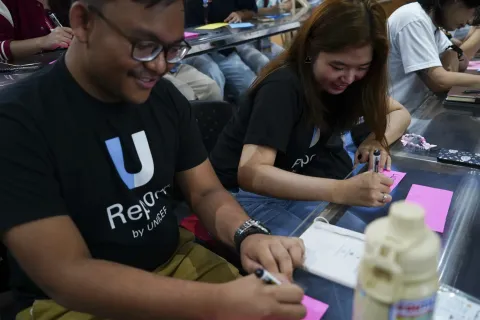
We, the young people of Luzon, Visayas, and Mindanao, convened in Quezon City, Philippines, on October 11, 2025, are united by our shared history, diverse upbringings, and common purpose of shaping a future built on transformative resilience;
We demand that the State, private sector, civil society, and the international community act with urgency, lead with integrity, and build a future grounded in justice and sustainability, ensuring that resilience goes beyond merely enduring one disaster after another and instead drives the transformation of our governance, economic, and food systems; the protection of our communities, animals, and ecosystems; and the safeguarding of our collective future from both climate and ecological collapse;
We uphold that climate change is not merely a developmental concern but a systemic crisis that exposes the failures of extractive and profit-driven models of growth, impacting generations and sectors, and disrupting education, health, livelihoods, and local economies;
We affirm that all Filipinos, especially children and youth, have the right to safety, security, and equity in the face of the climate crisis; and
We amplify the voices and lived realities of children and youth across the Philippines, who face rising seas, eroding coastlines, loss of ancestral territories, and increasing exposure to environmental hazards compounded by existing inequalities and vulnerabilities.
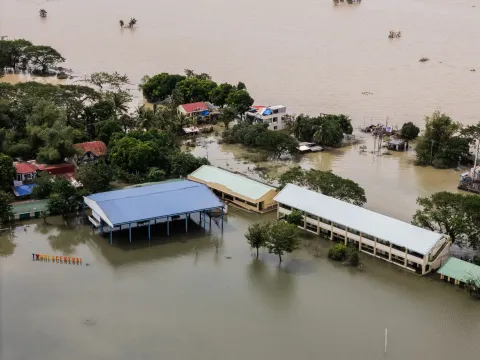
In the face of these realities, we refuse to accept a future defined by mere survival, where our classrooms become evacuation centers, our communities endure repeated losses, and our pursuit of stability is continually undermined by recurring disasters.
More than an ecological crisis, climate change is also an issue of intergenerational injustice, where the burden of disasters and slow-onset events is disproportionately borne by children and youth, marginalized and low-income communities, and the animals and ecosystems who share our vulnerability to floods, droughts, and displacement, whose vulnerabilities are deepened by historical neglect and structural inequalities.
As we move beyond the romanticized notion of resilience, we envision a Philippines where resilience is rooted in sustainable development, strengthened by inclusive and participatory planning, driven by innovation, and sustained through equitable opportunities.
Building on these affirmations, we recognize the persistent climate and environmental challenges confronting Filipinos, especially young people who stand at the frontlines of this crisis. These realities call for urgent action and collective resolve. The following highlights the challenges that must be addressed to achieve genuine resilience and climate justice:
Gaps in Climate Policy and Governance
The absence of an official declaration of a National Climate Emergency reflects a significant disconnect between the urgency of the climate crisis and the political will to confront it. Without this, interventions remain fragmented, underfunded, and largely reactive, leaving vulnerable sectors, especially children and youth, to shoulder the burden of worsening climate impacts.
In addition, climate and DRRM budgets are often insufficient, reactive, and unevenly allocated, with funds frequently delayed or failing to reach frontline communities where they are most needed. Meanwhile, youth-led and community-based initiatives continue to struggle to access financing due to bureaucratic barriers and the lack of youth-responsive funding mechanisms. The systemic exclusion of youth from the implementation, monitoring, and evaluation of climate policies further weakens accountability and undermines the nation’s capacity to achieve a just, inclusive, and resilient transition.
Inaccessible and Uncontextualized National Adaptation Plan (NAP)
Local communities continue to face persistent challenges in adapting and addressing issues brought about by the climate crisis. While the NAP was developed to guide the country’s medium and long-term adaptation priorities, efforts to localize, communicate, implement, and monitor its strategies remain limited.Many communities are left unaware of its strategies and lack the capacity to integrate them into local development and climate action plans. This gap prevents inclusive and effective adaptation, as local actors often lack the knowledge, resources, and institutional support needed to translate national strategies into tangible, community-driven actions.
Climate-Vulnerable Learning Facilities and Inadequate Integration of Climate Change Education in Curricula
Climate Change Education (CCE) in the Philippines remains fragmented, inconsistently implemented, and often lacking contextual depth. It is frequently confined to scientific discussions on greenhouse gases or disasters, rather than being framed as an issue of social justice, economic resilience, and collective survival. Learning materials are often overly generic and fail to reflect localized realities, which limits students’ development of ownership, agency, and urgency in addressing the climate crisis.The lack of climate literacy across schools and communities weakens adaptive capacity, deepens vulnerability, and allows systems of corruption and injustices to persist. At the same time, the absence of climate-resilient schools and education systems leads to constant disruptions caused by extreme weather events, undermining learning continuity and the ability of young people to adapt, recover, and thrive.
Moreover, historical and Indigenous Knowledge Systems and Practices (IKSPs), which embody generations of environmental stewardship and localized innovations, are often dismissed as irrelevant in formal education and insufficiently protected in times of disasters and crisis. This neglect leaves vital cultural and indigenous knowledge untapped in building a climate-resilient and inclusive education system.
Challenges in Food and Water Systems, and the Widening Gap in Access to Sustainable Resources
The fragility of food and water systems across the Philippines reveals a worsening intersection of climate vulnerability, livelihood instability, resource inequality - deepening food insecurity in already at-risk communities. As the climate crisis intensifies, communities across coastal, lowland, upland, and urban areas face distinct yet interconnected threats that endanger their health, nutrition, and survival.At the same time, the erosion of traditional and ancestral farming practices rooted in biodiversity conservation and community care weakens local adaptive capacity and displaces indigenous and smallholder knowledge that could sustain more climate-resilient livelihoods.
In areas where institutions lack the capacity to manage resource scarcity, instability persists, leading to greater food insecurity, health risks, and social tension. The persistence of unsustainable and extractive food production systems, coupled with the lack of institutional support for traditional, high-welfare, and locally grounded alternatives, continues to trap communities in cycles of vulnerability and loss.
Inadequate Gender Equality, Disability, and Social Inclusion (GEDSI) Integration in Climate Action
The climate crisis disproportionately affects marginalized communities: women, queers, persons with disabilities, indigenous peoples, religious minorities, children, and youth. They must have inclusive, safe, and enabling spaces to be recognized as formal climate stakeholders and meaningfully involved in decision-making at all levels. Despite being among the most affected by the climate crisis, these communities are often relegated to token consultations or symbolic representation, rather than being engaged as genuine partners in shaping solutions.Environmental defenders, including but not limited to journalists, activists, and online advocates, face increasing risks of red-tagging, harassment, and censorship, further shrinking civic spaces for climate and environmental advocacy.
A safe, inclusive, and enabling environment means more than just a seat at the table; it requires strong protection mechanisms that shield communities and defenders from harassment, red-tagging, and political repression.
Recognizing these challenges, the outlined priorities underscore the urgent need for scaled-up, sustainable, and people-centered adaptation and mitigation strategies. To advance these priorities, we assert that the following key recommendations be directed to the government, private sector, non-governmental organizations, and the international community to support young people and address these gaps:
Declare a National Climate Emergency immediately
A declaration of a National Climate Emergency is essential to match the urgency of the crisis and translate it into decisive political action. It would compel government agencies to prioritize climate-responsive policies and budgets, harmonize interventions, ensure coordinated action across sectors, and protect the most vulnerable, especially for children, who bear the heaviest burden of inaction.A declaration would not only symbolize recognition of the crisis but also institutionalize stronger coordination, financing, and accountability mechanisms across all levels of government.
Further, we call on our government to expedite the passage of the National Land-Use Act, the National Coastal Greenbelt Bill, and the institutionalization of Nature-based Solutions into the national climate action. These legislative measures would enable a coherent, science-based, and inclusive approach to land use, watershed management, and disaster risk reduction, ensuring that adaptation and mitigation efforts are locally grounded, sustainable, and equitable.
Deliver equitable, predictable, and transparent climate finance
Climate and DRRM financing, including the People’s Survival Fund, NDRRM Fund, and Loss and Damage Fund, must be transparent, inclusive, and accessible, not mired in bureaucracy or politics. We call for open data systems on budgets, participatory budgeting and monitoring, and direct access to funds for grassroots and youth-led initiatives.
The Philippines must actively champion climate justice in global negotiations, ensuring the full operationalization of the Loss and Damage Fund for those who suffer most. Every peso of climate financing must reach communities, not consultants. Climate finance must be provided as grants, not loans, as a form of reparation for loss and damages, including non-economic losses such as the loss of culture, heritage, and community identity.
We demand that the Global North fulfill its financial pledges and historical obligations to adequately capitalize the Loss and Damage Fund. At the same time, we call for stronger accountability from fossil fuel corporations whose high emissions have fueled the climate crisis.
Furthermore, we assert that the country must collaborate actively with international partners to enable youth’s access to financing for youth-led climate-responsive scientific research, policy development, and innovation.
Institutionalize climate education and inclusive and participatory capacity development
Fully integrate Climate Change Education (CCE) into the national curriculum, from basic to higher education, as a core subject grounded in science, justice, and action. Education must equip every learner, including out-of-school youth, indigenous learners, and vulnerable communities, with the knowledge and skills to respond to the climate crisis. One approach is to integrate CCE as a General Education subject or embed it within existing syllabi.
To advance localized and context-specific CCE and safeguard against heritage erasure, educational institutions must ensure the inclusion of historical and IKPS in curriculum development and the implementation of holistic, community-centered learning approaches.
Educational institutions must also build the capacity of youth for scientific, policy, and participatory research that generates locally relevant knowledge to enhance national CCE programs. Schools and educational institutions must evolve into centers of resilience and empowerment, where climate literacy is not only taught but practiced, through participatory governance, innovation, and community engagement.
Localize the National Adaptation Plan and strengthen grassroots capacities
Localizing and contextualizing the National Adaptation Plan (NAP) ensures that climate policies translate into tangible action for vulnerable communities. By providing local governments and grassroots groups with accessible tools, resources, and materials in their local languages, adaptation strategies will become more responsive to on-the-ground realities.
This approach creates greater opportunities for IKSP integration, participatory decision-making, and local innovation. This directly supports the Philippines’ Nationally Determined Contributions (NDCs), which commit to building climate-resilient communities and safeguarding livelihoods. Localized NAP implementation can accelerate NDC targets by enabling community-driven adaptation projects, improving local data and risk assessments, and integrating indigenous and traditional practices into broader resilience strategies. In this way, the NAP becomes not only a policy guide but a key driver in fulfilling national and international climate commitments.
Build Climate-Resilient Communities
Redefine development beyond concrete and consumption by building green, inclusive, and climate-resilient communities. Development must be community-centered, grounded in the knowledge, needs, and leadership of local residents, ensuring that solutions are people-driven and context-specific. It must also integrate strong environmental safeguards and social equity.
Every community must adopt a climate lens in land use and zoning plans to ensure that growth does not deepen vulnerability or cause displacement, especially among children, youth, minorities, and marginalized groups.
There must be learning continuity during disasters without putting the lives of children and youth at risk. Climate-resilient education means creating safe and adaptive learning environments, and empowering teachers and students to understand and respond to climate risks. Children must be protected from climate-related hazards while ensuring that their right to safe, uninterrupted, and quality education is upheld.
Infrastructure development should prioritize low-carbon transport systems, flood-adaptive designs, renewable energy solutions, and green public spaces that safeguard both people and the environment. Flood-control projects and other infrastructure must complement Nature-based Solutions (NbS) such as mangrove rehabilitation, integrated watershed management, and urban greening - all of which enhance community resilience and strengthen ecological integrity.
Establish stronger accountability measures for all stakeholders
A clear regulatory framework must mandate public access to greenhouse gas (GHG) emissions data from large enterprises, ensuring transparency and accountability. High emitters must face appropriate sanctions, with revenues redirected toward green industries and community resilience initiatives—creating both deterrence and support for a just transition.
Additionally, robust safeguards must be established for carbon markets to prevent greenwashing, ensure genuine emissions reductions, and protect communities from exploitative carbon offset projects.
Institutionalizing youth participation, such as granting youth state actors a seat in the Independent Commission for Infrastructure (ICI), ensures that climate and infrastructure planning reflects intergenerational equity and long-term sustainability.
Transform Agrifood Systems and Livelihoods for Climate Resilience
Food security must be strengthened across all communities, particularly for our farmers and fisherfolk who bear the brunt of extreme weather events and slow-onset climate impacts. There must be a revitalization of agriculture and fisheries through climate-smart technologies and equitable economic systems. Farmers, fisherfolk, and agri-youth must be provided with accessible financing, energy-efficient equipment, and digital tools that build adaptive capacity and improve productivity.
There must be safeguards and increased investments in agroecological and ancestral farming systems that sustain biodiversity, strengthen local resilience, and reduce dependency on extractive and high-emission production models.
Strengthen the implementation of the Sagip Saka Act by amending Section 6 to include the Department of Education (DepEd) among the agencies supporting its implementation. This amendment will enable DepEd’s active participation in empowering and preparing the youth to become farmers and fisherfolk, effectively addressing the aging population within the sector.
The Magna Carta for Small Farmers must be enhanced into a holistic and inclusive framework that reflects the diverse realities and needs of farmers across crops and regions. It must be grounded in their lived experiences, ensuring that policies and programs respond directly and effectively to their contexts.
Furthermore, children and youth in agrifood communities must be empowered to perceive agriculture and fisheries as dignified and viable livelihoods, continuing their communities’ culture and heritage in the process.. Programs such as Binhi ng Pag-asa, which promote youth participation, innovation, and agripreneurship in the agriculture and fisheries sectors should be institutionalized.
Enforce environmental laws fully and the stop projects that displace, destroy, and exploit communities and their resources
Uphold the government’s mandate to protect ancestral lands and natural resources from exploitative corporations. There must be youth environmentalists and organizational representatives in DENR councils to ensure that Environmental Compliance Certificates (ECCs) are granted only when corporate projects safeguard ecosystems, communities, and climate resilience.
Strengthen sustainable tourism laws and policies such as the RA 9593 or “The Tourism Act of 2009” by emphasizing ecological, cultural sensitivity and promoting practices that protect local communities from the environmental destruction caused by unsustainable tourism. Local Government Units and tourism establishments must be urged to adopt and implement sustainable practices.
Protect indigenous peoples, farmers, and fisherfolk communities, and uphold Philippine laws in defending their lands and livelihoods from major carbon-emitting companies and corporations.
Advance Equitable and Just Transition for Children, Youth, and Vulnerable Sectors
We call for a Just Transition that ensures no one is left behind in the shift toward a low-carbon and climate-resilient economy. Workers and communities dependent on fossil fuels, extractive industries, and carbon-intensive sectors must be supported through retraining, social protection measures, and the creation of blue and green jobs.
National and local development plans must prioritize renewable energy, circular economy initiatives, and sustainable livelihoods that uphold human dignity and ecological integrity. The Renewable Energy (RE) Law must be properly implemented to promote equitable access to clean energy, ensure transparency in project approval, and uphold the right of communities to Free, Prior, and Informed Consent (FPIC). This includes developing decentralized and community-based energy systems that empower local governance and participation in the transition process.
This transition must also recognize and integrate Indigenous Knowledge Systems and Practices (IKSPs) as vital contributions to sustainable and just energy pathways.
Finally, there must be adequate integration of Gender Equality, Disability, and Social Inclusion in the design and implementation of Just Transition frameworks, ensuring that climate action goes hand in hand with social justice and energy democracy.
Protect and Empower Youth Environmental Defenders
Advance the passage and full implementation of the Environmental Defenders Bill to institutionalize safeguards that protect youth, indigenous peoples, and local communities advocating for the environment. Ensure mechanisms for accountability, redress, and protection are in place for those facing threats, harassment, or intimidation.
Uphold and operationalize the rights to organize, assemble, and participate meaningfully in environmental governance without intimidation, violence, or reprisal, recognizing youth as vital partners in defending climate and ecological justice.
Address the intersection of climate and conflict in pursuing resilience and positive peace
Strengthen the capacity of institutions in geographically isolated and disadvantaged communities (GIDACs) and conflict-affected areas to respond to the overlapping impacts of climate change and conflict, which perpetuate cycles of poverty, displacement, and instability, further hampering development opportunities.
Local governments in conflict affected areas must move beyond reactive disaster response and advance climate action as a peace-building agenda. Fund locally-led, conflict-sensitive climate adaptation initiatives that rebuild livelihoods and address the vulnerabilities intensified by both conflict and climate crisis. Conflict-sensitive climate education should be integrated into localized Climate Change Education at the appropriate grade levels to promote a culture of people among children and youth.
Peace and climate justice must be pursued together, recognizing that positive peace cannot last where climate injustice persists, and climate justice cannot be achieved when conflict endures.
Institutionalize youth leadership in climate governance
Strengthen youth participation in governance by creating formal spaces for young people in the State, Civil Society, and Private Sector to contribute to policy-making, consultations, and implementation of climate programs. Youth must no longer be treated as mere participants but as equal partners and co-architects of policy and action
Establish mandatory youth representation in Local Disaster Risk Reduction and Management Councils (LDRRMCs) and Climate Adaptation Committees, ensuring diverse voices, especially from Indigenous Peoples, rural communities, and marginalized youth, are heard and valued
We propose to amend the RA 10121 or the Philippine Disaster Risk Reduction and Management Act of 2010 Sec. 11, in which there should be an official seat for the SK in the LDRRMC through the Barangay Development Councils (BDCs).
While these demands are directed primarily at our government, we also recognize that effective adaptation in a country like the Philippines depends heavily on global cooperation. Compared to many Global North countries, the Philippines contributes significantly less to global greenhouse gas emissions, yet suffers disproportionately from climate impacts. Therefore, the international community must bear its fair share by providing adequate and predictable funding, technology transfer, and capacity support so that climate-vulnerable nations like ours can implement adaptation effectively and support children and youth in building resilience.
Recognizing young people as present stakeholders and custodians of our future, we affirm the vital role of youth in advancing sustainability and shaping a climate-resilient future for all. We commit to:
- Upholding accountability and stewardship in protection of natural resources, guided by the principle of intergenerational responsibility for both present and future generations;
- Advocating inclusive climate action that ensures vulnerable groups, marginalized sectors, and local communities are never left behind;
- Fostering innovation and collaboration through youth-led initiatives that harness creativity, skills, and traditional knowledge to develop sustainable solutions for environmental and climate challenges;
- Advancing climate justice by calling for urgent measures that hold polluters and destructive industries accountable, while supporting fair transitions to sustainable livelihoods;
- Strengthening youth participation in governance and policy making, ensuring that our voices are meaningfully included in the decision-making process at the local, regional, and national levels;
- Building solidarity across regions and generations, fostering partnerships that unite diverse communities in pursuit of shared climate goals.
We call on our elected officials to move beyond promises and take tangible actions that address the realities of climate change. This includes enacting and enforcing climate policies, allocating sufficient budgets for renewable energy, sustainable agriculture, disaster risk reduction, and climate-resilient social services, and ensuring transparency and accountability in the use of public funds.
These twelve (12) calls to action articulate the collective resolve of the Filipino youth: to advance decisive, inclusive, and accountable climate action across all levels of governance.
We, the Filipino youth, refuse to be passive inheritors of a worsening climate crisis. We assert our rightful role as partners in governance and co-architects of a just, resilient, and sustainable future, where policies protect people and ecosystems, and where every young Filipino can live, thrive, and lead with dignity and security.
Media contacts
About UNICEF
UNICEF promotes the rights and wellbeing of every child, in everything we do. Together with our partners, we work in 190 countries and territories to translate that commitment into practical action, focusing special effort on reaching the most vulnerable and excluded children, to the benefit of all children, everywhere.
For more information about UNICEF and its work for children in the Philippines, visit www.unicef.ph.
Follow UNICEF Philippines on Facebook, Instagram, LinkedIn, TikTok and Twitter and YouTube.