First ever Bangsamoro Disaster Response Plan to protect children and families launched

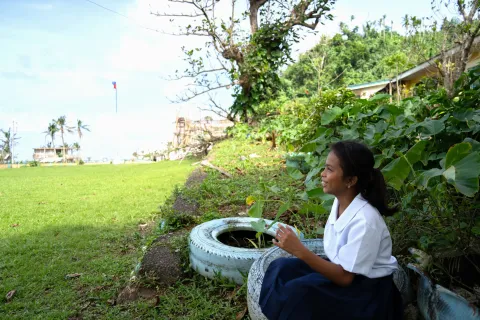
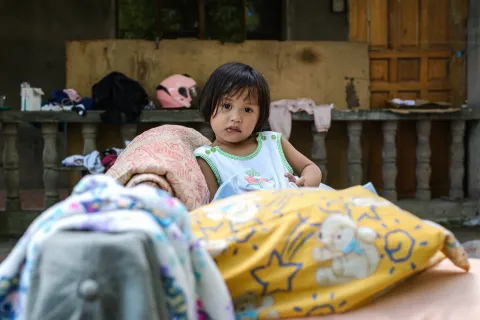
Cotabato City, 20 August 2025 – The Bangsamoro Government, with strong support from the Korean Government through the Korea International Cooperation Agency (KOICA) and UNICEF, today launched the region’s first Bangsamoro Disaster Response Plan (BDRP) — a groundbreaking framework to prepare for, respond to, and recover from disasters and emergencies. The plan prioritizes the safety and well-being of BARMM’s 1.7 million children and their families, many of whom face increasing climate-related risks.
The launch — coming just a day after World Humanitarian Day — underscores the urgency of building resilience in a region frequently affected by flash floods, landslides, and typhoons.
Chief Minister Abdulraof A. Macacua emphasized that, “Consistent with our duty to uplift the lives of the Bangsamoro people and guided by the principle of moral governance, we offer the Bangsamoro Disaster Response Plan as the embodiment of our shared commitment to safeguarding life and property, upholding dignity, and strengthening our resilience in the face of disasters and adversity.”
In developing the BDRP, the Ministry of Social Services and Development (MSSD), Bangsamoro Rapid Emergency Action on Disaster Incidence (READi), and member-ministries, offices, and agencies of the Bangsamoro DRRM Council identified flooding and rain-induced landslides as among the most frequent and damaging hazards in the region. In 2022, Severe Tropical Storm Paeng claimed 63 lives and displaced thousands, causing losses exceeding ₱3.5 billion. In July 2024, flash floods affected more than 187,000 families. These recurring emergencies threaten children’s lives and disrupt education, health services, and peacebuilding in the post-conflict region.
The plan enhances the region’s capacity to respond effectively to disasters cause, armed conflict, and other complex emergencies — protecting lives, minimizing disruption to the region’s post-conflict journey, and strengthening community resilience. It encourages local governments to mobilize their own resources and lead emergency response efforts, while outlining how they can seek support from national agencies, nearby LGUs, or partners when necessary.
The development of the plan was supported by UNICEF, with funding from KOICA. A series of consultations with BARMM ministries and agencies, LGUs, civil society organizations, and humanitarian partners ensured that the plan reflects real community needs in responding to climate related effects and other disasters.
“KOICA is proud to support the Bangsamoro Government through UNICEF in delivering this first ever Disaster Response Plan for BARMM,” said JUNG Youngsun, Country Director, KOICA. “This plan is not just about responding to emergencies — it is about saving lives, protecting children, and ensuring that communities can stand strong in the face of future disasters. KOICA will remain a committed partner in strengthening BARMM’s resilience and safeguarding its people.”
“The Philippines is among the most disaster-prone countries in the world, and children are especially vulnerable to climate and environmental shocks,” said Behzad Noubary, UNICEF Acting Representative to the Philippines.
"This plan will not only reduce the impact of emergencies on children and their families but also empower them to take part in the response. We are grateful to work with KOICA and the Bangsamoro Government on this important initiative and remain committed to advancing climate change mitigation and adaptation — including by strengthening climate-resilient social services for children.”
Media contacts
About UNICEF
UNICEF promotes the rights and wellbeing of every child, in everything we do. Together with our partners, we work in 190 countries and territories to translate that commitment into practical action, focusing special effort on reaching the most vulnerable and excluded children, to the benefit of all children, everywhere.
For more information about UNICEF and its work for children in the Philippines, visit www.unicef.ph.
Follow UNICEF Philippines on Facebook, Instagram, LinkedIn, TikTok and Twitter and YouTube.