The ASEAN Declaration on the Empowerment of Youth in Climate Action and Disaster Resilience
WE, the Member States of the Association of Southeast Asian Nations (ASEAN) -namely Brunei Darussalam, the Kingdom of Cambodia, the Republic of Indonesia, the Lao People’s Democratic Republic (Lao PDR), Malaysia, the Republic of the Union of Myanmar, the Republic of the Philippines, the Republic of Singapore, the Kingdom of Thailand, Democratic Republic of Timor-Leste, and the Socialist Republic of Viet Nam, on the occasion of 48th ASEAN Summit in Cebu, Philippines on 8 May 2026.
RECALLING our shared commitment to the Kuala Lumpur Declaration on ASEAN 2045: Our Shared Future, along with the ASEAN Socio-Cultural Community Strategic Plan adopted during the 46th ASEAN Summit, which underlines ASEAN’s commitment in providing platforms and youth empowerment initiatives to contribute to sustainable socio-economic development and promoting ASEAN awareness, values and identity for a resilient community;
FURTHER RECALLING our commitments outlined in the ASEAN Work Plan on Youth, and the ASEAN Agreement on Disaster Management and Emergency Response (AADMER) Work Programme 2026-2030, as well as the ASEAN Joint Statements on Climate Change to the 30th Session of the Conference of the Parties to the United Nations Framework Convention on Climate Change (UNFCCC COP 30);
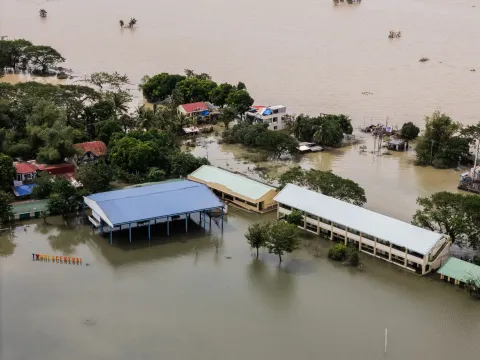
RECOGNISING the increasing urgency posed by climate change, disasters, and environmental degradation, and the disproportionate impacts these crises pose on youth, particularly in terms of education, health, employment, and future security;
REAFFIRMING the significance of ASEAN youth as critical stakeholders in advancing regional resilience, sustainability, innovation, and inclusive development, and their essential role in contributing to the achievement of ASEAN’s shared vision of a climate adaptive and disaster-resilient community;
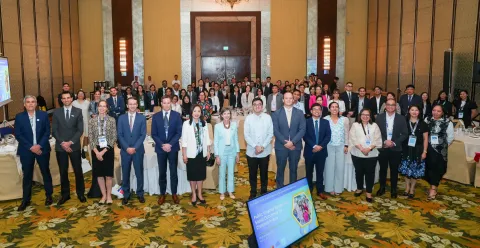
ACKNOWLEDGING the outcome of the ASEAN Youth Climate Action and Disaster Resilience Conference held from 30 April to 3 May 2025 in Manila, Philippines, which brought forward concrete recommendations from youth representatives across the region, including on innovation, education, governance, health, and community engagement;
NOTING WITH CONCERN the barriers faced by young people in accessing disaster and climate action, climate finance, formal participation mechanisms, equitable access to green jobs, digital skills, and relevant capacity-building opportunities;
RECOGNISING FURTHER the value of youth-led initiatives, including nature-based solutions, early warning technologies, youth and community-based disaster risk reduction programs, innovations and education, research and multi-stakeholder engagement for climate action and disaster risk reduction.
DO HEREBY:
- AFFIRM our collective commitment to support youth participation and leadership at both national and regional levels, in climate and disaster risk management, including through engagement in ASEAN related activities and in decision-making processes through multi-stakeholder platforms in accordance with national laws and policies;
- DECLARE our support for the establishment of an ASEAN Youth Climate Resilience Programme to train and deploy youth leaders in vulnerable groups. For climate preparedness, response, and recovery efforts;
- SUPPORT the creation of youth-led innovation, multi-stakeholder and disaster risk reduction learning platforms and youth consultative platforms to strengthen the role of youth in shaping solutions, policies, and community resilience;
- PROMOTE intergenerational mentorship, capacity – building programmes on green skills, civic education, and institutional dialogues on climate action and disaster resilience to enhance knowledge sharing, foster interdisciplinary collaboration, and build trust between youth and decision-makers;
- ENCOURAGE the mobilisation of financial support for youth-led enterprises and community-based innovations related to climate action and disaster resilience through seed grants, rolling micro-grant mechanisms, public-private partnerships including highly concessional financing and innovative sources, aligned with the nationally determined priorities and in accordance with the respective national laws, regulation, and conditions of each ASEAN Member State;
- DEVELOP scaled-up, accessible, decentralised, and needs-responsive climate finance instruments for youth, particularly those addressing loss and damage in climate vulnerable region, and better access to funding at local and regional levels from both public and private sources; as well as fostering partnerships with ASEAN Dialogue Partners, international organisations and other relevant stakeholders.
- PROMOTE the creation of an ASEAN Youth Advisory Board on Climate Action and Disaster Resilience under the guidance of SOMY, and the appointment of national youth focal persons in each Member State, on a voluntary basis and in accordance with the respective national institutional arrangements of each ASEAN Member State; to coordinate, promote, and safeguard youth engagement, while tracking the implementation of this Declaration and ensuring accountability for these commitments;
- ENCOURAGE alignment with the ASCC Results Framework and the implementation of the ASEAN Work Plan on Youth in reporting progress on the implementation of this Declaration, and convening annual consultations and reviews with youth stakeholders to ensure effective monitoring and reporting, inclusivity, and alignment with ASEAN’s strategic objectives;
TASK the ASEAN Ministerial Meeting on Youth (AMMY), with support from the ASEAN Senior Officials Meeting on Youth (SOMY), in coordination with the ASEAN Committee on Disaster Management (ACDM) and the ASEAN Senior Officials on Environment (ASOEN) supported by the ASEAN Working Group on Climate Change (AWGCC) to develop a work plan or relevant documents to facilitate the implementation and monitoring of this Declaration.
The implementation of this Declaration shall be in accordance with the domestic laws, regulations, and national priorities of each ASEAN Member State.
ADOPTED in Cebu, Philippines, on the Eighth Day of May in the Year Two Thousand and Twenty-Six in a single original copy in the English Language.
Media contacts
Additional resources
About UNICEF
UNICEF promotes the rights and wellbeing of every child, in everything we do. Together with our partners, we work in 190 countries and territories to translate that commitment into practical action, focusing special effort on reaching the most vulnerable and excluded children, to the benefit of all children, everywhere.
For more information about UNICEF and its work for children in the Philippines, visit www.unicef.ph.
Follow UNICEF Philippines on Facebook, Instagram, LinkedIn, TikTok and Twitter and YouTube.