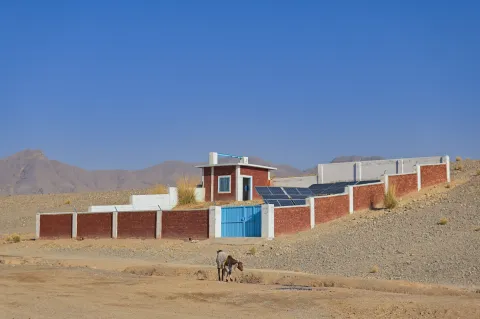
Women and children reap benefits from climate-resilient water schemes
With support from the UK’s Foreign, Commonwealth & Development Office, climate-resilient water supply schemes help flood-affected families in Swat.
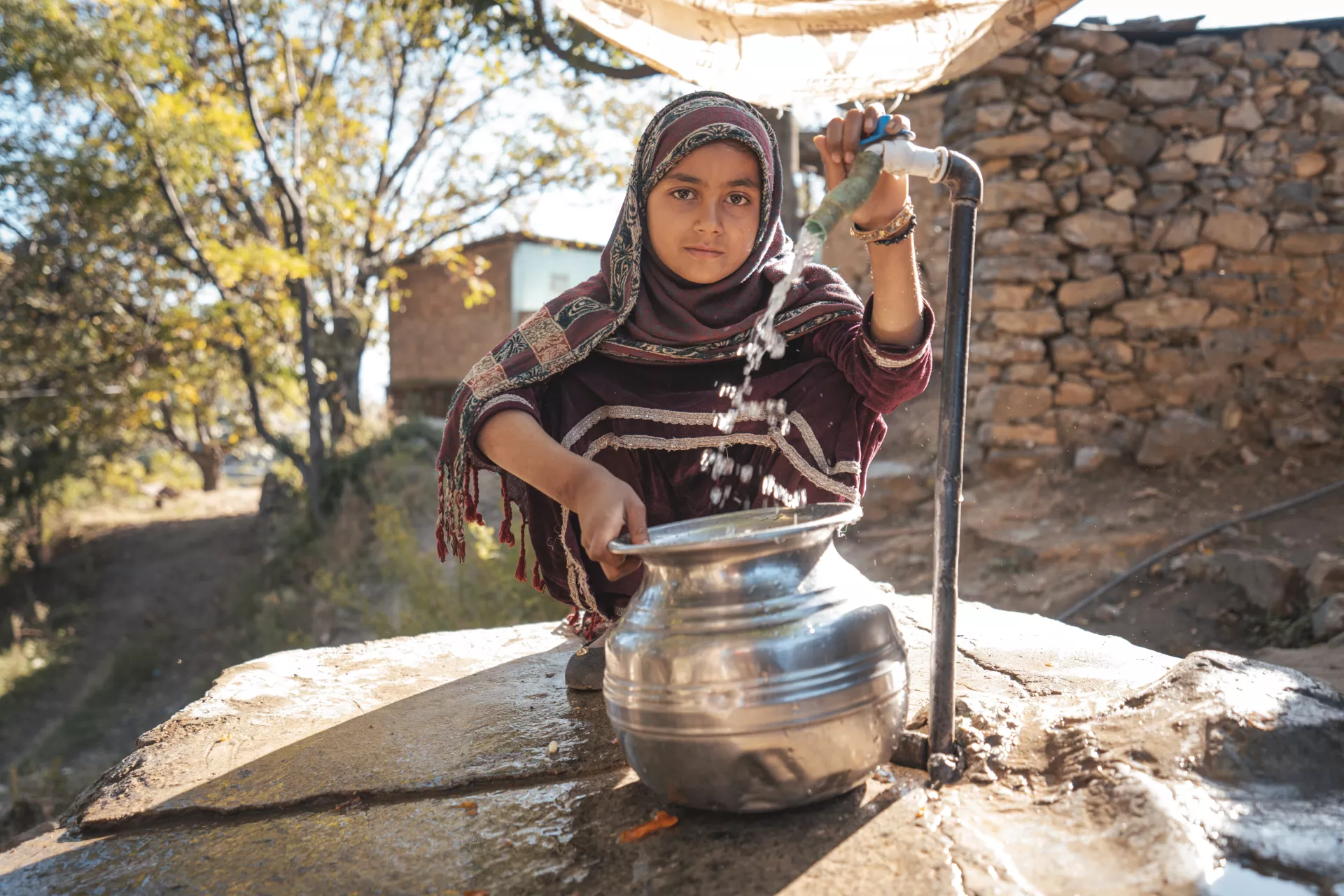
Swat, Khyber Pakhtunkhwa: Raishma Bibi, 8, is happy and relaxed after being relieved from the hardship of fetching water from distant mountain springs.
“It used to be so long and difficult trekking with water pots in our hands and on our heads. I would get very tired from this. Now we are getting our water supply right at home,” says Raishma Bibi.
“I used to go with my elder sister and other women from our neighbourhood to collect water. It was challenging as we would descend the mountain from our village and then ascend to the mountain spring on the other side of the road. The round trip would take us more than one hour.”
Raishma lives with her extended family, including her parents, siblings, uncles, aunts and cousins, in Shotkal, a small village on a mountain in Matta, Swat. The water supply to the village was completely cut off when massive rains and flooding damaged the water wells in 2022.
“Before the floods, we used to get water from the wells through pipelines, but they damaged the wells and swept away the supply lines. As men are away from home for work, women and children had to fetch water from far away springs,” says Raishma’s father Suleman.
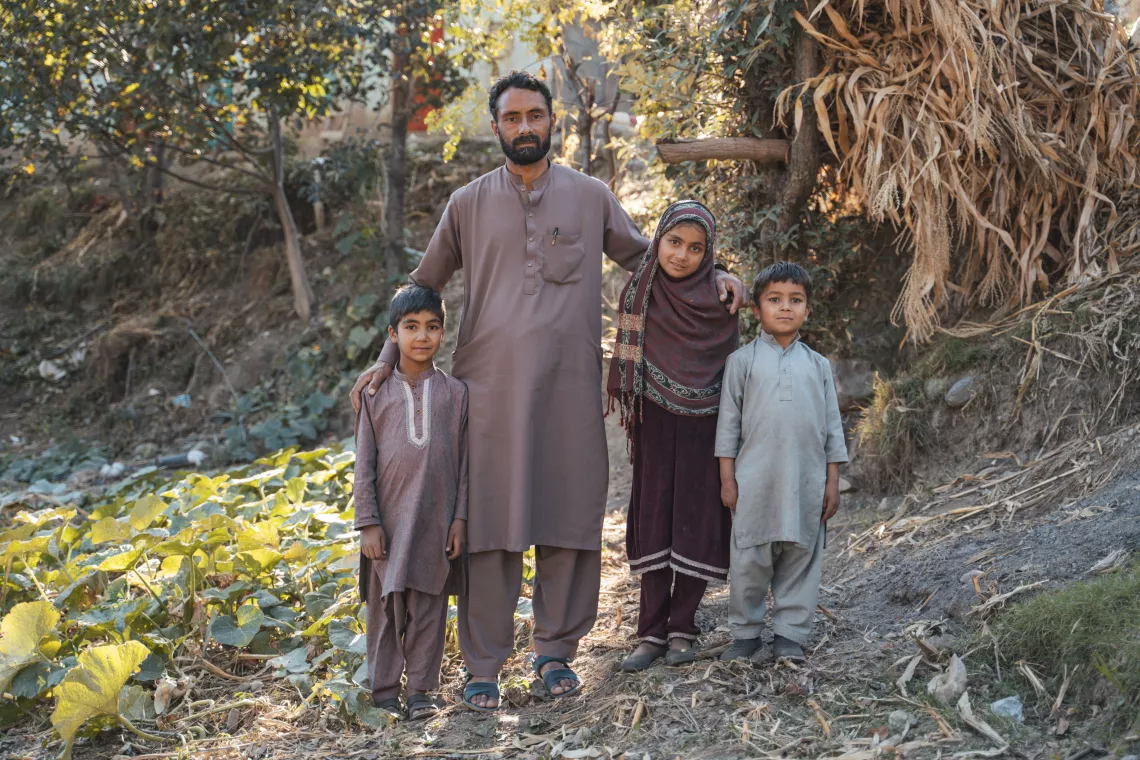
“For some households living higher up the mountains, it would take almost two hours to collect water,” adds Suleman.
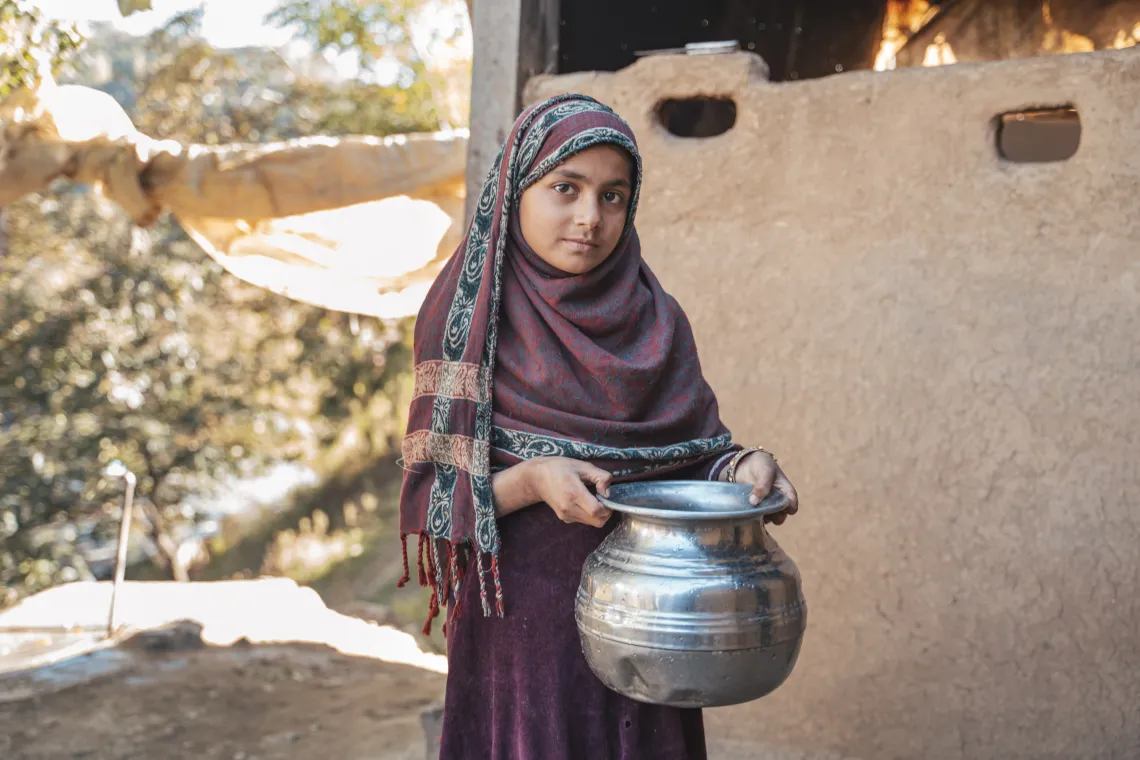
“First thing in the morning, after breakfast, my mother would ask us to go get water along with children in the neighbourhood. We had to do that twice a day, go for fetching water in the morning and afternoon. For me it was boring,” says Raishma.
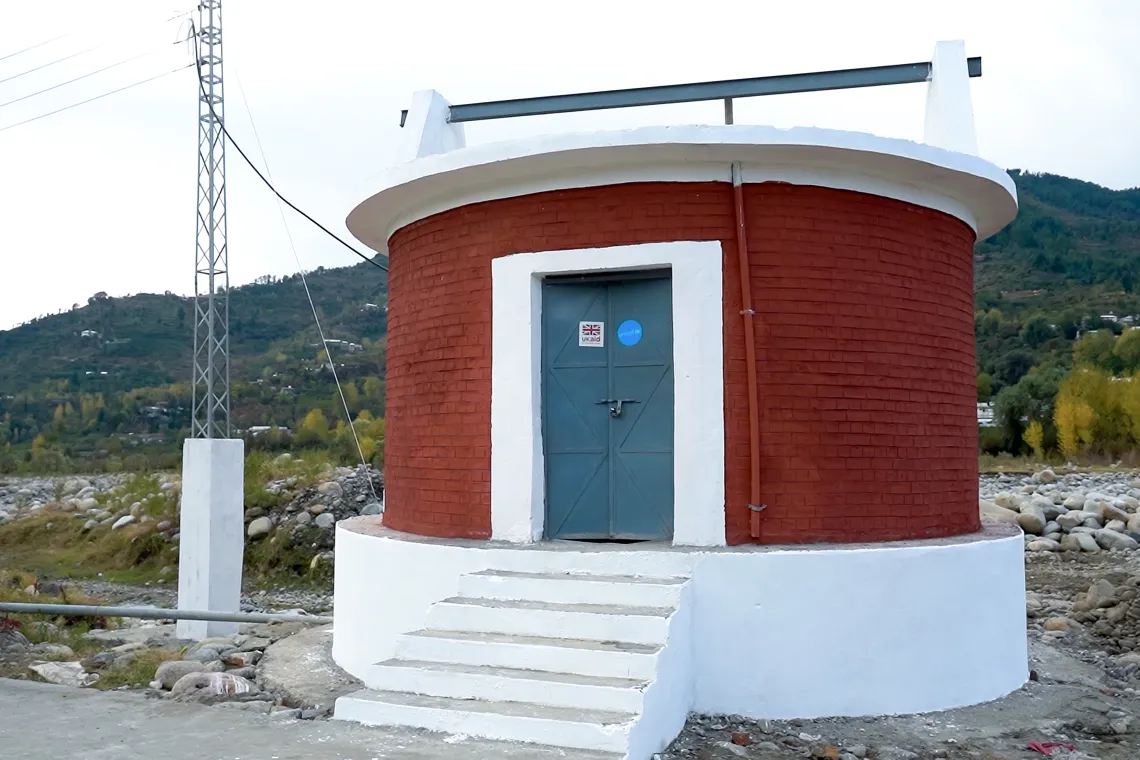
Following the restoration of the water supply scheme in January 2023, water is now pumped from the well on the riverbank to the tank built atop the mountain in the village. Then, the water is supplied to Raishma’s neighbourhood, through distribution lines from the water tank.
Swat is prone to torrential rains and flash floods, the worst was experienced in 2010 and 2022, which damaged critical infrastructure including water supply schemes.
According to government assessments, the 2022 floods damaged 154 water supply schemes in the higher mountainous terrain of Upper Swat, while 15 schemes were damaged due to urban flooding in Lower Swat.
Thanks to funding from UK’s Foreign, Commonwealth & Development Office (FCDO), the Provincial Government of Khyber Pakhtunkhwa in collaboration with UNICEF, rehabilitated 17 water supply schemes, benefiting over 122,000 people including Rasihma’s family in Swat. The beneficiaries include around 33,000 males, 32,000 females, 27,000 girls and 29,000 boys.
The water schemes are rebuilt according to new climate-resilient designs that aim to protect the scheme from damage due to climate-related disasters. The designs include elevated and reinforced structures around the wells and power supply poles built on raised platforms to withstand the force of flash floods.
The availability of safe drinking water at the household level not only saves time and energy for the community, but crucially it helps prevent waterborne diseases, particularly among children.
Relieved from the responsibility of accompanying family members to fetch water from distant sources, Raishma has now more time to study, play with her siblings and help with other household chores.
“I don’t have to worry about water anymore. Water reaches our home through the pipeline, I help in filling water containers and coolers. It’s so easy and convenient,” says Raishma.
“Our people, especially women and children, struggled for months to access safe water. They had to fetch water twice a day and that was not even enough to meet our household needs. The restoration of the water supply is nothing short of a divine blessing for us,” says Suleman.