Pakistan steps up COVID-19 vaccine roll-out
30 million doses of COVID-19 vaccine have been administered as part of the Government-led vaccination campaign in Pakistan so far.

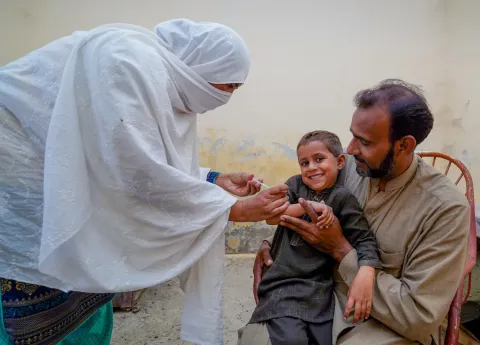
ISLAMABAD, Pakistan, 4 August 2021 – Nearly 7 million people have received two doses of COVID-19 vaccine, and more than 24 million have received one dose in Pakistan so far. The country, which launched its COVID-19 vaccination campaign one year after the first case was reported, administered over one million doses of vaccine in a day.
From the onset of the pandemic in February 2020, UNICEF has worked closely with the Ministry of National Health Services, Regulations and Coordination (MoNHSRC) to support its response to the COVID-19 emergency. UNICEF has supported the Government’s efforts to reduce virus transmission by promoting adherence to public safety health measures and is now supporting the COVID-19 vaccination campaign in line with the National Deployment and Vaccination Plan (NDVP). So far one million cases have been reported in Pakistan and at least 23,529 people have succumbed to the disease.
More than 8 million doses of COVID-19 vaccines have arrived in Pakistan through COVAX so far, and more are on the way. This includes 2.4 million doses of AstraZeneca, 100,160 doses of Pfizer and 5.5 million doses of Moderna, the latter donated by the United States under COVAX’ dose-sharing mechanism.
UNICEF is leading the efforts to procure and supply safe, effective, and affordable COVID-19 vaccines on behalf of the COVAX facility which aims to quickly reach people in low and middle-income countries. UNICEF has also supported Pakistan’s vaccine supply chain by providing additional cold chain, logistics storage and Ultra Cold Chain with support from Gavi, the Government of Japan and the Asian Development Bank (ADB). The latter also provided funding for the procurement of laboratory items, Personal Protective Equipment (PPEs) and oxygen concentrators. Similar support was provided by the World Bank through the PEF Grant for PPEs, 1,320 Oxygen Concentrators and laboratory equipment to run COVID 19 tests. UNICEF also used its own resources to buy 525 Oxygen Concentrators (525), Pulse Oximeters and PPEs.

Despite constraints on global vaccine availability, the Government of Pakistan has procured nearly 30 million doses of COVID-19 vaccines licensed in China through bilateral agreements. The country recently started bottling PakVac, a one-dose COVID-19 vaccine licensed from China, in view of delivering 3 million doses a month. The Government has also announced that it would buy 13 million doses of Pfizer COVID-19 vaccine over the coming months.
Pakistan has a long History of vaccinating children against polio and other transmittable diseases such as measles or typhoid through mass immunization campaigns. In response to the COVID-19 outbreak, the Ministry of Health adapted its facilities to be able to vaccinate adults, who make up about half of a population of 225 million.
The Ministry ramped up the existing cold chain capacity of its Expanded Program on Immunization (EPI), which now includes 15,000 cold freezers. It also installed 23 ultra-cold chain facilities procured with support from UNICEF and ADB in 15 large cities. Moreover, it set up processes to distribute the vaccines across the country safely; dispose of waste, including syringes, in a safe and environment-friendly manner; and register people for vaccination via SMS.
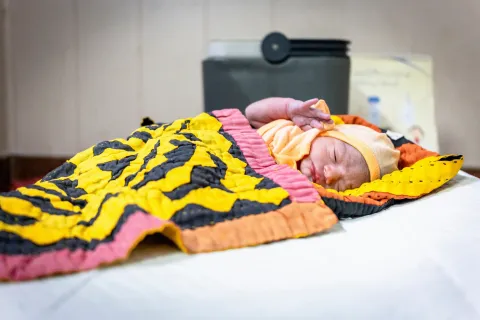
“UNICEF Pakistan has supported the expansion of both cold and dry storage capacity to prevent the routine immunization system from suffering from the influx of COVID-19 supplies and vaccines generated by the emergency,” says Dr Yasmine Challoub, Senior manager Immunization, UNICEF Pakistan. “This has helped ensure the continuity of quality essential immunization for children and adults alike. The delivery of COVID-19 vaccines for adults cannot come at the cost of childhood immunizations.”
Since health is one of the sectors devolved to the provinces, UNICEF is working with the Ministry in close coordination with the four provincial health departments. The Ministry has 2,800 vaccination centers up and running across the country and plans to increase this number up to 4,000. The MoNHSRC has also launched mobile units to reach out to underserved communities more easily.
After vaccinating health workers and senior citizens, Pakistan gradually opened vaccination to people over 18. The Government is prioritizing densely populated urban centers and “hotspot” areas where the coronavirus spreads more easily than in scattered rural communities.
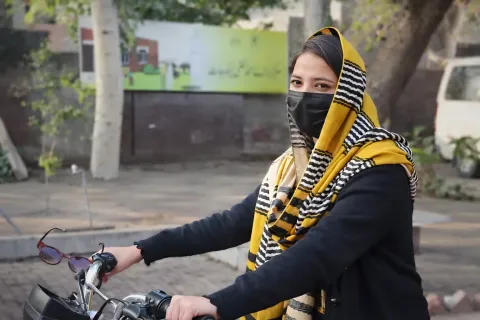
With the supply chain, distribution and facilities secured, the Government has started working on generating demand for the vaccine. This includes appealing to women, who are more fearful of side effects and have less access to information in conservative communities. With support from UNICEF, the Ministry of Health is tackling the proliferation of misinformation in a country which was already dealing with polio vaccine refusal in some areas. For COVID-19, the reluctance often stems from myths such as the vaccine causing infertility, the pandemic being a foreign conspiracy or the virus being harmless.

“Sentiment analysis shows that many people are not against being vaccinated but hesitate because of what they heard about side effects. They want to wait,” says Ayesha Durrani, UNICEF Communication for Development Specialist in Pakistan, who supports the communication efforts led by the Ministry.
“You have a History of vaccine hesitancy in the country, mixed with myths and fake rumours imported from abroad via social media,” she explains. “Once digital influencers start relaying these myths, they are picked up by small media outlets and people start sharing their articles on WhatsApp, reaching the communities which are not on social media.”
To counter widespread misinformation, UNICEF develops anthropological surveys to determine which conversations are taking place; periodic surveys to capture current attitudes on the pandemic and vaccination; digital media analyses; and a KAP survey to better understand vaccine hesitancy. The results help the Ministry adapt its strategy and customize information shared with the public via mass media and social media. Since last year, UNICEF has supported the Ministry to develop and disseminate content such as leaflets, online flyers, videos… in the six languages spoken in the country, and to engage celebrities, religious leaders, key media, and adolescents.
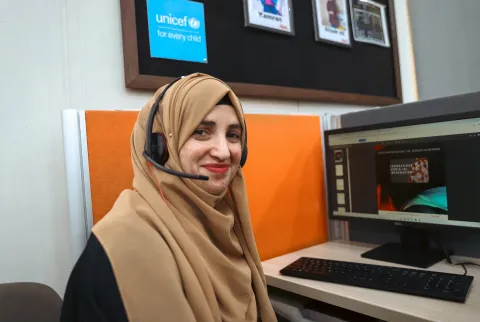
The Ministry has also expanded the national 1166 helpline set up for Polio with support from UNICEF and other Global Polio Eradication Initiative partners. The center answers 20,000 calls related to COVID-19 and vaccination daily. UNICEF has also helped record caller tunes featuring information messages which people hear each time they use the phone. Community engagement efforts are also being planned at the provincial level to better reach people living in the most affected districts and those where vaccination rates are the lowest.
“UNICEF supports the Government of Pakistan’s drive to ensure an efficient and effective roll-out of the COVID-19 vaccination campaign,” says Aida Girma, UNICEF Representative in Pakistan. “We help the Government procure essential COVID-19, routine immunization and polio supplies; expand cold chain capacity to ensure safe storage of vaccines; and lead risk communication and community engagement to increase vaccine uptake and ensure adherence to COVID-19 safety measures. When the virus spreads anywhere, it poses a threat everywhere. Only global solidarity can help curb the pandemic.”